Kundalini: Kriyas, Breathwork and Energy
Retiru Team
The Retiru content team — yoga, meditation and ayurveda.
Introduction
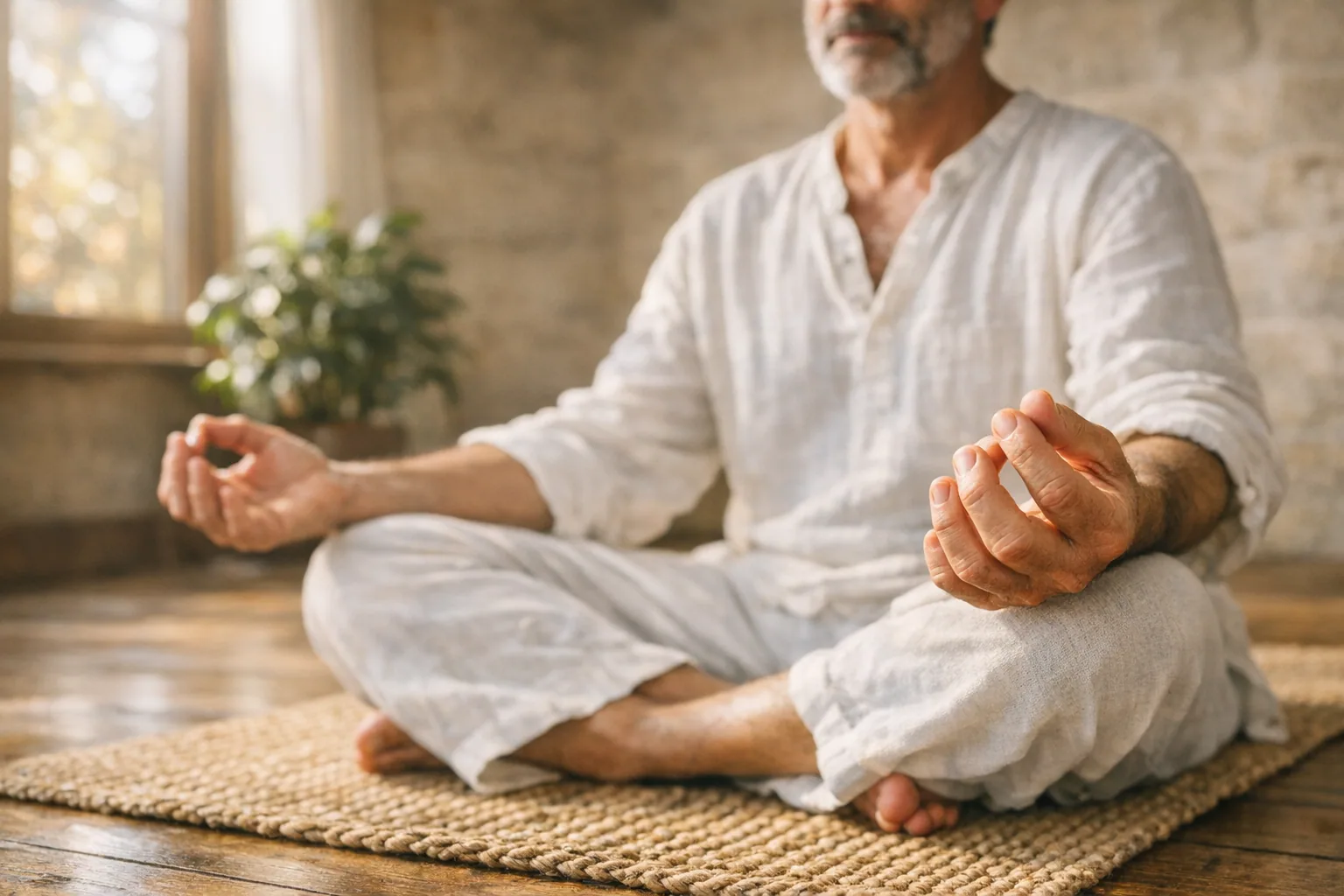
Kundalini is one of the yoga styles that attracts the most curiosity and, at the same time, the most misunderstanding. It is often described with dramatic language about awakening energy, but in daily practice it can be approached in a much more grounded way: a combination of postures, breathwork, attention, rhythm, meditation and, in some schools, sound or mantra. The aim is not to perform advanced shapes or chase extraordinary states, but to consciously shift the state of body and mind.
The word kundalini comes from the yogic tradition and is usually described as latent energy. From a modern and cautious perspective, this can be understood as vitality, nervous system activation, body awareness and the ability to sustain attention. A Kundalini session may feel intense even when the postures look simple, because it often uses repetition, specific breathing patterns and timed holds.
This guide is designed for beginners and yoga practitioners who want to understand what kriyas are, how breath is used and what it means to speak about energy without exaggeration. It also includes a practical sequence with clear timings, common beginner mistakes and important contraindications, because not every breathing technique is suitable for every person.
What this style is and how it differs
Kundalini yoga is organised around kriyas. A kriya is a complete sequence with a specific intention: mobilising the spine, activating the breath, training mental steadiness, supporting concentration or preparing the body for meditation. It may include static postures, repeated movements, mudras or hand positions, rhythmic breathing, moments of stillness and a final meditation.
Unlike styles such as Hatha or Vinyasa, where the focus is often on postural alignment or flowing from one asana to another, Kundalini uses repetition and duration as key tools. A simple seated spinal flex may be repeated for 2 or 3 minutes while coordinated with inhalation and exhalation. This repetition changes the experience: it builds warmth, requires focus and makes the relationship between breath, posture and inner state more noticeable.
Kundalini also frequently uses more active breathing techniques. The best known is breath of fire, a fast rhythmic breath driven by the abdomen. It is not essential for beginners and should not be practised without adaptation during pregnancy, uncontrolled high blood pressure, intense anxiety, dizziness or cardiovascular conditions. For new practitioners, it is better introduced in short rounds of 30 seconds to 1 minute, or replaced by steady nasal breathing.
When Kundalini speaks about energy, it does not need to be interpreted as something mysterious. During a session, body temperature, muscle tone, breathing rate, mental clarity or the perception of fatigue may all change. Calling this energy can be useful, as long as it does not become an absolute promise or a medical explanation.
Benefits and realistic limits
A well-guided Kundalini practice can improve breathing awareness. Many people discover that they breathe shallowly, hold the abdomen when inhaling or stop breathing when concentrating. By working with clear patterns, such as inhaling while lengthening the spine and exhaling while rounding it, you train a steadier relationship between movement and breath.
It may also support sustained attention. Repeating a sequence for several minutes asks you to observe discomfort, regulate effort and return again and again to the rhythm. This does not mean Kundalini cures stress, anxiety or insomnia, but it can be a complementary tool for learning how to slow down or, depending on the practice, how to activate the body with more clarity.
Physically, kriyas often mobilise the spine, shoulders, hips and diaphragm. The practice may be helpful for people who spend many hours sitting, provided there is no acute pain or unassessed injury. Gentle movement combined with breathing can create a sense of warmth, lightness and improved postural awareness.
Its limits matter just as much. Kundalini does not replace psychological therapy, medical care or a personalised exercise programme when there is a health condition. It is also not advisable to chase intense experiences as the main goal. If a practice causes dizziness, strong tingling, palpitations, a sense of losing control or anxiety, stop, breathe naturally and seek qualified guidance before repeating it.
How to practise: detailed sequence
The following sequence lasts around 35 minutes. It is intended for beginners with basic mobility and no major contraindications. Practise on a relatively empty stomach, ideally leaving 2 hours after a heavy meal. Keep a blanket or cushion nearby so you can sit with the pelvis slightly elevated if the lower back rounds.
1. Arrival and natural breathing — 3 minutes
Sit in easy pose with crossed legs, or on a chair with both feet on the floor. Place your hands on your thighs and observe your breathing without changing it. Notice the contact of the pelvis with the floor or chair, the length of the spine and the position of the jaw. During the final minute, gently lengthen the exhale without forcing: for example, inhale for 4 counts and exhale for 5 or 6.
2. Seated spinal flexes — 4 minutes
Keep your hands on your knees or shins. As you inhale, move the chest forward and lift the sternum slightly; as you exhale, round the back without collapsing the neck. Let the movement begin in the pelvis and travel through the spine. Start slowly for 1 minute, then find a comfortable rhythm. If lower back pain appears, reduce the range or sit on a chair.
3. Shoulder circles and mindful neck release — 4 minutes
Make large shoulder circles backwards for 1 minute, then forwards for 1 minute. Then let your right ear move towards your right shoulder for 5 breaths and repeat on the other side. Avoid dropping the head backwards if you have neck discomfort. This phase prepares the upper back, which often holds tension during active breathing practices.
4. Extended arms and rhythmic breathing — 5 minutes
Extend both arms out to the sides, parallel to the floor, palms facing out and fingers pointing up. Keep the shoulders relaxed and the neck long. Breathe through the nose steadily: inhale for 4 counts and exhale for 4 counts. If the arms become tired, lower them for 10 seconds and raise them again. The goal is not rigid endurance, but observing how the mind reacts to sustained effort.
5. Cat-cow — 5 minutes
Come onto all fours, with knees under hips and hands under shoulders. Inhale as you gently arch the spine and look forward without compressing the neck; exhale as you round the spine and draw the navel inward. Keep a continuous rhythm for 3 minutes. For the final 2 minutes, slow down and make the movement more precise. If the wrists are uncomfortable, use forearms or place a folded blanket under the hands.
6. Adapted breath of fire — 1 to 3 minutes
If you have no contraindications, sit again and practise a short version. Breath of fire is done through the nose, with short, even inhales and exhales; the abdomen moves lightly, without harsh pumping or gripping. Begin with 30 seconds, rest for 30 seconds breathing normally, then repeat once or twice. If you are a beginner, do not look for speed: look for symmetry and steadiness. Stop immediately if you feel dizzy, pressure in the head or anxiety.
If you are pregnant, have uncontrolled high blood pressure, arrhythmia, a history of panic attacks, epilepsy, glaucoma, vertigo or recent abdominal surgery, replace this section with slow nasal breathing: inhale for 4 counts and exhale for 6 counts for 3 minutes.
7. Observation meditation — 7 minutes
Remain seated with your hands in your lap. Observe the sensations after movement: warmth, pulsing, calm, restlessness or fatigue. Do not try to manufacture any energetic experience. Each time the mind wanders, return to the feeling of the breath at the nostrils. If you use mantra within your tradition, you may repeat it silently; if not, simply count exhales from 1 to 10 and begin again.
8. Closing rest — 4 minutes
Lie on your back with the legs extended or the knees bent. Let the breath return to its natural rhythm. Relax the tongue, eyelids, hands and abdomen. This phase is not decorative: it helps integrate the previous activation and prevents you from ending the practice overstimulated.
Common beginner mistakes
One of the most common mistakes is confusing intensity with effectiveness. In Kundalini, a technique can feel powerful even when practised gently. Forcing the breath, tightening the face or competing with the suggested time usually creates more agitation than clarity. It is better to practise 20 minutes steadily than to complete 45 minutes with tension and dizziness.
Another mistake is starting with advanced breathing techniques too soon. Breath of fire, long breath retentions and certain energetic locks require gradual learning. Before increasing speed, it is wise to master the basics: breathing through the nose without strain, keeping the spine comfortable and recognising signs of overload. If the body asks you to stop, that information is part of the practice.
It is also common to idealise the idea of energy. Some people expect extraordinary sensations and feel disappointed if they only notice warmth, tiredness or calm. Others interpret any discomfort as energetic release and continue beyond what is sensible. A more balanced approach is to observe what happens without dramatizing it or chasing it.
Who it suits / contraindications
Kundalini may suit people who want a structured practice with less emphasis on extreme flexibility and more attention to breath, concentration and repetition. It can be a good option if silent meditation feels difficult at first, because rhythmic movement prepares the mind for stillness. It may also interest those who already practise Hatha, Vinyasa or meditation and want to explore another approach.
Intense practices should be adapted or avoided during pregnancy, early postpartum, uncontrolled high blood pressure, cardiovascular disease, epilepsy, glaucoma, vertigo, migraines triggered by intense breathing, panic attacks, active bipolar episodes or a history of severe dysregulation with meditation. This does not mean all Kundalini is forbidden, but it does mean a gentle and supervised version should be prioritised.
Do not practise breath of fire or breath retentions if you are dizzy, feverish, after alcohol, with chest pain, during an anxiety attack or immediately after a heavy meal. If sharp pain, strong pressure in the head, significant palpitations, blurred vision or faintness appear, stop and seek professional guidance.
Suggested weekly routine
To begin, less is more. During the first two weeks, practise the full sequence twice per week and add 5 minutes of natural breathing on two other days. Notice how you sleep, how your daytime energy responds and whether the practice leaves you centred or overstimulated.
In weeks 3 and 4, you can practise three times per week. Keep breath of fire in short rounds of 30 to 60 seconds, with clear rests. If you feel agitated, reduce that section and extend the final rest to 6 or 8 minutes. If you feel stable, you can increase the final meditation to 10 minutes.
A balanced routine might be: Monday full 35-minute sequence, Wednesday gentle 20-minute practice without breath of fire, Friday full sequence, Sunday 10 minutes of meditation and slow breathing. Consistency matters more than intensity. One month of moderate practice will teach you more than one overly ambitious session.
FAQ
Is Kundalini suitable for beginners?
Yes, as long as you start with simple kriyas, moderate timings and adapted breathing. There is no need to do intense techniques on day one. A beginner should prioritise posture comfort, steady nasal breathing and the ability to stop when the body asks.
What exactly is a kriya?
A kriya is a structured practice sequence. It may combine postures, repeated movements, breathing, focus, mudras and meditation. Rather than choosing exercises randomly, a kriya organises those elements around a specific intention, such as mobilising the spine or preparing the mind for stillness.
Is breath of fire mandatory?
No. Although it is well known in Kundalini, it is not essential and does not suit everyone. It can be replaced with slow nasal breathing, longer exhales or quiet observation. The practice remains valid when adapted.
What does awakening Kundalini energy mean?
In traditional language, it refers to activating a latent energy associated with consciousness. In a safe contemporary practice, it can be understood as increasing body awareness, vitality, mental clarity and attention. It is important not to turn this idea into a spectacular promise or a forced goal.
Closing
Kundalini yoga can be a deep practice when approached with sobriety: clear kriyas, well-measured breathing, enough rest and respect for the body’s signals. Its value is not in provoking extreme experiences, but in training a more conscious relationship with everyday energy: when to activate, when to slow down and how to remain present without forcing.
Ready for your next retreat?
Explore hundreds of retreats across Spain with transparent pricing.
Explore retreats