Mustard Oil: Warmth and Ayurvedic Winter Care
Retiru Team
The Retiru content team — yoga, meditation and ayurveda.
Introduction
Mustard oil has a very distinctive character: it is strong, sharp, penetrating and clearly warming. In Ayurvedic body care, it is traditionally used when the body needs stimulation, surface warmth and a more activating effect than gentler oils such as almond, sesame or coconut. This is why it is often associated with winter, damp weather and moments when the body feels heavy, cold or stiff.
It should not be treated as a neutral cosmetic oil. Its strength is precisely what makes it useful, but also what requires caution. For some people, it can be too irritating, especially if the skin is sensitive, inflamed, prone to redness or affected by eczema, rosacea or active dermatitis. In Ayurvedic terms, mustard oil is not suitable for everyone or every season; it is chosen according to constitution, climate, skin condition and purpose.
This guide focuses on external use, especially short winter massages and home body care. We will look at its Ayurvedic context, traditional uses, practical application, dosha considerations, safety precautions and the difference between using it at home and receiving it in a professional setting.
What mustard oil is in Ayurveda
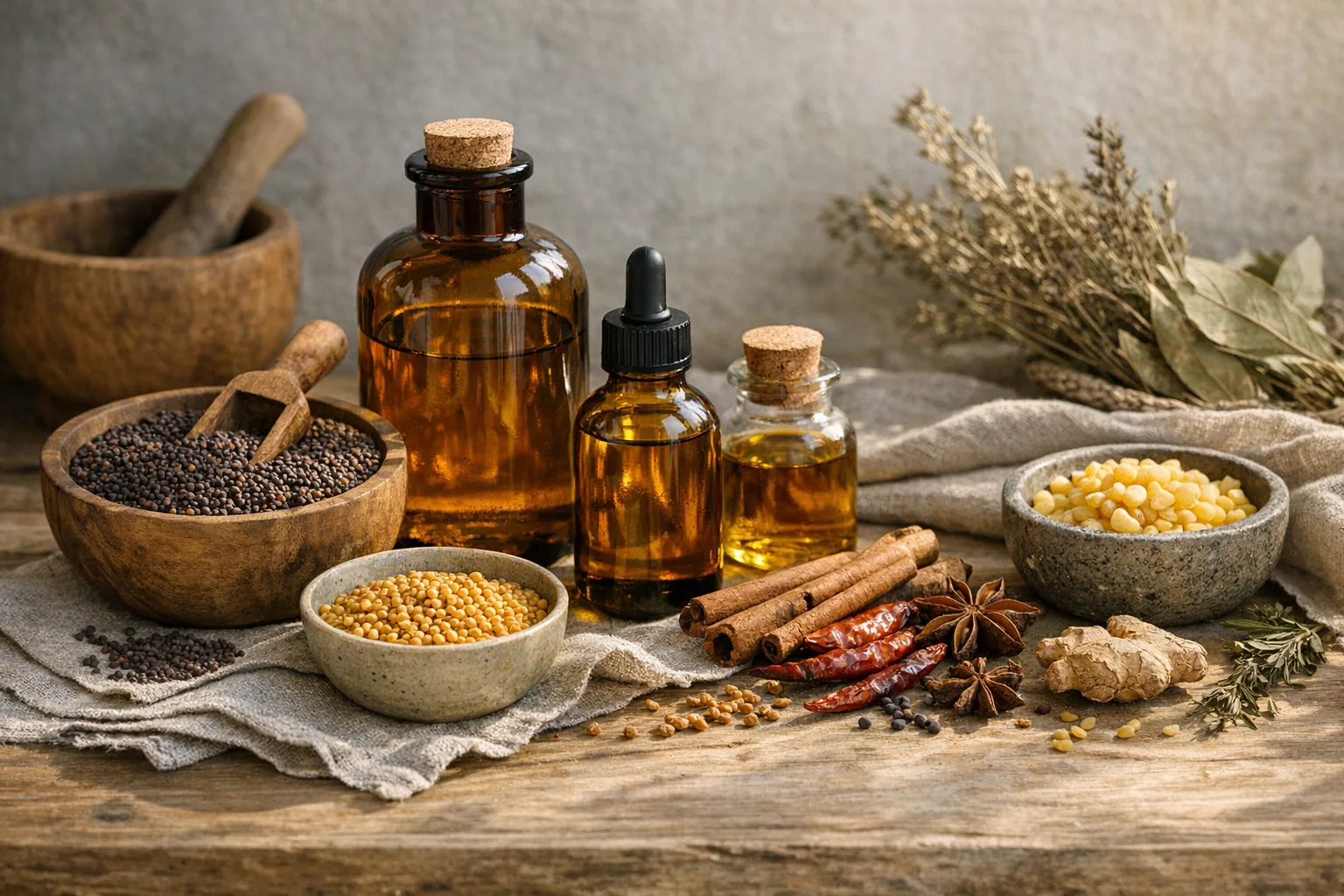
Mustard oil is extracted from mustard seeds, commonly from black, brown or white mustard varieties. In Ayurveda, it is valued for its heating, light, sharp and stimulating qualities. These qualities make it quite different from heavier nourishing oils such as sesame, or clearly cooling oils such as coconut.
Ayurvedic practitioners often describe mustard oil as having hot potency and a mobilising action. This means it is not used only to moisturise the skin, but to create warmth, stimulate the surface of the body and counter sensations of cold, dampness and stagnation. For that reason, it is often linked to Kapha, the dosha associated with heaviness, coldness, moisture, accumulation and sluggishness.
It may also be used occasionally for Vata when coldness and stiffness are prominent, but this requires more care. Vata needs warmth, but also softness, nourishment and steadiness. Mustard oil provides warmth, yet it may feel too sharp if the skin is very dry, thin or reactive. In such cases, it is usually better diluted with sesame oil or applied only briefly.
For Pitta, mustard oil is generally considered unsuitable. Pitta is associated with heat, intensity, redness, inflammation, sweating, acidity and irritation. Adding a hot and pungent oil may aggravate these tendencies, especially in summer or in people with sensitive skin. This is not a medical diagnosis, but it is a useful framework for understanding why mustard oil should not be applied indiscriminately.
Traditional uses and attributed benefits
In Ayurvedic massage, mustard oil has traditionally been used to bring local warmth, stimulate the skin and support winter routines. People often reach for it when they experience cold hands and feet, morning stiffness, bodily heaviness or a lack of physical activation during damp weather. Its effect is not subtle: even in small amounts, it tends to feel warmer and more stimulating than many other carrier oils.
It is also used in more vigorous body massages, especially when the aim is to counter Kapha-like inertia. In that sense, it can fit into a short pre-shower self-massage with brisk movements and upward strokes. It is not the ideal oil for a deeply calming bedtime ritual; it is better suited to moments when you want to wake the body up.
Traditional cosmetic use also includes skin and hair care, improved softness and protection against external aggressors such as cold weather or heavily chlorinated water. Some sources highlight its content of fatty acids, particularly omega-9, and phenolic compounds with antioxidant activity. These components may support skin barrier care, but they should not be interpreted as treatment for skin disease.
You may also find traditional references to antifungal, antiparasitic or disinfectant properties. These claims require caution. The presence of bioactive compounds does not mean mustard oil should be used to treat infections, wounds, fungal conditions or open lesions. If there is persistent pain, significant inflammation, suspected infection or a diagnosed skin condition, professional medical advice is appropriate.
How to apply it: oil, massage, duration and temperature
The safest way to start is with a patch test. Apply one drop of mustard oil to the inner forearm, wait 24 hours and check for itching, redness, burning or rash. If any reaction appears, do not use it. Even if there is no reaction, use a small amount the first time.
For winter body care, mustard oil can be gently warmed in a bain-marie. It should never boil or smoke. A comfortable massage temperature is around body temperature, approximately 37–40 °C. Always test a few drops on the inner wrist before applying it more widely. If it feels hot or uncomfortable, it is too warm.
For a short self-massage, 1–2 tablespoons, around 15–30 ml, are usually enough depending on the area. You do not need to cover the whole body. It can be applied only to feet, legs, lower back or specific stiff areas. For sensitive people, dilution is preferable: for example, 1 part mustard oil to 2 or 3 parts sesame oil. This keeps some warming quality while reducing intensity.
Massage may last 5–15 minutes. For Kapha-like heaviness, brisk strokes, gentle friction and upward movements from the limbs toward the centre are appropriate. Around joints, use circular movements without pressing into sharp pain. After massage, leave the oil on for another 5–10 minutes and then shower with warm water. If the skin feels excessively hot or irritated, wash it off immediately with mild soap and stop using it.
Avoid applying mustard oil near the eyes, mucous membranes, genitals, wounds, freshly shaved or waxed skin, or areas with dermatitis. It is also not ideal before sun exposure, intense sauna or vigorous exercise, as it can increase heat and redness. On the scalp, it should be used very cautiously and for a short time, avoiding active itching, seborrhoeic dermatitis or sensitive scalp conditions.
Choosing it by dosha and season
Mustard oil fits best in late winter, cold damp days or periods when the body feels sluggish and heavy. From an Ayurvedic perspective, these are contexts in which Kapha may accumulate: more sleep, slower digestion, mucus, low motivation and a preference for stillness. In that setting, a warming and penetrating oil may support an activating routine, alongside movement, warm food and regular timing.
For Kapha constitutions or Kapha states, it is often the clearest match. The massage does not need to be long or very oily. In fact, too much oil and too much slowness may reinforce heaviness. Use a small amount, rub well, keep the session short and finish with a warm shower. The aim is activation, not sedation.
For Vata, mustard oil may help when coldness dominates, but it is usually better softened. A blend with sesame oil is more balanced: sesame provides stability and nourishment, while mustard adds warmth. Movements should be slower and more enveloping than in Kapha massage. If there is anxiety, insomnia, extreme dryness or hypersensitivity, sesame alone may be a better choice.
For Pitta, the safest recommendation is generally to avoid mustard oil. People who overheat easily, have red or reactive skin, hives, inflammatory breakouts, active acne, frequent acidity or marked irritability tend to tolerate cooling or neutral oils better. In summer, even people who are not predominantly Pitta may find mustard oil excessive.
Precautions and when to seek professional advice
Mustard oil should not be used on inflamed skin, open wounds, burns, active eczema, psoriasis flare-ups, skin infections, painful varicose veins or areas with reduced sensation. It is also unsuitable during fever, high body heat, intense sweating or burning sensations. In Ayurvedic language, when signs of excess heat or inflammation are present, adding a hot substance is usually unwise.
Anyone with mustard allergy should avoid it completely. Mustard is a recognised allergen and may trigger significant reactions in sensitive individuals. Extra caution is also needed for people with allergic asthma, atopic dermatitis or a history of reactions to essential oils, spices or natural cosmetics. Natural does not automatically mean safe.
During pregnancy, breastfeeding, cancer treatment, diagnosed skin diseases, neuropathy, diabetes with altered sensation or anticoagulant medication, it is best to ask a qualified professional before using stimulating oils or strong massage. The oil is not necessarily dangerous in every case, but skin, circulation and sensitivity may respond differently.
Internal use deserves separate caution. In some countries, mustard oil is not authorised as a cooking oil because of its erucic acid content, while in others specific food-grade varieties are used traditionally. This guide does not recommend ingestion. If someone wants to use it in food, the product must be clearly labelled as edible and compliant with local regulations.
At home vs in a professional setting
At home, mustard oil is best used as a simple occasional tool: a short massage for cold feet, brisk rubbing on the legs before a shower, or a diluted blend with sesame oil on very cold days. The key is to keep it modest, observe the skin and avoid making it a daily routine if it causes irritation. For many people, 1–2 times per week in winter is more reasonable than intense daily use.
A trained Ayurvedic therapist can assess a wider picture: constitution, season, digestion, energy, skin, sleep and current symptoms. They may decide whether mustard oil should be used pure, diluted, locally or not at all. In traditional bodywork, the choice of oil is not a cosmetic detail; it is part of the treatment strategy.
The main difference is intensity and supervision. At home, the safety margin should be greater: less oil, less time and moderate warmth. In a professional setting, more specific techniques may be used, but there should also be an intake process, attention to contraindications and adaptation to the person. If a hot oil massage produces burning, dizziness, palpitations, rash or discomfort, it should be stopped.
FAQ
Can I use mustard oil every day in winter?
Usually, no. Because it is hot and stimulating, daily use may irritate the skin, especially if applied undiluted. A more cautious pattern is 1–2 times per week, or only on particularly cold and heavy days. If you want a daily abhyanga oil, sesame is often a more balanced option.
Is it better before or after showering?
For most people, before showering is better. Apply it warm, massage for 5–15 minutes, leave it briefly and then wash it off with warm water. This reduces the risk of prolonged irritation. After showering, if your skin needs moisture, choose a gentler oil or neutral cream.
Can I mix it with other oils?
Yes, and it is often advisable. Mixing it with sesame oil reduces its intensity while keeping a warming winter profile. A cautious starting ratio is 1 part mustard oil to 3 parts sesame oil. If tolerated well, it can be adjusted to 1:2.
Can it help with muscle or joint pain?
It may provide warmth and comfort for mild stiffness or cold sensations in muscles and joints. It should not be used as treatment for injuries, acute inflammation, active arthritis or recent trauma. If there is swelling, local heat, intense pain or reduced function, seek medical advice before using hot oils or massage.
Closing
Mustard oil is a powerful Ayurvedic winter oil, but it is not universal. Its value lies in its ability to warm, stimulate and mobilise when cold, dampness and heaviness are present. Used well, in small amounts, for short periods and with attention to the skin, it can be a useful seasonal tool.
The essential point is to respect its intensity. For Kapha it may be particularly suitable; for Vata it is usually better diluted and softened; for Pitta it is generally best avoided. As with many traditional practices, discernment matters more than trend: observe, adjust and stop if the body responds with irritation.
Ready for your next retreat?
Explore hundreds of retreats across Spain with transparent pricing.
Explore retreats