Plain and Mango Lassi: Classic Indian Recipe Step by Step
Retiru Team
The Retiru content team — yoga, meditation and ayurveda.
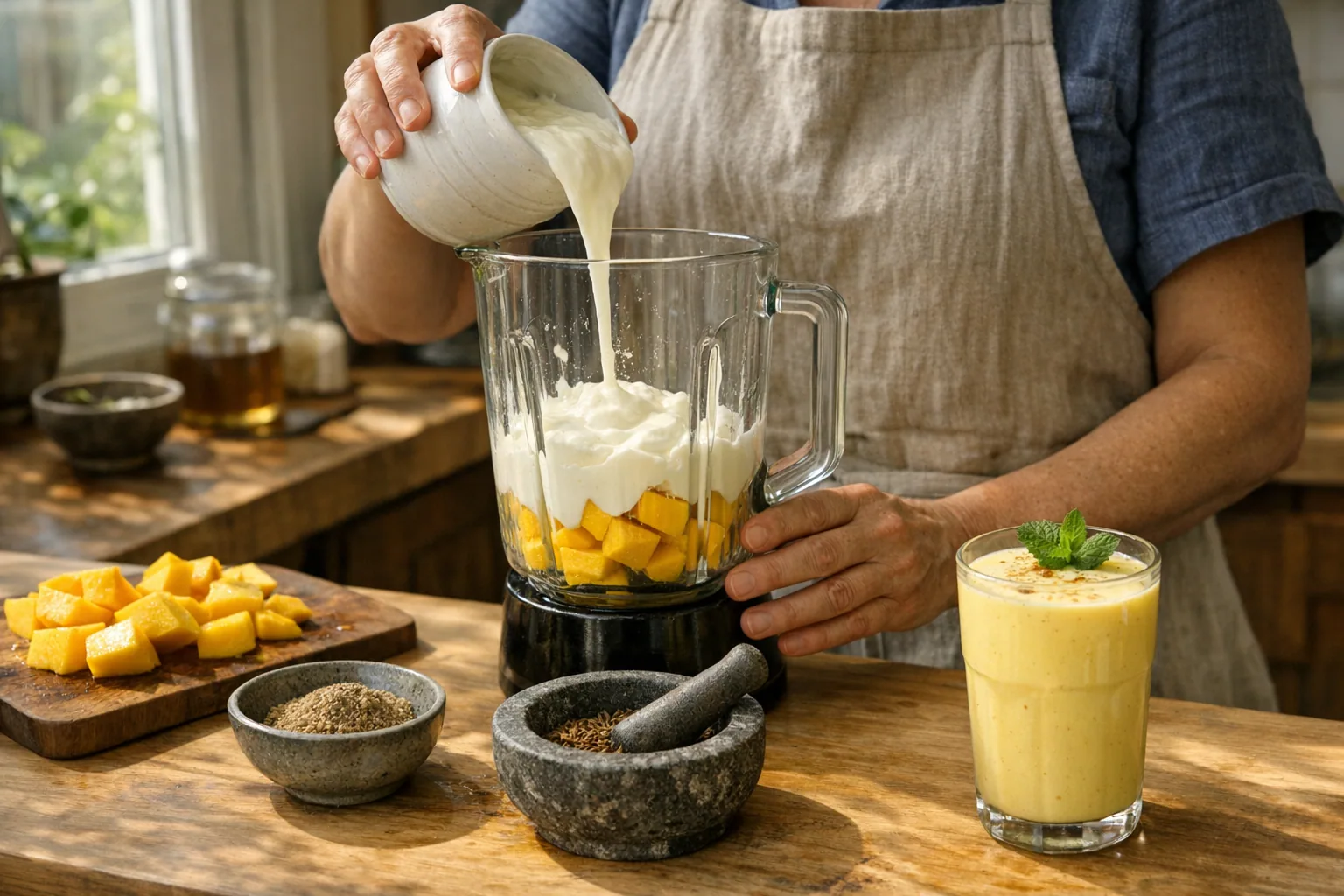
Plain and Mango Lassi: Classic Indian Recipe Step by Step
Lassi is a traditional yogurt-based drink from northern India, especially associated with Punjab. At its simplest, it is made by blending yogurt with water or milk until smooth, light and drinkable. It can be sweet, salty, spiced or mixed with fruit. Plain lassi is the most basic version, while mango lassi has become widely loved for its creamy texture, bright color and balance of yogurt tanginess with ripe fruit sweetness.
The appeal of lassi is that it is quick, nourishing and easy to adjust. In less than 10 minutes, you can make a refreshing drink with protein and calcium from yogurt, hydration from water or milk, and, in the mango version, natural sweetness and plant compounds from the fruit. It does not need to be overly sweet. With ripe mango, plain unsweetened yogurt and just a small amount of honey or sugar if needed, the result is balanced rather than heavy.
The best time to drink lassi depends on the version. Salted plain lassi works well with spicy food, during warm weather or as a mid-morning drink. Sweet plain lassi and mango lassi are better suited to breakfast, an afternoon snack or a light dessert. If you drink it in the evening, keep the portion small and avoid too much sugar, as cold dairy and fruit can feel heavy for some people.
Ingredients with exact quantities
The following quantities make 2 generous glasses or 3 smaller servings. For a drink served with food, aim for 180 to 200 ml per glass. For a snack, a 250 ml serving is more appropriate.
Sweet plain lassi
- 250 g plain whole yogurt, cold
- 120 ml cold water or cold whole milk
- 10 g honey or sugar, optional
- 1 small pinch fine salt, about 0.5 g
- 1 pinch ground cardamom, about 0.3 g, optional
- 3 or 4 ice cubes, optional
Salted plain lassi
- 250 g plain whole yogurt, cold
- 150 ml cold water
- 1 g fine salt, or to taste
- 0.5 g ground cumin, preferably toasted
- 3 fresh mint leaves, optional
- 3 or 4 ice cubes, optional
Classic mango lassi
- 250 g ripe mango pulp, about 1 large mango or 2 small ones
- 200 g plain whole yogurt, cold
- 100 ml cold whole milk, or 80 ml if the mango is very juicy
- 10 to 15 g honey or sugar, only if the mango is not sweet enough
- 1 pinch ground cardamom, about 0.3 g
- 5 ml lemon or lime juice, optional
- 4 to 6 ice cubes, optional
For the creamiest result, use unsweetened whole yogurt. Greek yogurt also works, but you will need a little more milk or water because it is thicker. If using frozen mango pulp, let it soften for 5 minutes at room temperature before blending so the texture becomes smoother.
Step-by-step preparation
- Chill the ingredients. Keep the yogurt, milk or water, and mango in the fridge for at least 2 hours before making lassi. It is served cold, ideally around 4 to 8 °C. If the ingredients are already cold, you will need less ice and the drink will stay creamier.
- Prepare the mango. Peel the mango, cut the flesh away from the stone and weigh about 250 g. If the mango is fibrous, blend it alone for 20 to 30 seconds first. For an extra smooth drink, pass the purée through a wide sieve. A ripe mango should smell sweet and give slightly when pressed.
- Add yogurt to the blender. Start with the yogurt so the blades move easily and splashing is reduced. Use 250 g for plain lassi and 200 g for mango lassi. For a lighter texture, replace 50 g of yogurt with 50 ml of cold water.
- Add the liquid gradually. Use 100 to 150 ml of water or milk, depending on the recipe. Milk makes the drink rounder and creamier; water makes it lighter and more refreshing. Do not add all the liquid at once if your yogurt is runny. Lassi should be drinkable, but not watery.
- Season gently. For sweet lassi, add a pinch of salt and, if needed, 10 g honey or sugar. For salted lassi, add salt and toasted cumin. For mango lassi, add cardamom and sweeten only if the fruit needs it. The main flavors should be yogurt and mango, not sugar or spice.
- Blend until smooth. Blend for 30 to 45 seconds on medium-high speed. If using ice, add it at the end and blend for another 10 to 15 seconds. The right texture is creamy, smooth and slightly frothy. If it is too thick, add 20 ml more water or milk. If it is too thin, add 1 or 2 tablespoons of yogurt.
- Taste and adjust. Add more salt, sweetness or acidity if needed. In mango lassi, 5 ml lime juice can brighten the flavor if the mango is very sweet. In salted lassi, a few mint leaves add freshness, but use them lightly so they do not dominate.
- Serve immediately. Pour into cold glasses and drink within 10 minutes. If it rests, slight separation is normal; stir with a spoon or blend for 5 seconds before serving. Do not heat lassi. Its charm lies in the cool temperature, gentle acidity and airy texture.
Useful variations
Lighter lassi
For a lighter lassi, replace some or all of the milk with cold water. In mango lassi, you can use 200 g yogurt, 250 g mango and 120 ml water instead of milk. The result will be less creamy but more refreshing. This version is especially pleasant with a full meal or on hot days.
You can also use semi-skimmed plain yogurt, although the drink will lose some body. Avoid flavored sweetened yogurts, as they tend to make the lassi taste artificial. If you want less sugar, start with no honey and taste at the end. A ripe mango is often sweet enough on its own.
Higher-protein version
For a more filling lassi, use plain Greek yogurt or skyr and increase the liquid slightly. A good ratio is 220 g Greek yogurt, 250 g mango and 130 to 150 ml milk or water. Blend for about 45 seconds, because thicker yogurts need more time to become smooth.
This version can work well for breakfast or as a snack after gentle physical activity, provided you tolerate dairy well. Avoid overloading it with protein powder, nut butter and sweeteners all at once. Lassi is best when it stays simple: yogurt, liquid, fruit or spices, and a small flavor adjustment.
Lactose-free or plant-based adaptation
For a lactose-free version, use lactose-free plain yogurt and lactose-free milk in the same quantities. This keeps the recipe close to the classic version and is often the easiest option for people with lactose intolerance, though not for those with milk protein allergy.
For a plant-based drink, use unsweetened coconut, soy or almond yogurt. Coconut pairs very well with mango but has a stronger flavor. Soy is usually more neutral and slightly higher in protein. Strictly speaking, this is no longer traditional lassi, but it is a useful recipe inspired by the classic.
Storage in the fridge and freezer
Lassi is best freshly made, when the texture is light and slightly foamy. Still, you can keep it in the fridge in an airtight container for up to 24 hours. Shake or blend briefly before drinking, as yogurt, water and fruit may separate. Do not leave it at room temperature for more than 1 hour, especially in summer.
If you want to prepare ahead, freeze mango pulp in cubes. Spread the pieces on a tray, freeze for 2 to 3 hours, then transfer them to a freezer-safe bag. This makes mango lassi very quick to prepare. When using frozen mango, reduce or skip the ice so the drink does not become watery.
Freezing prepared lassi is not ideal. Once thawed, it may separate and become grainy. If you still want to freeze it, pour it into ice lolly molds or ice cube trays and later blend the cubes with a little cold milk. It can be enjoyable, but it will not have the silky texture of freshly blended lassi.
Reasonable benefits
Lassi is a simple way to include plain yogurt in your diet. Yogurt provides protein, calcium and live cultures, depending on the specific product. When blended with water or milk, it becomes easier to drink than a thick bowl of yogurt. This makes it useful for quick breakfasts, gentle snacks or a homemade alternative to sugary soft drinks.
Mango lassi adds real fruit to the base recipe. Mango provides natural carbohydrates, a little fiber when the whole pulp is used, and plant pigments such as carotenoids, which give it its orange color. It should not be presented as a miracle drink or a universal digestive remedy. But when made with unsweetened yogurt and ripe fruit, it is a balanced homemade option with ingredients you can control.
Salted lassi has a different advantage: it pairs well with spicy or strongly seasoned meals. The acidity and fat from yogurt soften the perception of heat, which helps explain its place in spice-rich cuisines. Toasted cumin adds aroma without needing sugar. For people who prefer savory drinks, it is often the most interesting version.
Precautions: who should avoid it
Traditional lassi is not suitable for people with milk protein allergy. If you are lactose intolerant, a lactose-free version may be better tolerated, but individual responses vary. If fermented dairy often causes discomfort, start with half a serving and observe how you feel. A healthy recipe for one person is not necessarily ideal for everyone.
People with diabetes, insulin resistance or a need to manage blood sugar should be careful with mango lassi, especially if honey, sugar or large portions are added. A small serving with no added sweetener is usually more moderate than a large glass on its own. Ripe mango already provides sweetness. Sweetened canned mango pulp is best avoided if you want more control over sugar.
If you have reflux, slow digestion or sensitivity to cold foods, an iced lassi may feel heavy. Prepare it cold but without ice, and keep the serving small. It may also be less suitable right before bed if dairy at night makes you feel uncomfortable. Practical tolerance matters more than trends.
FAQ
Can I make lassi without a blender?
Yes, especially plain lassi. Whisk the yogurt in a bowl until smooth, then add water or milk gradually while whisking. Mango lassi is harder without a blender because the fruit needs to become a purée. Very ripe mango can be mashed with a fork and strained, but the texture will be less smooth.
What yogurt is best for lassi?
Plain whole unsweetened yogurt is the best all-purpose choice. It gives creaminess, mild acidity and a drinkable texture. Greek yogurt makes a thicker, more filling lassi, but it needs more liquid. Avoid flavored yogurts if you want a clean, classic taste.
Can I use frozen mango?
Yes. Use 250 g frozen mango and let it sit for 5 minutes before blending. Add the yogurt and milk gradually because frozen fruit thickens the drink. You usually will not need ice. The result is very cold, creamy and close to a smoothie.
Is lassi sweet or salty?
It can be both. Traditional plain lassi exists in salted, sweet and spiced versions. Mango lassi is usually sweet, but it should not be cloying. If you are new to lassi, try sweet plain lassi first, then the salted version with cumin to understand its range.
Closing
Lassi shows how a simple recipe can be refreshing, nourishing and adaptable. With good yogurt, ripe fruit and a restrained use of spices, you can make a balanced drink in minutes. At Retiru, we value this kind of everyday cooking: practical, mindful and easy to integrate into a balanced life.
Ready for your next retreat?
Explore hundreds of retreats across Spain with transparent pricing.
Explore retreats