Seasonal Eating in Spain: A Month-by-Month Guide
Retiru Team
The Retiru content team — yoga, meditation and ayurveda.
Introduction: eating with the calendar, not against it
Seasonal eating in Spain is a simple habit with several benefits: better flavour, more variety, often better prices and a more coherent relationship with climate and local production. It does not mean refusing every imported food or following a rigid rule. It means giving priority to foods that are naturally at their best during each part of the year.
In modern supermarkets, many fruits and vegetables are available almost all year round, which can make the real season difficult to recognise. You may find tomatoes in January or oranges in August, but their flavour, price and production conditions are usually very different from those of their natural season. Seasonal eating helps you distinguish commercial availability from peak quality.
This guide is designed for everyday planning. The foundation remains a balanced Mediterranean-style diet: vegetables and fruit every day, legumes several times per week, whole grains, extra virgin olive oil, nuts, fish, eggs and moderate amounts of dairy, meat or suitable alternatives depending on personal needs.
What seasonal eating means
Seasonal eating means choosing foods that are harvested, fished or produced during their natural period in a specific region. In Spain, this varies by area: citrus fruit on the Mediterranean coast, apples in northern regions, tomatoes in warmer areas or leafy greens in colder inland climates may follow slightly different timings. For that reason, any calendar should be seen as a flexible guide, not a strict rule.
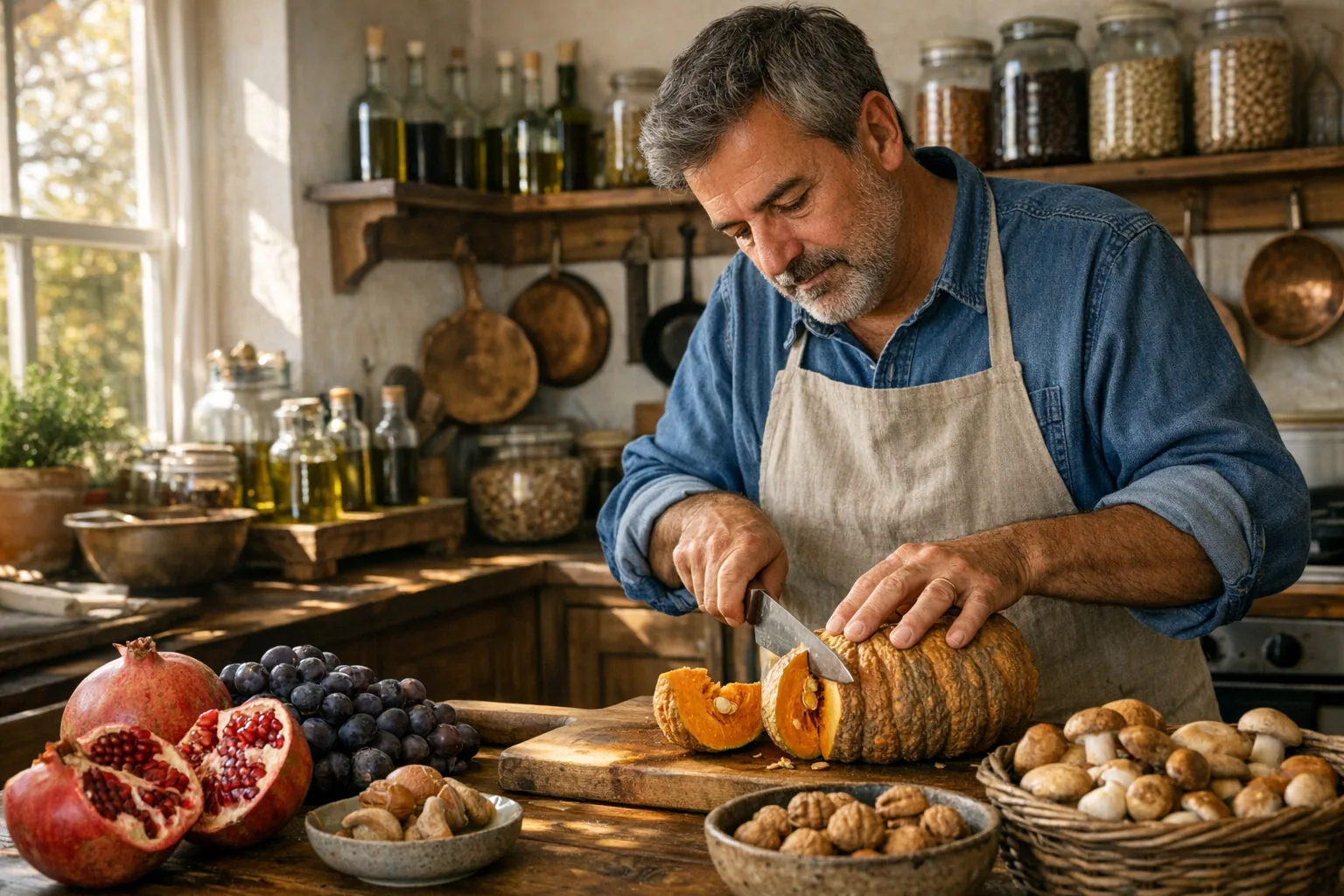
Seasonality is most obvious in fruit and vegetables, but it also applies to fish, seafood, mushrooms, fresh nuts, herbs and some animal products. From a nutrition perspective, its main value is variety. Winter brings citrus fruits, cabbages and roots; spring brings tender greens and peas; summer brings watery fruit and colourful vegetables; autumn brings pumpkin, grapes, pomegranates, mushrooms and chestnuts.
A healthy pantry can still include non-seasonal staples all year: dried legumes, rice, oats, wholegrain pasta, canned fish, canned tomatoes, frozen vegetables, olive oil, nuts and spices. The goal is not perfection, but making the fresh part of your diet follow the rhythm of the month.
Benefits, with realistic nuance
The most immediate benefit is flavour. Produce harvested close to its ideal ripeness often has better aroma, texture and taste. This is not automatic, because variety, farming method, storage and transport also matter, but the chance of eating something truly good is higher when the product is in season.
Nutritionally, seasonal fresh produce may retain certain sensitive compounds better, especially when it spends less time in storage or transport. However, this should be understood with nuance. Frozen vegetables can be highly nutritious, and a seasonal fruit will not compensate for an unbalanced diet. The real benefit appears when seasonal eating helps you eat more plants and rotate colours, fibres and food families.
It may also help your budget. When a product is abundant, prices often improve because there is less need for importation, long storage or intensive production methods. Environmentally, seasonal eating can reduce dependence on long-distance transport, cold storage and forced production, although water use, packaging, waste and farming practices also matter.
Food sources: a month-by-month guide in Spain
Use this list as a practical reference. Seasons overlap and may shift depending on region and weather.
January
January is a month for warm dishes, citrus fruit and cold-weather vegetables. Choose oranges, mandarins, lemons, grapefruit, kiwi, apples and pears. Vegetables include cabbage, cauliflower, broccoli, red cabbage, chard, spinach, leek, celery, carrot, turnip, artichoke and escarole. It is a good time for legume stews, vegetable soups and warm salads with citrus.
February
February keeps the winter profile. Continue with citrus fruits, kiwi, apples and pears, and vegetables such as artichokes, broccoli, cauliflower, chard, spinach, leek, cardoon, escarole and beetroot. To avoid monotony, vary cooking methods: steaming, roasting at 180 °C, quick sautéing or slow stewing.
March
March begins the transition into spring. Late citrus remains available, and strawberries start to appear more often. Vegetables include asparagus, peas, broad beans, artichokes, spinach, chard, leeks and spring onions. This is a good month for green dishes: asparagus omelette, rice with artichokes or pea soup.
April
April brings more tender vegetables. Fruit may include strawberries, loquats in some regions, lemons, late apples and pears. Vegetables include asparagus, peas, broad beans, artichokes, lettuces, chard, spinach, spring onions and young carrots. A useful routine is one raw portion and one cooked vegetable portion each day.
May
May is one of the most varied months. Fruit includes early cherries, apricots, loquats, strawberries and early plums. Vegetables include courgette, green beans, cucumber, lettuces, carrots, beetroot, spring onion and the first tomatoes in warm areas. Keep legumes in the menu with lentil salads, chickpeas with vegetables or homemade hummus.
June
June marks the beginning of true summer eating. Fruit includes cherries, apricots, peaches, nectarines, plums, early melon and early watermelon. Vegetables include tomatoes, cucumber, peppers, courgette, aubergine, green beans and lettuce. Gazpacho, salmorejo, complete salads and grilled vegetables are useful, especially when paired with protein.
July
July is the peak of watery fruits and colourful vegetables. Choose watermelon, melon, peaches, nectarines, flat peaches, plums, figs and late berries. Vegetables include tomatoes, peppers, cucumber, aubergine, courgette, green beans, lettuce and onion. For balance, combine summer vegetables with eggs, sardines, bonito, legumes, tofu, poultry or fresh cheese.
August
August continues the summer peak. Fruit includes watermelon, melon, peaches, nectarines, plums, figs, early grapes and summer pears. Vegetables include tomatoes, peppers, aubergine, courgette, cucumber, green beans and fresh corn. In hot weather, appetite may drop, but the body still needs enough protein, salt and energy, especially if you sweat a lot.
September
September connects summer and autumn. You may still find figs, grapes, melon, late peaches, plums, pears and early apples. Foods such as pumpkin, sweet potato, early mushrooms, aubergine, peppers, late tomatoes, green beans and chard become more present. It is a good month for batch cooking and preserving: tomato sauce, ratatouille-style vegetables or roasted vegetables.
October
October brings denser, more comforting foods. Fruit includes grapes, pomegranate, persimmon, apples, pears, quince, chestnuts and nuts. Vegetables include pumpkin, sweet potato, mushrooms, leeks, chard, spinach, cabbage, cauliflower, broccoli and carrots. Always cook wild mushrooms well and only eat species that have been identified safely.
November
November is a month for soups and stews. Choose mandarins, early oranges, persimmon, pomegranate, kiwi, apples, pears and chestnuts. Vegetables include cabbages, broccoli, cauliflower, red cabbage, chard, spinach, leek, cardoon, artichoke, turnip and celery. Legumes fit especially well: beans with vegetables, lentils with pumpkin or chickpeas with spinach.
December
December closes the cycle with citrus fruit and winter vegetables. Fruit includes oranges, mandarins, lemons, grapefruit, kiwi, apples and pears. Vegetables include cabbage, red cabbage, broccoli, cauliflower, escarole, chard, spinach, leek, artichoke, cardoon, carrot and turnip. For festive meals, add real vegetable sides: sautéed red cabbage, escarole with pomegranate, artichokes or leek soup.
Signs of deficiency or excess
Seasonal eating is not a nutrient, so there is no specific deficiency of seasonality. What can happen is a lack of variety. If you eat too few fruits and vegetables for weeks, you may notice constipation, lower satiety, reduced intake of fibre, vitamin C, folate and potassium, and a higher tendency to snack on less nutritious foods.
There can also be a poorly planned excess. If someone uses seasonal eating as a reason to eliminate whole food groups, they may fall short in protein, iron, calcium, iodine, vitamin B12 or vitamin D, especially on vegetarian or vegan diets. Seasonality should add diversity, not unnecessary restriction.
Another common mistake is replacing full meals with fruit during summer. Fruit is healthy, but it does not provide everything. A dinner made only of watermelon may feel refreshing, but if repeated daily it can displace protein and essential fats.
A sudden increase in fibre from many legumes, cabbages and raw vegetables may also cause gas or bloating. Sensitive people should increase fibre gradually, cook vegetables more thoroughly, use spices such as cumin or bay leaf with legumes and distribute fibre across the day.
How to include it in daily life
Start by choosing three seasonal vegetables and two seasonal fruits each week. That is enough to change your menu without overcomplicating it. In January, this could be broccoli, leek, escarole, oranges and kiwi. In July, tomatoes, courgette, cucumber, peaches and watermelon.
As a general reference, many healthy eating guidelines recommend at least five daily portions of fruit and vegetables, roughly 400 g per day or more. A portion can be a medium fruit, a bowl of berries, a plate of salad, a generous cooked vegetable side or a vegetable soup. Do not treat the number as a rigid rule; use it as a compass.
Build meals in blocks. First, choose a seasonal vegetable base. Second, add protein: legumes, eggs, fish, lean meat, fermented dairy, tofu or tempeh. Third, add a quality carbohydrate if needed: potatoes, sweet potatoes, rice, wholegrain pasta or bread. Fourth, include healthy fat: extra virgin olive oil, nuts or seeds.
Storage matters too. Keep leafy greens in the fridge and use them within a few days. Fruits such as pears, peaches, tomatoes or bananas can ripen at room temperature and then be refrigerated if needed. If something becomes too ripe, turn it into soup, compote, sauce, roasted vegetables or a freezer portion.
Precautions: when not to apply it rigidly
Seasonal eating is safe for most people, but it should never become a restrictive rule. During pregnancy, breastfeeding, childhood, adolescence, intense sport, older age or digestive, kidney, metabolic or autoimmune conditions, nutritional needs may be specific. In those cases, adequacy matters more than the calendar.
During pregnancy, seasonal fruit and vegetables are useful, but hygiene is essential: wash raw produce well, cook foods properly and store perishable foods safely. Nutrients such as iodine, iron, folate, vitamin D, omega 3 and vitamin B12 may need special attention.
People with irritable bowel syndrome or sensitivity to FODMAPs may react to foods such as cabbage, artichoke, onion, leek or certain fruits. These foods are not bad, but quantity, cooking method and frequency may need adjustment.
FAQ
Is fresh seasonal produce better than frozen?
Not always. Fresh seasonal produce is excellent when well handled, but frozen vegetables can also be highly nutritious and practical. They help reduce waste and make healthy cooking easier.
Can I eat bananas, avocados or mangoes if they are not local?
Yes. Seasonal eating does not require absolute purity. Prioritise local and seasonal produce in your daily base, and use imported foods as occasional complements if they suit your diet.
What if vegetables spoil before I use them?
Buy smaller amounts, shop more often and combine fresh with frozen. Batch cooking also helps: roast vegetables, cook legumes and prepare sauces that can be used in several meals.
Should children eat seasonally?
Yes, as part of a varied diet adapted to their age. Seasonal foods expose children to different flavours throughout the year. For young children, adapt textures and avoid choking risks such as whole nuts, whole grapes or hard raw apple chunks.
Closing
Seasonal eating in Spain is not a trend or a strict rule. It is a practical way to organise food around what each month offers. Start small, rotate a few fruits and vegetables, combine them with legumes, fish, eggs, whole grains and olive oil, and let the calendar make healthy eating easier.
Ready for your next retreat?
Explore hundreds of retreats across Spain with transparent pricing.
Explore retreats