Vinyasa Flow: What to Expect in a Class
Retiru Team
The Retiru content team — yoga, meditation and ayurveda.
Introduction
Walking into your first Vinyasa flow class can feel exciting and slightly intimidating. You may wonder whether it will be too fast, whether you need to know the Sanskrit names of poses, or what happens if you cannot keep up. These are common concerns. Vinyasa is popular because it combines movement, strength, mobility, breath and focus, but it is not always obvious what to expect before you try it.
The key word is flow. In Vinyasa, poses are not treated as isolated shapes held for a long time. Instead, they are linked through conscious transitions, usually guided by the breath. You inhale to lengthen, lift or open; you exhale to fold, stabilise or move into the next position. This makes the practice physical, but also mentally engaging.
A good Vinyasa class is not simply fast movement. It has a clear structure: arrival, warm-up, progressive sequences, a more active section, cooling poses and final rest. It can be accessible to beginners when modifications are offered, but it is not the ideal class for every body or every situation. This guide explains what happens in class, the realistic benefits, common mistakes and when to modify or avoid the practice.
What this style is and how it differs
Vinyasa is a dynamic style of yoga in which movement and breath are coordinated. You may hear cues such as inhale, reach your arms up; exhale, fold forward; inhale, lengthen your spine; exhale, step back. This relationship between breath and transition is the foundation of the practice.
Compared with Hatha yoga, Vinyasa usually has a more continuous rhythm. Hatha classes often hold postures for longer and move more slowly, which can be useful for learning alignment. Vinyasa adds coordination, endurance and adaptability because the body moves from one shape to another with less pause.
It also differs from Ashtanga yoga. Ashtanga follows fixed sequences practised in the same order. Vinyasa flow is inspired by the idea of linking breath and movement, but gives the teacher more freedom to design each class. One session might focus on hip mobility, another on twists, backbends, balance or a peak pose.
Power yoga and Vinyasa can overlap. Many Power yoga classes are intense forms of Vinyasa with a stronger fitness emphasis. However, Vinyasa flow does not have to be exhausting. It can be gentle, moderate or vigorous depending on the pace, transitions, room temperature and level of instruction.
Benefits and realistic limits
Vinyasa flow can improve general mobility because it moves the spine, shoulders, hips, ankles and wrists in different directions. Since the body moves continuously, it warms up relatively quickly. In a 45 to 60 minute class, many people notice moderate sweating, improved circulation and a sense of lightness by the end.
It also builds functional strength. Plank, chaturanga, downward facing dog, chair pose and warrior variations require the legs, core, back, arms and shoulder girdle to work together. Vinyasa is not a complete replacement for progressive strength training with weights if that is your main goal, but it can improve muscular endurance and body control.
Mentally, the main benefit is focus. Because the sequence changes and the breath sets the rhythm, attention has a clear anchor. This can reduce the feeling of mental noise and help regulate stress, especially when the class includes a gradual cool-down and at least 5 minutes of final relaxation.
The limits are just as important. Vinyasa is not medical treatment and it will not automatically fix chronic injuries. It is also not always relaxing if practised at maximum intensity every time. When sequences are rushed or poorly adapted, wrists, shoulders, lower back and hamstrings may become overloaded. The benefits come from progression, technique and knowing when to rest.
How to practise: a 60-minute class structure
A Vinyasa class may last 30, 45, 60 or 75 minutes. A balanced 60-minute session usually follows a clear arc. The exact poses vary, but the structure below is common.
0–5 minutes: arrival and breathing
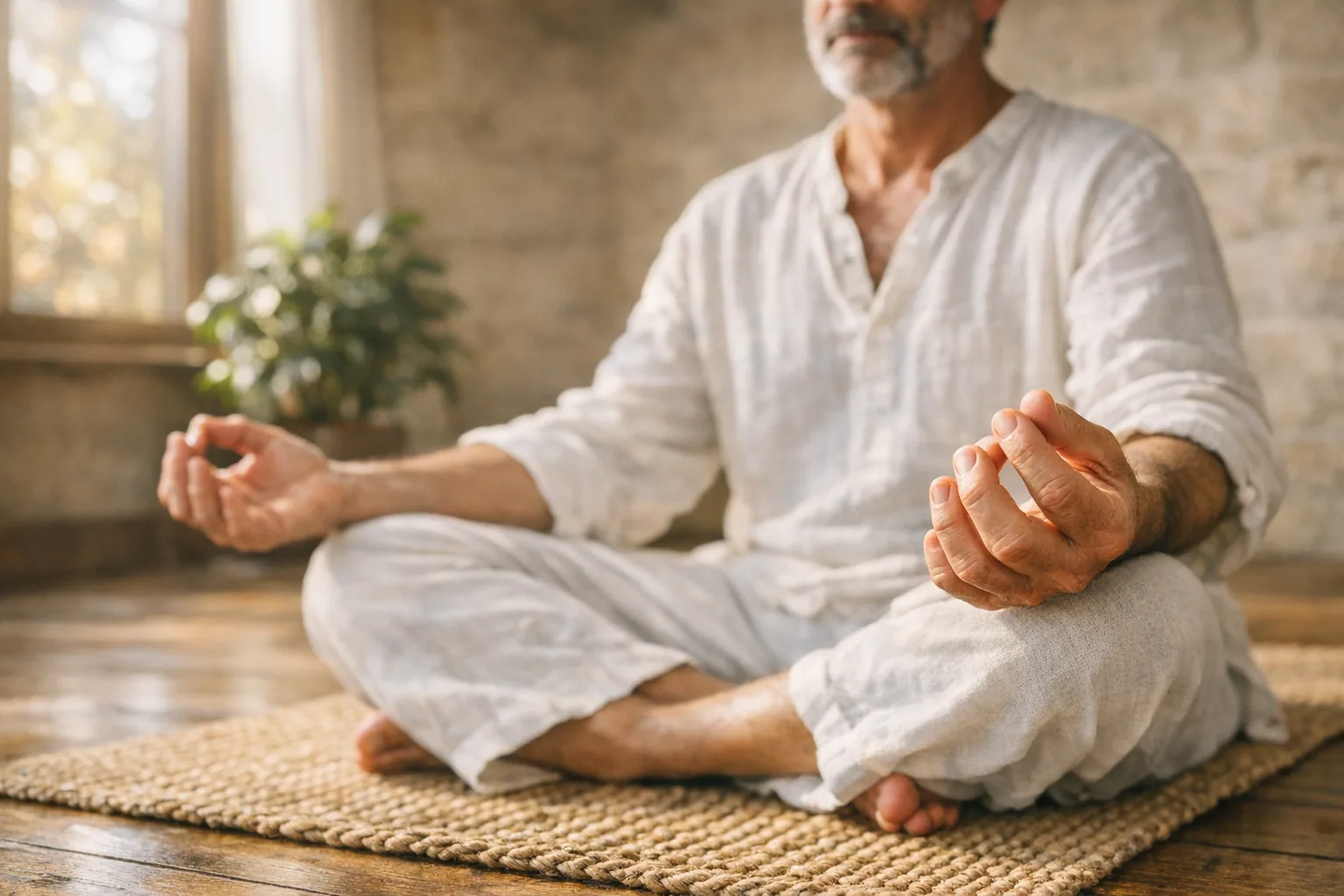
Class often begins seated or lying down. The teacher may ask you to notice your breath, relax your jaw and shoulders, and feel the points of contact with the mat. This is not complicated meditation; it is a transition from the outside pace into practice mode. Gentle nasal breathing and slightly longer exhalations can help settle the nervous system.
5–12 minutes: gentle mobility
The warm-up may include cat-cow, shoulder circles, wrist mobilisation, child’s pose, side stretches and downward facing dog with bent knees. This section matters because Vinyasa asks a lot from the wrists, shoulders and hips. Skipping it or moving through it too quickly can increase the risk of discomfort.
12–25 minutes: sun salutations
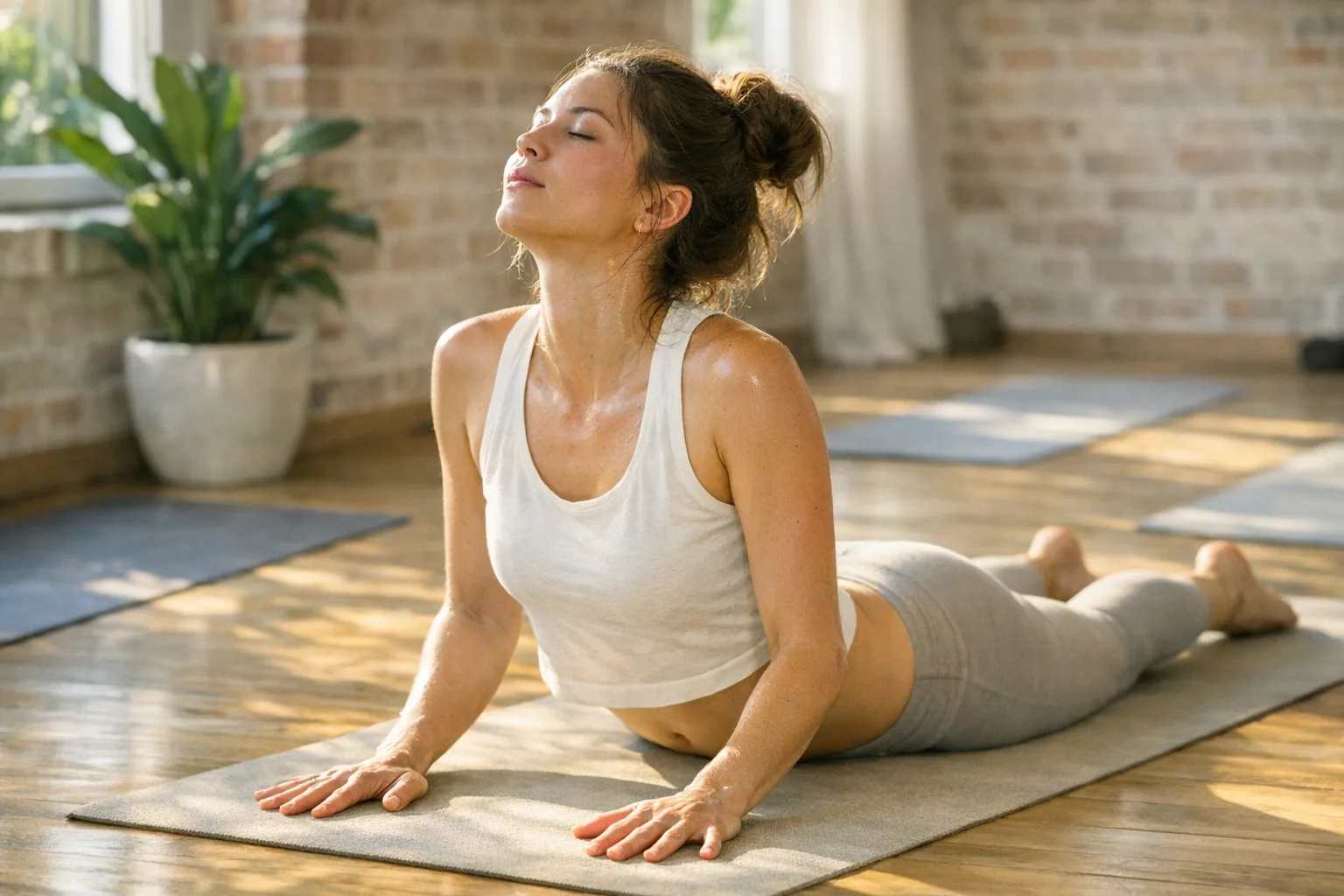
Sun salutations are a common base. A beginner-friendly version may include mountain pose, arms overhead, forward fold, half lift, stepping back to plank, knees down, low cobra, downward facing dog and stepping forward again. More dynamic classes may include chaturanga and upward facing dog, but they are not compulsory. Three to six rounds are usually enough to build heat gradually.
If you are new, you can lower your knees in plank, replace chaturanga with a controlled descent to the floor, or choose cobra instead of upward facing dog. These are not lesser versions. They are intelligent options that allow you to practise with better control.
25–40 minutes: main sequence
This is usually the strongest part of class. The teacher may build a sequence around warrior I, warrior II, extended side angle, triangle, half moon, chair pose, lunges or simple balances. Often one side is practised first, then the other, with transitions through downward facing dog or a modified vinyasa.
You will probably feel more heat and effort here. Your breath is the best guide. If you start gasping, clenching your face or missing instructions, reduce the intensity. You can rest in child’s pose, stay in downward facing dog or skip a vinyasa. Resting at the right time is part of a mature practice.
40–50 minutes: floor poses and counterposes
After the active section, the class usually moves to the floor. You may practise seated forward folds, gentle twists, hip openers, bridge pose or hamstring stretches. This helps balance the work done by the legs, shoulders and spine, and prepares the body for rest.
Avoid forcing stretches just because the body is warm. The sensation should be clear but breathable, never sharp. Props such as blocks, blankets or a folded towel can make hip and hamstring work safer and more useful.
50–60 minutes: final relaxation
The class ends with savasana, usually 5 to 10 minutes. This is not an optional nap. It allows the body to integrate the physical work, the breath to settle and the nervous system to shift down. A physically strong class without final rest feels incomplete from a yoga perspective.
Common beginner mistakes
A frequent mistake is trying to follow every transition at the teacher’s pace without adapting. Vinyasa flows, but your breath is the real guide. If you need an extra breath to reach downward facing dog or prefer stepping instead of jumping, that is perfectly fine.
Another common issue is doing too many chaturangas with poor technique. Chaturanga requires strength through the core, legs, shoulders and upper back. If the shoulders drop too low, the lower back collapses or the wrists hurt, lower the knees or come all the way down to the floor. Repeating this transition poorly can create irritation over time.
Holding the breath is also common. Many people unconsciously stop breathing in balances, planks or difficult poses. When that happens, the practice becomes tense and unsustainable. A simple rule: if you cannot breathe steadily, choose an easier variation.
Comparison is another obstacle. In one class there may be people with years of experience, high mobility or strong upper bodies. Copying their range of motion does not guarantee better results. Practising with attention, stability and respect for your own body matters more than looking advanced.
Who it suits and when to be cautious
Vinyasa flow may suit people who enjoy an active, varied and complete practice. It is a good option if you like movement, want to combine strength and mobility, or find it difficult to stay in static poses for a long time. It can also complement other sports by adding breath awareness and joint mobility.
Beginners can start with Vinyasa if the class is labelled beginner, gentle or all-levels, and if the teacher offers clear modifications. A 45-minute class is often more approachable than a vigorous 75-minute session. If you are new to yoga, tell the teacher before class so they can guide you through basic transitions.
Be cautious if you have recent injuries in the shoulder, wrist, elbow, knee, hip or back. Speak with a healthcare professional when needed and inform the teacher. Many poses can be modified, but not every class suits every injury.
During pregnancy, especially if you were not already practising, a general dynamic class is not ideal without prenatal adaptations. Deep twists, strong abdominal compression, excessive heat and certain balances may be inappropriate. You should also avoid vigorous practice if you have fever, dizziness, extreme fatigue, uncontrolled blood pressure or medical advice to rest.
If you are hypermobile, focus on strength and control rather than depth. Choose stable supports, small bends in the joints and active muscle engagement. Flexibility without control is not the goal.
Suggested weekly routine
If you are starting, practise Vinyasa flow twice a week with at least one rest day or gentle practice between sessions. This gives the wrists, shoulders and legs time to adapt. For example, you might practise on Tuesday and Friday, or Monday and Thursday.
A balanced week could include one 45 to 60 minute Vinyasa class, one gentler Hatha or mobility session of 30 to 45 minutes, and one short breathing or stretching practice of 15 to 20 minutes. If you are already physically active, you may move to three classes per week as long as no persistent pain appears.
Not every session should be intense. A sustainable routine alternates dynamic flow with slower practices. If one class included many planks, arm balances or deep backbends, the next day may be better for walking, gentle mobility or rest.
FAQ
Do I need to be fit to try Vinyasa flow?
No, but choosing the right level matters. A beginner or gentle Vinyasa class is much better than an advanced class. If you can get up and down from the floor comfortably and have no major injuries, you can usually start with modifications.
What does doing a vinyasa mean in class?
In many classes, a vinyasa refers to a transition from plank to chaturanga or a modified lowering, then cobra or upward facing dog, and finally downward facing dog. You do not have to do it every time. Child’s pose or downward facing dog are valid alternatives.
How long is a typical class?
Most classes last 45 to 60 minutes, though 30-minute and 75-minute sessions are also common. For beginners, 45 minutes is often enough to understand the rhythm without becoming overly tired.
Is it normal to sweat?
Yes, especially in dynamic sequences or warm rooms. But more sweat does not mean a better practice. Breath quality, stability and absence of pain are much better indicators.
Closing
Vinyasa flow is dynamic, varied and complete when taught with progression. You can expect continuous movement, guided breathing, strength work, mobility, focus and a final rest that should not be skipped. The key is to adapt the intensity rather than compete with anyone.
For your first class, arrive a few minutes early, mention any injuries and choose a place where you can see the teacher without twisting your neck constantly. Wear comfortable clothes, use a stable mat and keep an open attitude. You do not need to do everything. You need to breathe, listen and learn to move with more awareness.
Ready for your next retreat?
Explore hundreds of retreats across Spain with transparent pricing.
Explore retreats