Swedana: Herbal Steam Bath Explained
Retiru Team
The Retiru content team — yoga, meditation and ayurveda.
Introduction
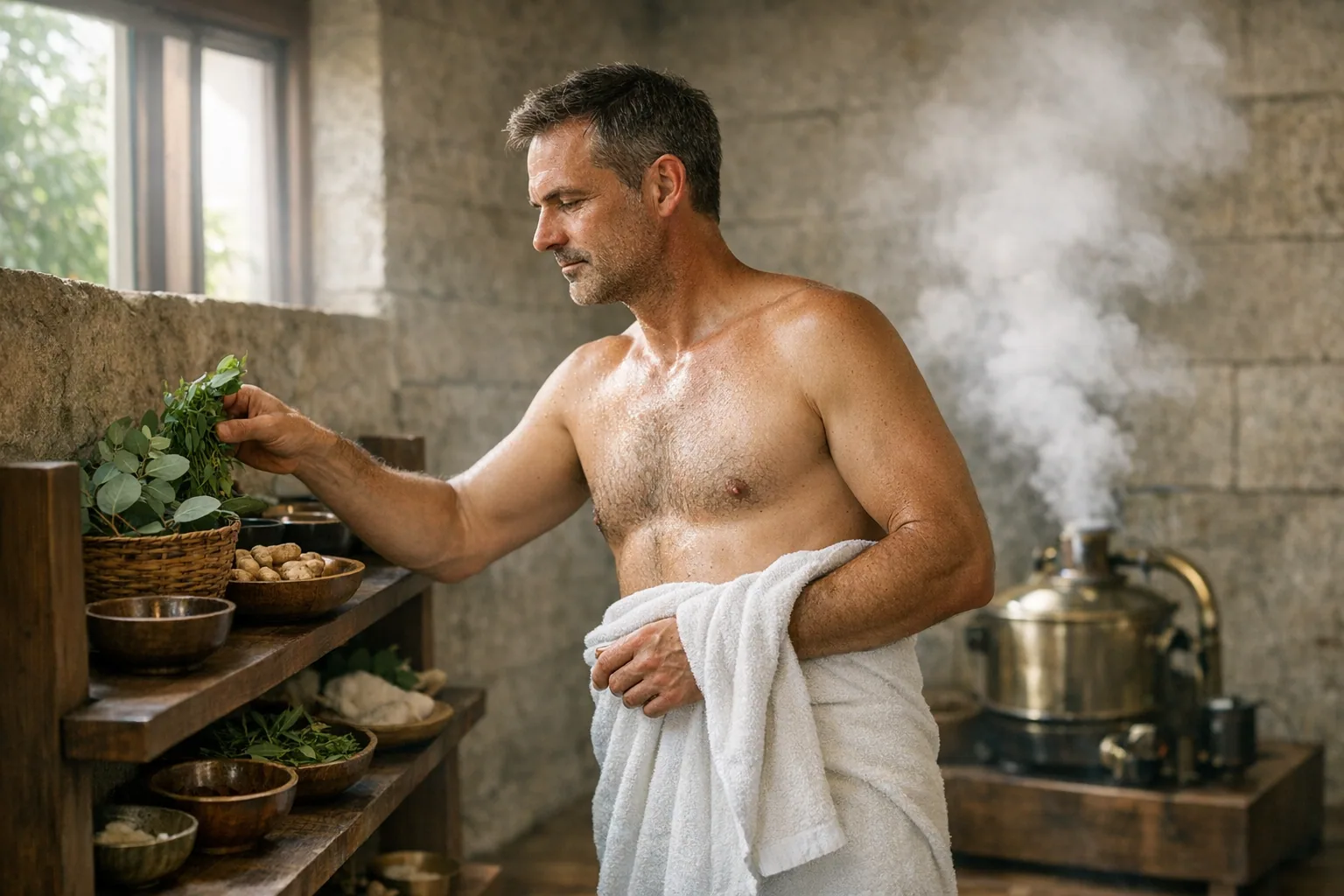
Swedana is often described as an “Ayurvedic herbal steam bath”, and while that definition is useful, it does not tell the whole story. In Ayurveda, Swedana is a therapeutic sweating technique: the body is exposed to moist heat, usually after warm oil massage, to soften tissues, encourage perspiration and support a feeling of physical lightness.
In modern practice, the best-known form is a steam cabinet where the body is surrounded by herbal vapour while the head remains outside. There are also local applications, where steam is directed to a specific area such as the back, knees or shoulders. The appeal is easy to understand: warmth, humidity, aromatic plants and rest. But it should still be approached with care, because heat-based practices are not suitable for everyone.
This guide explains what Swedana is, what it is traditionally used for, how it is usually applied, when to avoid it, and how a home version differs from a professional treatment.
What Swedana is in Ayurveda
The word Swedana comes from sweda, meaning sweat. In Ayurvedic practice, it refers to procedures that induce perspiration through heat. It is often used after Abhyanga, the warm oil massage, because the oil prepares the skin and the warmth helps the body relax more deeply.
Classical Ayurveda describes Swedana as a way to open the srotas, the bodily channels, and to help mobilise ama, a term often translated as metabolic residue or undigested accumulation. These terms should be understood carefully; they do not correspond exactly to modern biomedical categories. From a contemporary perspective, some of the effects may be related to vasodilation, sweating, muscle relaxation, improved body awareness and reduced stiffness.
The most familiar version is Bashpa Swedana, the herbal steam bath. Other forms include Nadi Sweda, where steam is applied through a tube to a specific area, and local heat applications using herbal boluses or warm compresses. The intensity and purpose vary, so the treatment should be adapted to the person rather than applied as a standard routine.
What it is used for and attributed benefits
In Ayurveda, Swedana is mainly used when there is heaviness, stiffness, coldness or accumulated tension. Traditionally, it is associated with balancing excess Vata and Kapha. Vata-type imbalance may feel like dryness, tightness, restlessness or cracking joints. Kapha-type imbalance may feel like heaviness, sluggishness, congestion or lack of mobility. Moist heat has the opposite qualities: it warms, softens, relaxes and helps things move.
Commonly attributed benefits include reduced muscular and joint stiffness, relief of mild body aches, improved peripheral circulation and a general feeling of ease. Many people also notice softer skin after a session, especially when steam follows oil massage. In Ayurveda it is also said to support Agni, the digestive fire, although this should not be interpreted as a direct treatment for digestive disorders. It is better understood as one element within a broader routine of rest, nutrition and stress regulation.
You may also hear that Swedana “removes toxins”. This claim needs nuance. The body eliminates substances mainly through the liver, kidneys, gut, lungs and skin. Sweating increases the loss of water, salts and small amounts of other compounds, but it is not a medical detox. A more accurate way to describe Swedana is that it promotes sweating, relaxation and a subjective feeling of cleansing, without promising a cure.
It may be particularly useful for people with mild muscular tension, cold body sensations, stiffness after long hours of sitting, or a need for a calming body-based practice. It can also complement massage, gentle mobility and recovery, provided there are no contraindications.
How it is applied: oil, massage, duration and temperature
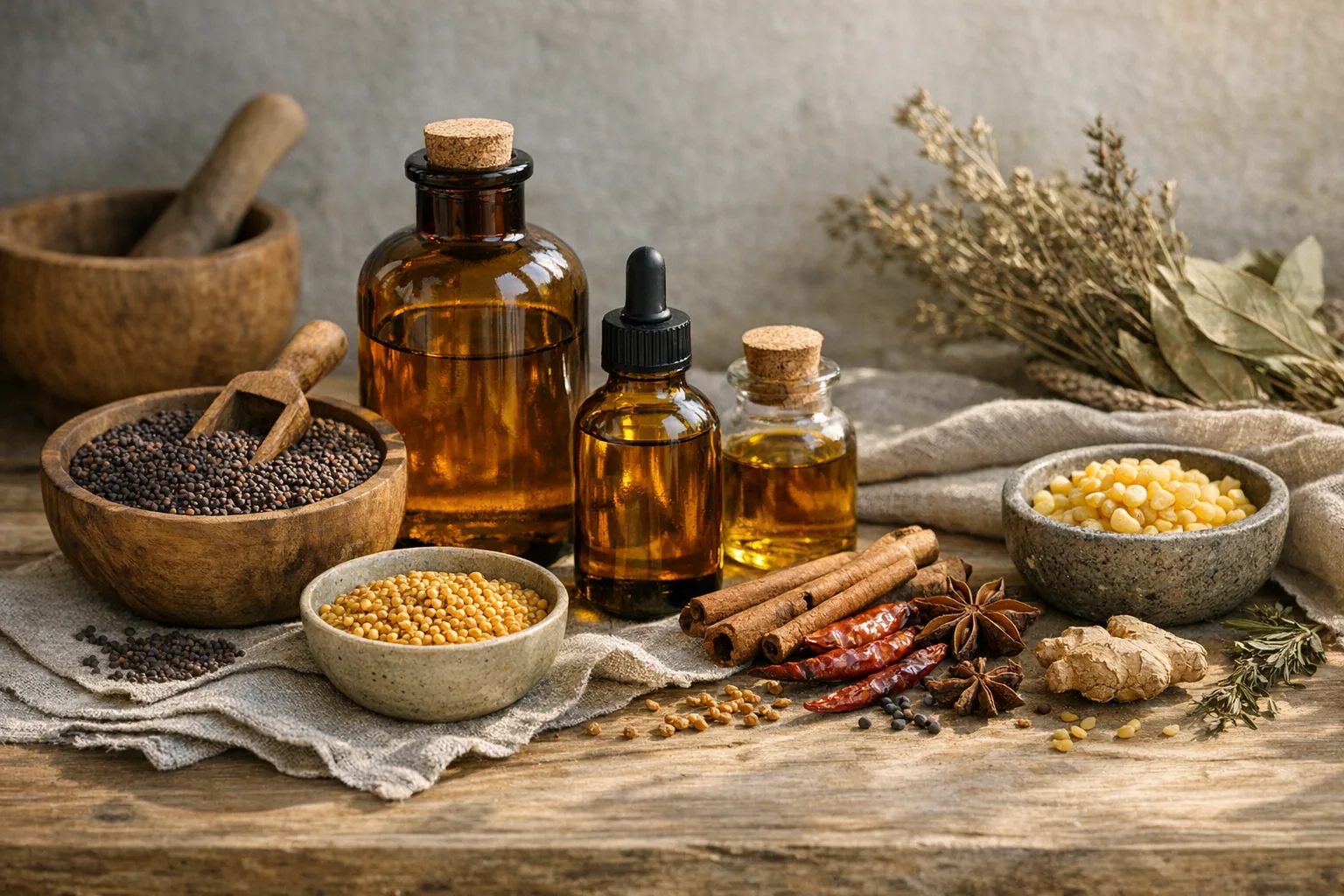
A traditional session usually starts with a short assessment: how the person feels that day, whether they have eaten recently, whether they have fever, dizziness, heavy menstruation, uncontrolled blood pressure, pregnancy or any relevant medical condition. Then warm oil is applied through massage. Sesame oil is often used for colder, drier states, while lighter or cooling oils may be chosen when there is a tendency toward heat.
The massage does not need to be intense. Its purpose is often to distribute the oil, warm the tissues and calm the nervous system. The oil protects the skin from dryness and gives the body a sense of containment. After the massage, the person enters the steam cabinet or receives local steam. In many Ayurvedic cabinets, the head stays outside to reduce facial heat and make breathing more comfortable.
Duration should be moderate. As a practical reference, many steam sessions last around 10 to 20 minutes, adjusted according to tolerance, age, constitution and season. The goal is not to endure as much heat as possible, but to reach gentle to moderate sweating without distress. If dizziness, palpitations, nausea, weakness, headache or shortness of breath appear, the session should stop immediately.
Temperature should feel warm and steady, not aggressive. When equipment allows control, the practitioner should avoid overheating and direct exposure to scalding vapour. This is especially important in local steam applications, where concentrated heat can irritate or burn the skin. After the session, it is advisable to rest for a few minutes, wipe sweat gently, drink warm water and avoid an immediate cold shower.
Herbs vary depending on the tradition and purpose. Aromatic leaves, warming herbs or mild decoctions may be used. The choice should not be based on scent alone: people with sensitive skin, asthma, allergies or migraines may react poorly to strong vapours.
Choosing according to dosha or season
For a Vata tendency — coldness, dryness, tension, irregular sleep or cracking joints — Swedana is usually gentle, warm, moist and combined with nourishing oil. The aim is to calm and soften, not to provoke heavy sweating. A short to medium session is often enough.
For Kapha states — heaviness, lethargy, congestion or sluggishness — slightly stronger heat may be tolerated, always within safe limits. The steam may be combined with a more stimulating massage or clearer aromatic herbs. Still, more heat does not automatically mean a better result. Excess heat can cause fatigue, dehydration or headache.
For Pitta tendencies — heat, irritability, reactive skin, inflammation or easy sweating — Swedana requires caution. In some cases it is avoided; in others it is applied briefly, with low heat and mild herbs. If someone already feels overheated, has red skin, acidity, fever or acute inflammation, steam is usually not appropriate.
Season matters too. In autumn and winter, when cold and stiffness are more common, Swedana often feels supportive. In spring it may help counter heaviness and congestion. In summer or during heat waves, the intensity should be reduced, the session shortened or replaced with a cooling practice.
Precautions and when to consult a professional
Swedana is not suitable for everyone. People with fever, acute infection, intense inflammation, open wounds, burns, dehydration, frequent dizziness, uncontrolled hypertension, significant cardiovascular conditions or a history of fainting with heat should avoid it or seek medical advice first. Caution is also recommended during pregnancy, in frail older adults and in anyone taking medication that affects blood pressure, sweating or temperature regulation.
Ayurveda traditionally advises against Swedana in conditions such as Raktapitta, involving bleeding or excessive heat, and Atisara, diarrhoea. In practical terms, avoid strong heat when the body is already losing fluids, when there is significant bleeding, acute inflammation or clear signs of overheating.
During menstruation, the decision depends on the person. If bleeding is heavy, energy is low, pain is strong or the body feels hot, it is better to avoid steam. If menstruation is light and the person is used to heat practices, a very gentle local application may be tolerated, but it is not necessary.
Swedana should not be done right after a meal. A sensible gap is at least two hours after a heavy meal. It should also be avoided after alcohol, intense exercise without rehydration or severe lack of sleep. Before and after the session, small sips of warm water are preferable to drinking a large amount all at once.
At home vs in a professional centre
The main advantage of a professional setting is control. A trained practitioner can assess whether Swedana is appropriate, adjust duration and intensity, choose suitable oils and herbs, and watch for signs of intolerance. Dedicated equipment also distributes steam more evenly and often keeps the head outside, which improves comfort.
At home, it is safer to adapt the idea rather than trying to recreate a professional steam cabinet. Improvised setups with boiling pots, blankets and enclosed spaces can cause burns, falls or overheating. A safer home version may be a short warm shower, a warm foot bath, a hot moist towel on the back or a very mild aromatic inhalation, avoiding strong essential oils and direct steam.
A simple foot bath can last 10 to 15 minutes with warm, not hot, water. It is not a full Swedana treatment, but it can provide warmth, relaxation and a grounded feeling without exposing the whole body to intense heat. For neck or lower back stiffness, a warm damp towel applied for 5 to 10 minutes may be enough.
A centre makes more sense when you want a complete treatment with oil massage, herbal steam and guided rest. Home practice is better understood as gentle maintenance, not an exact substitute.
FAQ
Does Swedana help with weight loss?
It should not be used as a weight-loss method. Any immediate weight change is mostly water loss and returns with hydration. Swedana can be part of a healthy routine, but it does not significantly burn fat on its own.
Is it the same as a sauna?
They are similar but not identical. A sauna usually involves dry heat or general steam, while Swedana is part of an Ayurvedic treatment that may include oil massage, herbs and individual adaptation. In many Swedana cabinets, the head remains outside, which changes heat tolerance.
Can I do it with sensitive skin?
It depends. Heat and herbs can irritate reactive skin, rosacea, dermatitis or inflammatory flare-ups. If tried at all, it should be low intensity, short and free from strong fragrances.
How often is it recommended?
There is no universal frequency. In an Ayurvedic programme it may be prescribed for a specific period; for general self-care, occasional use may be enough. Too much heat too often can increase dryness, fatigue or irritability.
Closing
Swedana looks simple, but its effectiveness depends on careful application. The point is not to sweat as much as possible, but to use moist heat wisely: the right intensity, the right duration, appropriate herbs and an honest reading of the person’s current state.
Used well, it can support relaxation, ease stiffness and create a deep sense of rest. Used carelessly, it can dehydrate, irritate or exhaust. As with many traditional therapies, safety depends less on the exotic name and more on thoughtful, moderate practice.
Ready for your next retreat?
Explore hundreds of retreats across Spain with transparent pricing.
Explore retreats