Vegetarian Buddha Bowl: How to Build a Balanced One
Retiru Team
The Retiru content team — yoga, meditation and ayurveda.
Vegetarian Buddha Bowl: How to Build a Balanced One
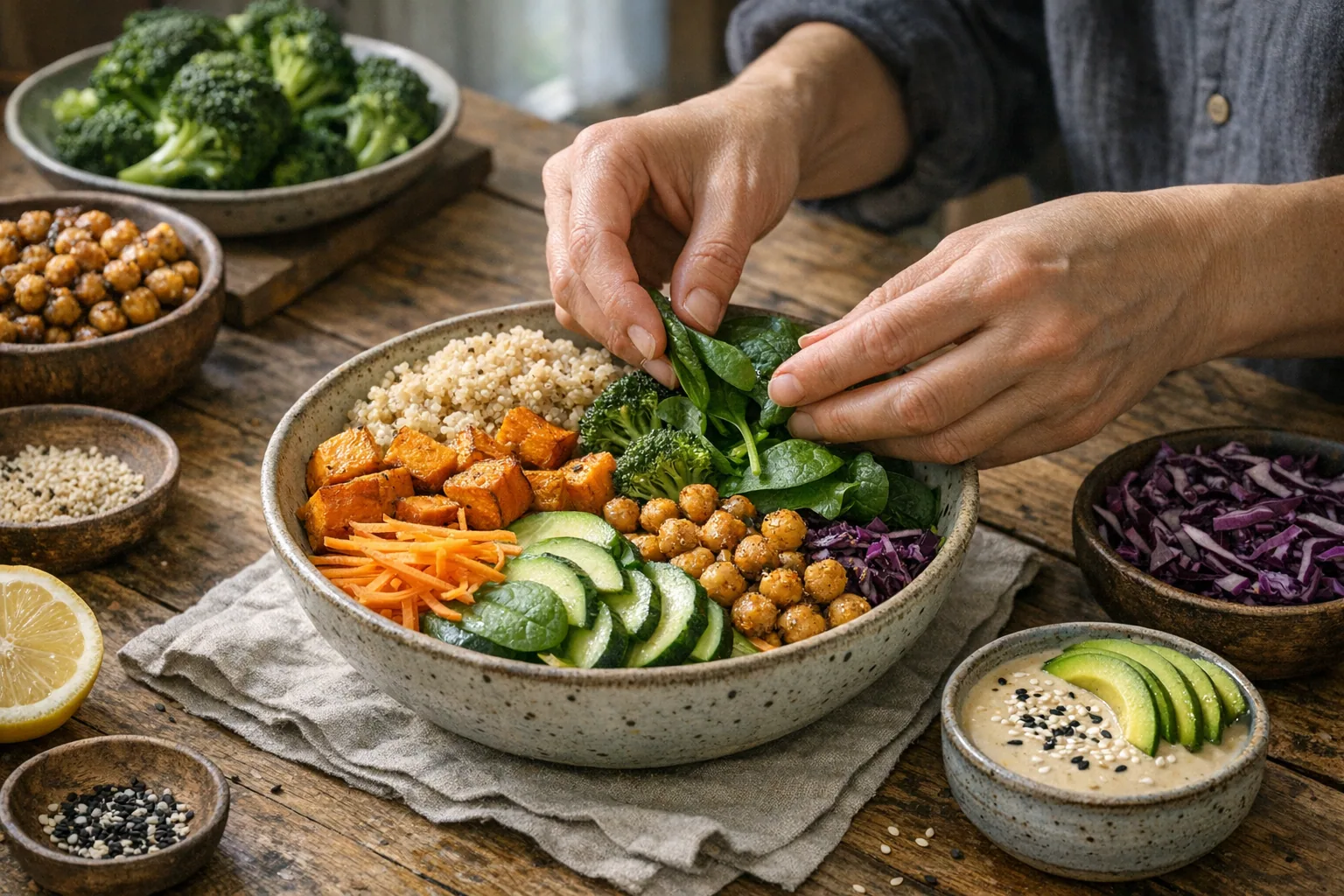
A vegetarian Buddha bowl is a complete meal served in a bowl: a grain or pseudograin base, a plant-based protein, cooked and raw vegetables, a healthy fat and a dressing that brings everything together. Its appeal lies in the contrast of colours, textures and temperatures. Still, a good bowl is not just a random mix of healthy ingredients; it needs proportion, seasoning and enough protein to be satisfying.
This kind of meal is useful because it is flexible, practical and easy to adapt to the season. It can help you eat more vegetables, use cooked legumes and prepare lunches in advance without spending hours in the kitchen. Compared with a light salad, it is usually more filling; compared with a fully cooked dish, it feels fresher and more varied. The key is to avoid turning it into a large serving of grains with a few toppings and too much sauce.
It works especially well as a main lunch, when you need steady energy for the rest of the day. It can also be a good early dinner if you choose more cooked vegetables and a slightly lighter portion. For meal prep, keep the dressing separate and add delicate ingredients such as avocado, cucumber and leafy greens just before eating.
Ingredients with Exact Quantities
Makes 2 generous main-course servings.
For the base and vegetables
- 120 g dry quinoa, rinsed well
- 240 ml water
- 1 pinch of salt
- 300 g sweet potato, diced into 2 cm cubes
- 200 g broccoli, cut into small florets
- 150 g cooked chickpeas, drained and rinsed
- 80 g fresh spinach or mixed leafy greens
- 120 g carrot, grated or cut into thin strips
- 100 g cucumber, sliced into half moons
- 80 g red cabbage, very finely sliced
- 1 tablespoon extra virgin olive oil, about 10 g
- 1 teaspoon sweet paprika
- 1/2 teaspoon ground cumin
- 1/4 teaspoon ground turmeric, optional
- Black pepper to taste
- Salt to taste
For the lemon tahini dressing
- 40 g tahini, about 2 heaped tablespoons
- 30 ml lemon juice
- 25 ml water, plus more if needed
- 10 g extra virgin olive oil, optional
- 1/2 garlic clove, grated, optional
- 1 teaspoon maple syrup, honey or date syrup, optional
- 1 pinch of salt
To finish
- 60 g avocado, sliced
- 10 g sesame, pumpkin or sunflower seeds
- Lemon or lime wedges
- Fresh parsley, coriander or chives to taste
Step-by-Step Preparation
- Preheat the oven to 200 ºC. Line a baking tray with parchment paper or use a wide oven dish. The sweet potato needs space to brown; if the pieces are crowded, they will steam and become soft rather than lightly caramelised.
- Rinse the quinoa in a fine sieve under running water for 30–40 seconds. Place it in a saucepan with 240 ml water and a pinch of salt. Bring to a boil, reduce the heat, cover and cook for 12–15 minutes, until the water is absorbed and the grains are tender. Turn off the heat, let it rest for 5 minutes and fluff with a fork.
- Toss the sweet potato with half the olive oil, salt, pepper and paprika. Spread it on the tray and roast for 25–30 minutes at 200 ºC, turning once halfway through. It should be tender inside and slightly golden outside.
- Pat the chickpeas dry with kitchen paper or a clean cloth. Mix them with the remaining oil, cumin, turmeric if using, salt and pepper. Add them to the tray for the last 15–18 minutes of roasting. They do not need to become fully crunchy; the goal is a drier, more flavourful texture.
- Steam the broccoli for 4–5 minutes, until bright green and still firm. You can also roast it for the last 12 minutes, although steaming tends to be gentler and keeps the florets fresher. Avoid overcooking, as mushy broccoli makes the bowl feel heavy.
- Prepare the raw vegetables while everything else cooks. Grate the carrot, slice the cucumber and cut the red cabbage as finely as possible. If the cabbage feels too tough, massage it for 30 seconds with a little lemon juice and a pinch of salt.
- Make the dressing. Put the tahini in a bowl with lemon juice, salt, garlic if using and the optional sweetener. Stir well. It may thicken at first; add water gradually until you get a creamy, pourable texture, similar to thin yoghurt. Adjust with more lemon, water or salt as needed.
- Assemble the bowls. Divide the quinoa between two bowls. Add the sweet potato, chickpeas, broccoli, leafy greens, carrot, cucumber and red cabbage. Finish with avocado, seeds, fresh herbs and the tahini dressing. Serve with a lemon or lime wedge.
- Check the final balance. A useful guide is half vegetables, one quarter grain or pseudograin and one quarter plant-based protein, plus a moderate amount of healthy fat and dressing. This simple structure prevents the bowl from becoming too grain-heavy or too rich.
Variations
Gluten-free version
This recipe is naturally gluten-free if you use certified gluten-free quinoa and check your spices and tahini. You can also use brown rice, buckwheat or millet. Brown rice works well with roasted vegetables and chickpeas, though it usually needs 35–40 minutes to cook. Buckwheat is faster, usually around 12–15 minutes, and adds a slightly nutty flavour.
Higher-protein version
For a more protein-rich bowl, add 150 g firm tofu per person or about 100 g tempeh. Cut it into cubes, marinate for 10 minutes with soy sauce, lemon and garlic, then pan-fry for 6–8 minutes until golden. If you add tofu or tempeh, reduce the quinoa or chickpeas slightly so the bowl stays balanced. If you eat dairy or eggs, you could also add natural Greek yoghurt as part of the sauce, fresh cheese or a boiled egg.
Warmer, easier-to-digest version
If raw vegetables or legumes tend to make you bloated, make the bowl more cooked and less raw. Replace raw cabbage with sautéed courgette, steamed carrot or wilted spinach. Use very soft chickpeas, rinse them well and start with a smaller portion. You can also soften the dressing by mixing tahini with natural yoghurt or blending roasted pumpkin with lemon and a little water.
Storage: Fridge and Freezer
Buddha bowls store best as separate components rather than fully assembled. Cooked quinoa keeps for 3–4 days in an airtight container in the fridge. Roasted sweet potato and broccoli keep for around 3 days, although broccoli will lose some colour and firmness. Spiced chickpeas keep for 3–4 days and can be refreshed in a pan or oven before serving.
The tahini dressing keeps for 4–5 days in a closed jar in the fridge. It will thicken when cold; add a teaspoon of water and stir before using. Cucumber, avocado and leafy greens are more delicate, so it is better to cut or add them on the day you eat the bowl. For packed lunches, carry the dressing separately and add seeds and avocado at the last moment.
For freezing, freeze only the quinoa, sweet potato and chickpeas. Portion them and use within about 2 months for the best flavour and texture. Do not freeze cucumber, raw greens, avocado or emulsified tahini dressing, as they change too much after thawing.
Reasonable Benefits
A well-built Buddha bowl can make a complete vegetarian meal easier to organise. Quinoa provides complex carbohydrates and some plant protein, chickpeas add fibre and satiety, and vegetables increase volume, texture and variety. The combination of cooked and raw elements makes the bowl more enjoyable than a plain salad.
The dressing is more important than it seems. It adds flavour, moisture and cohesion, helping vegetables and grains feel like one dish rather than separate leftovers. Tahini brings richness, so a moderate amount is enough. Lemon balances the sweetness of the sweet potato and the density of the legumes.
This type of recipe also teaches a practical way to build meals. Once you understand the structure—base, protein, vegetables, fat and dressing—you can improvise with what you have at home. That makes it easier to eat varied meals and use up cooked grains, roasted vegetables or legumes during the week.
Precautions: Who It May Not Suit
Although this bowl is suitable for many people, it may not be ideal in the same form for everyone. If you have irritable bowel syndrome, frequent bloating or poor tolerance to legumes, a large portion of chickpeas, broccoli and raw cabbage may feel uncomfortable. Reduce the legumes, choose more cooked vegetables and chew slowly.
If you are watching your energy intake, pay attention to the combination of tahini, olive oil, avocado and seeds. These foods are nutritious, but calorie-dense. You do not need to remove them; simply measure them. For two servings, 40 g tahini, 60 g avocado and 10 g seeds are already enough to add creaminess and flavour.
Anyone allergic to sesame should avoid tahini and use a yoghurt and lemon sauce, or a simple olive oil and mustard vinaigrette if tolerated. If you have coeliac disease, use certified gluten-free ingredients and check spices, sauces and bulk grains. If you follow a kidney-related diet or need to limit potassium, ask a professional before using large amounts of legumes, avocado and certain vegetables.
FAQ
Is a Buddha bowl eaten hot or cold?
It can be eaten warm, cold or with a mix of temperatures. The most pleasant version is often warm quinoa, sweet potato, chickpeas and broccoli with fresh raw vegetables on top. For a packed lunch, heat only the cooked components and add the fresh ones afterwards.
What is the best proportion?
Use half vegetables, one quarter cooked grain or pseudograin and one quarter plant-based protein. Then add a measured amount of healthy fat and dressing. If you are still hungry, increase vegetables or protein before doubling the grain base.
Can I use canned chickpeas?
Yes, canned chickpeas are practical and work well. Drain them, rinse them under running water and dry them before seasoning or roasting. This improves flavour and helps the spices stick.
What can I use instead of tahini?
Try natural yoghurt with lemon, olive oil, salt and herbs. You can also blend avocado with lime, water, salt and a little garlic for a creamy sauce. For a lighter option, use a lemon and olive oil vinaigrette with mild mustard.
Final Note
A balanced vegetarian Buddha bowl is not about exotic ingredients. It is about thoughtful proportions, enough protein, plenty of vegetables and a dressing that ties everything together.
Ready for your next retreat?
Explore hundreds of retreats across Spain with transparent pricing.
Explore retreats