Udvartana: a guide to Ayurvedic dry powder massage
Retiru Team
The Retiru content team — yoga, meditation and ayurveda.
Introduction
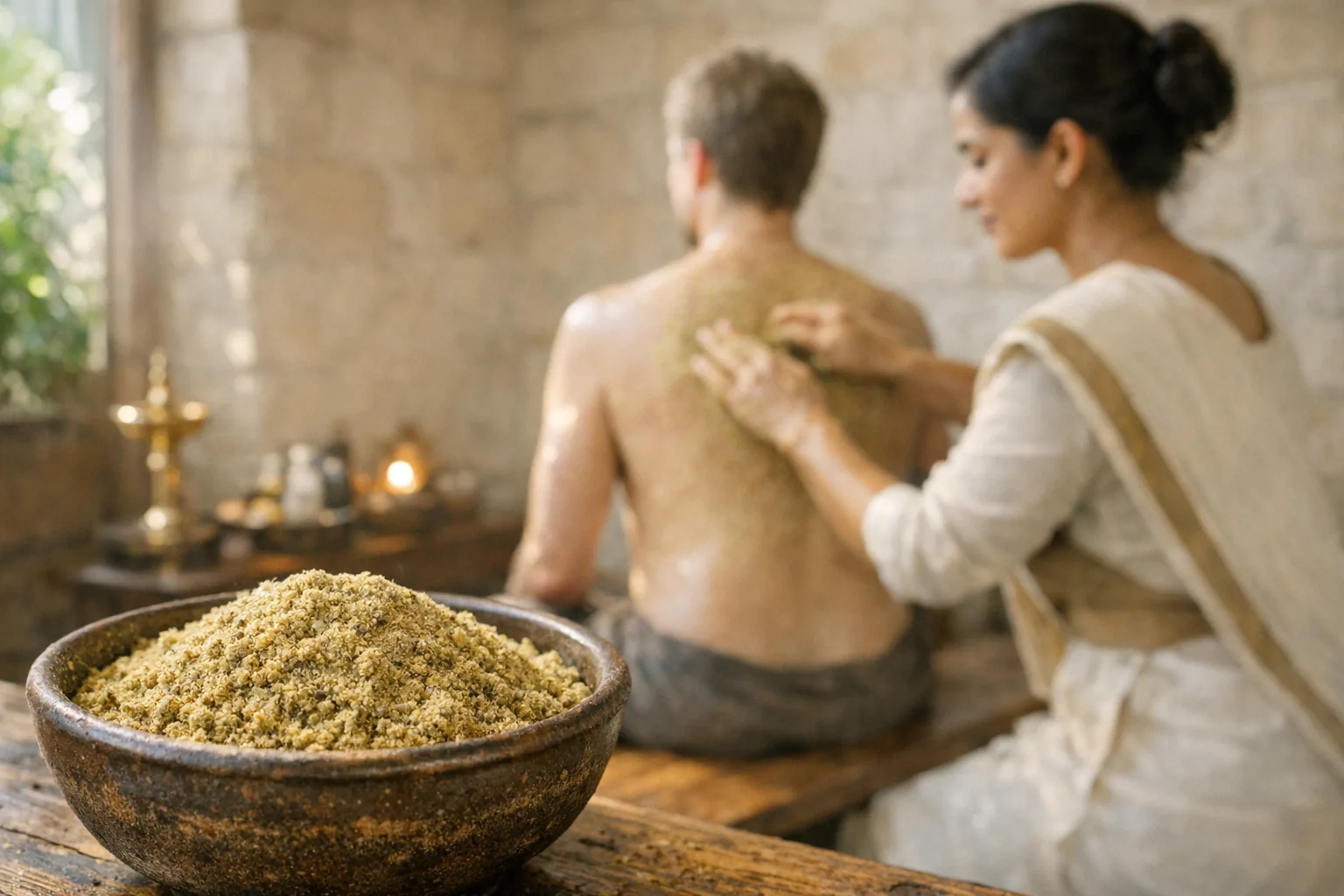
Udvartana is one of the most distinctive Ayurvedic body treatments because it moves away from the familiar image of warm oil massage. Instead of gliding over the skin with oil, the practitioner uses herbal powders, fine flours or a lightly moistened paste, applying them with rhythmic friction. The experience is closer to a therapeutic exfoliation than to a slow relaxation massage: warming, stimulating and physically energising.
In Ayurveda, Udvartana is traditionally associated with reducing excess kapha, the quality linked with heaviness, sluggishness, oiliness and accumulation. This should be understood with care. Udvartana is not a miracle slimming treatment, it does not replace medical care, and it should not be presented as a cure for metabolic or neurological conditions. Its practical value lies mainly in mechanical skin stimulation, temporary improvement in skin texture, superficial circulation and the feeling of lightness many people experience after a session.
This guide explains what Udvartana is, how it is applied, which powders are commonly used, how it may be adapted according to dosha or season, and when it is better to avoid it or seek professional advice.
What Udvartana is in Ayurveda
Udvartana is often translated as an upward massage or upward friction. In Ayurvedic practice, it refers to rubbing the body with dry powders, medicated powders or herbal pastes, often against the direction of hair growth. This direction is known as pratiloma. It creates more friction than oil massage and is traditionally used to stimulate the skin and reduce the sensation of heaviness.
Unlike Abhyanga, which uses warm oil and tends to be nourishing and calming, Udvartana is drier, more active and more stimulating. For this reason, it is often associated with kapha constitutions or kapha season, especially late winter and spring, when people may feel more congested, dull, heavy or slow.
There are several forms of Udvartana. Some are fully dry, using fine powders such as legume flours or herbal blends. Others are prepared as a paste by adding warm water, herbal decoctions or a small amount of oil, depending on the person’s constitution. In some traditions, a light oil massage is performed first and powder is then applied to remove excess oil and increase friction.
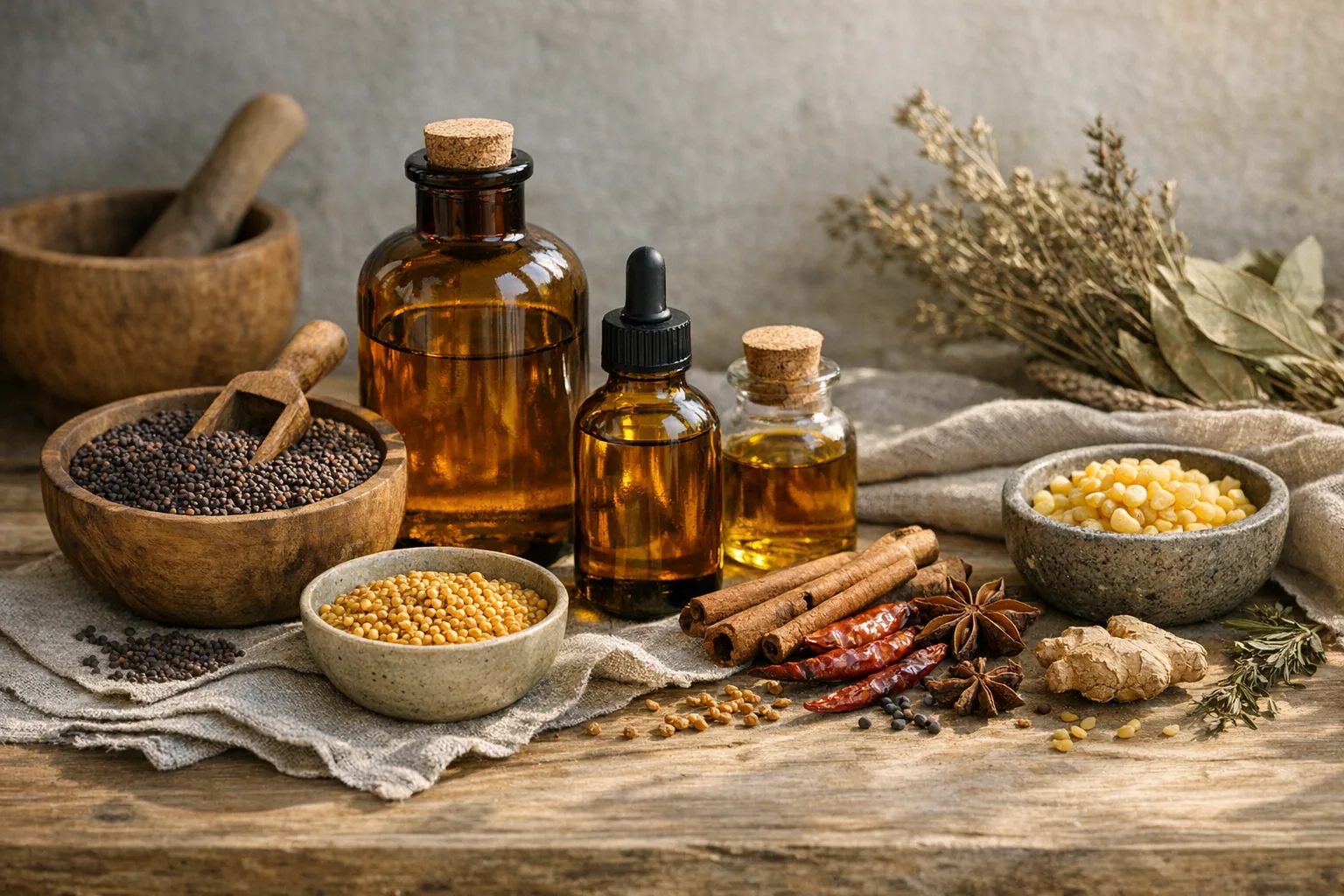
Powder choice matters. In professional settings, practitioners may use Triphala churna, astringent herbal powders, chickpea flour, barley flour, green mung flour or specific Ayurvedic formulations. At home, it is better to keep things simple and choose mild, finely ground, non-irritating ingredients. The texture should be soft and uniform, not scratchy.
Traditional uses and attributed benefits
The most immediate effect of Udvartana is exfoliation. Fine powder rubbed over the skin helps remove dead cells, sweat residue and superficial impurities, leaving the skin smoother and cleaner. Many people describe the treatment as lightening, awakening and toning, particularly when it is performed in a warm room with steady, confident movements.
Physically, friction can increase local warmth and stimulate superficial blood flow. This does not mean that Udvartana directly burns fat, but it may temporarily improve the appearance of the skin and the perception of firmness. This is why it is often mentioned in relation to cellulite, slackness or body heaviness. Any deeper or lasting effect depends on broader habits such as movement, nutrition, sleep and overall health.
In Ayurvedic language, Udvartana is said to open blocked channels, reduce the oily quality of kapha and promote clarity in the body. In practical terms, it may suit people who feel heavy, cold, dull or prone to oily skin, provided there is no active irritation or skin disease. Some traditions also mention relief from itching and improved skin lustre, but persistent itching, eczema, urticaria or inflammation should be assessed by a healthcare professional first.
Udvartana may also have an indirect mental effect. Its firm rhythm, steady pressure and warming action can help shift inertia and create a sense of energy. It is not a sedative treatment in the way a slow warm-oil Abhyanga can be. It is usually better suited to the morning or early afternoon than to late evening, especially for people who are sensitive or prone to insomnia.
How it is applied: powder, massage, duration and temperature
A professional Udvartana session usually lasts 30 to 45 minutes, sometimes longer if combined with mild steam, a shower or rest afterwards. At home, it is better to start with 10 to 15 minutes and observe how the skin responds. The aim is not aggressive rubbing. The skin may become warm and slightly pink, but it should not feel painful, scratched or burning.
The room should be warm, ideally around 24–26 °C, with no draughts. Dry powder can feel cooler than oil, and a cold room makes the treatment uncomfortable, especially for vata-type people. In professional settings, the powder may be gently warmed in a dry container or with indirect heat, but it must always feel comfortable to the touch.
For a full-body treatment, around 80 to 150 g of powder may be needed, depending on body size and technique. For a small home practice, 2–4 tablespoons are enough for legs, arms or abdomen. A simple blend might include very fine chickpea flour and colloidal oat powder or green mung flour. Stronger herbal preparations, such as Triphala churna, are best used when you already know your skin tolerates them or under professional guidance.
The classical direction is upward and against hair growth. On arms and legs, movements go from the extremities towards the centre of the body. On thighs, buttocks and abdomen, circular or diagonal friction may be used, avoiding strong pressure over varicose veins, painful areas or a sensitive belly. Joints are treated with gentle circular movements. Chest, neck, armpits and groin require great care or may be skipped.
There are two common preparations. The first is dry Udvartana, where powder is applied directly to dry skin. This is the most stimulating version and is generally more suitable for kapha, oily skin or damp seasons. The second is a light paste, made by adding warm water, a gentle hydrosol or a few drops of oil until the texture becomes creamy but slightly granular. This is kinder for dry skin and vata constitutions.
After the friction, the powder can rest on the skin for 2–5 minutes if comfortable, then be rinsed off with a warm shower. Full-body soap is usually unnecessary because the powder already acts as a physical cleanser. After drying, the skin may need light hydration: a few drops of sesame, almond or fractionated coconut oil, or a neutral moisturiser. If the skin feels tight or irritated, the technique was too strong or the powder was unsuitable.
Choosing according to dosha or season
In Ayurveda, Udvartana is adapted to the person and the season. The dry and vigorous version is considered especially appropriate for kapha because it counterbalances dampness, heaviness, coldness and sluggishness. In spring or humid climates, it may feel particularly useful, provided the skin tolerates it well. For kapha, dry, astringent and mildly stimulating powders are usually preferred.
For vata, the approach is different. Vata is associated with dryness, coldness, lightness and irregularity, so strong dry friction can increase dryness or nervous discomfort. A vata person may do better with a short, gentle version and some oil beforehand. For example, apply 1–2 tablespoons of warm sesame oil to the area, wait a few minutes and then use a fine powder with moderate friction. A duration of 8–12 minutes may be enough.
For pitta, the key is avoiding heat and irritation. Pitta often involves sensitivity, redness and reactivity, so mild powders, moderate pressure and a warm but not hot room are preferable. Very spicy blends, strong essential oils and prolonged rubbing should be avoided. In hot weather or during periods of skin redness, calming treatments may be more appropriate.
Season matters too. In late winter and spring, when heaviness is more common, Udvartana can work well as an occasional activating practice. In peak summer, if the skin is hot, sweaty or reactive, intensity should be reduced. In dry autumn or winter, especially for thin or tight skin, warm oil massage is often more suitable than dry powder friction.
Precautions and when to seek professional advice
Udvartana is not suitable for everyone. Avoid it over wounds, sunburn, active dermatitis, psoriasis flare-ups, eczema, urticaria, skin infections, folliculitis, inflamed body acne or recently waxed skin. It is also not recommended during fever, acute illness, significant inflammation, undiagnosed pain or extreme fatigue. Friction can worsen irritated skin and turn a useful treatment into unnecessary stress.
People with pronounced varicose veins, fragile capillaries, circulatory disorders, lymphoedema, neuropathy, diabetes with reduced sensation, anticoagulant treatment or a history of thrombosis should seek medical advice before trying it. During pregnancy, strong friction on the abdomen, lower back or legs should not be done without specialised guidance. After surgery, childbirth or during chronic illness, professional clearance is the safer option.
Allergies also matter. Ayurvedic blends may contain herbs, spices, legumes or ingredients that are not always clearly listed. Before using a new powder, test a small amount on the inner forearm and wait 24 hours. If itching, redness, bumps or burning appear, do not use it. Essential oils are not necessary for Udvartana and may increase irritation risk.
A common mistake is thinking that stronger pressure means better results. It does not. The skin should feel stimulated, not punished. Another mistake is using rough particles such as coarse salt or poorly ground homemade scrubs. Udvartana works best with fine, dry, homogeneous powders applied with rhythm and care.
At home vs in a professional centre
Home practice can be useful if it remains simple and cautious. Start with resilient areas such as legs and arms, once a week. Choose a mild powder, avoid sensitive zones and watch how your skin feels the next day. If there is tightness, flaking or itching, reduce frequency, add oil beforehand or stop.
A safe home routine could be: clean dry skin, warm room, 2–4 tablespoons of fine chickpea or mung flour, upward friction for 10 minutes, warm shower and moisturiser. Daily practice is unnecessary for most people. Once a week or every ten days is often enough. Oily and resilient skin may tolerate twice weekly use for short periods, but it should not become a rigid obligation.
In a professional setting, the value lies in personalisation. A trained practitioner can adjust pressure, direction, powder blend, duration and whether oil or steam is appropriate. This is particularly important if you have sensitive skin, want a full-body session or wish to include Udvartana within a broader Ayurvedic routine.
A serious centre should ask about allergies, medication, skin conditions, pregnancy, circulatory issues and pressure preferences. If there is no intake conversation or if exaggerated promises are made about weight loss or cures, it is wise to be cautious.
FAQ
Does Udvartana help with weight loss?
It may create a feeling of lightness and temporarily improve skin texture, but it does not remove fat on its own. Weight loss depends on consistent habits such as nutrition, movement, sleep and metabolic health. In Ayurveda, Udvartana is linked with excess kapha, but it should be seen as supportive body care, not a standalone slimming treatment.
Is it the same as body exfoliation?
They are similar, but not identical. Cosmetic exfoliation focuses mainly on removing dead skin cells. Udvartana also involves direction, rhythm, pressure and powder selection according to constitution or season. The upward, against-the-grain friction is one of its defining features.
Can I do it if my skin is dry?
Yes, but modify it. Avoid a strong, fully dry version. Use a mild paste or apply a little warm oil first. Keep the session short, around 8–12 minutes, and observe the skin afterwards. If the skin is cracked, inflamed or eczematous, do not do it.
Which powder is best for beginners?
For home use, start with fine and gentle flours such as chickpea, colloidal oat or well-ground green mung. Ayurvedic herbal formulas such as Triphala churna can be interesting, but they should be used carefully because some skins react to concentrated plant blends. Always patch test first.
Closing
Udvartana looks simple, but it is a nuanced Ayurvedic technique. Its value does not come from rubbing hard or using exotic ingredients. It comes from adapting powder, pressure, duration and timing to the person. When done well, it can help activate the body, smooth the skin and create a pleasant feeling of lightness, especially when heaviness or oiliness is present.
The key is not to exaggerate its promises. Udvartana does not replace exercise, nutrition or medical treatment when a health condition exists. As a body-care practice, it can have a useful place in a grounded routine: brief, respectful of the skin and adapted to season, constitution and real-life needs.
Ready for your next retreat?
Explore hundreds of retreats across Spain with transparent pricing.
Explore retreats