Ginger, Lemon and Honey Tea: Recipe and Uses
Retiru Team
The Retiru content team — yoga, meditation and ayurveda.
Ginger, Lemon and Honey Tea: Recipe and Uses
Ginger, lemon and honey tea is a warm infusion made with fresh ginger root, lemon juice and a small amount of honey. It has a bright, spicy and slightly sweet flavour: the ginger brings heat, the lemon adds freshness, and the honey softens the edges. Although it is often associated with winter and sore throats, it can also be a useful caffeine-free drink after a heavy meal or on days when plain water feels unappealing.
Its appeal is its simplicity. You only need a few ingredients, and the strength can be adjusted easily depending on your tolerance. Ginger contains aromatic compounds such as gingerols and shogaols, which give it its characteristic pungency. Lemon contributes acidity and aroma, while honey gives body and a soothing mouthfeel. It is important, however, to see this drink as a comforting infusion, not as a cure for colds, flu or digestive conditions.
The best time to drink it depends on your purpose. In the morning, it can feel gently energising without caffeine. After lunch or dinner, a mild cup may be pleasant for people who tolerate ginger well and want something warm to finish the meal. In the evening, it is better to make it lighter, with less ginger and less lemon, especially if you are prone to reflux. On cold days, the warmth and steam may provide temporary comfort for a dry throat or stuffy nose.
Ingredients with exact quantities
For 1 large cup, about 250 ml:
- 250 ml water.
- 10 g fresh ginger root, about 4 or 5 thin slices.
- 15 ml freshly squeezed lemon juice, about 1 tablespoon or the juice of 1/2 small lemon.
- 7 g honey, about 1 heaped teaspoon.
- 1 thin strip of lemon peel, optional, yellow part only and well washed.
For 1 litre, about 4 cups:
- 1 litre water.
- 35-40 g fresh ginger root, peeled or thoroughly washed.
- 60 ml freshly squeezed lemon juice.
- 28-35 g honey, adjusted to taste.
- 4 thin strips of lemon peel, optional.
Fresh ginger gives a cleaner and more aromatic result than ground ginger. If you only have ground ginger, use 1/4 level teaspoon per cup and strain carefully, as the texture can be slightly powdery. Choose any honey you like, but remember that stronger honeys will influence the final flavour. Lemon is best squeezed just before serving, so the drink tastes fresher and less bitter.
Step-by-step preparation
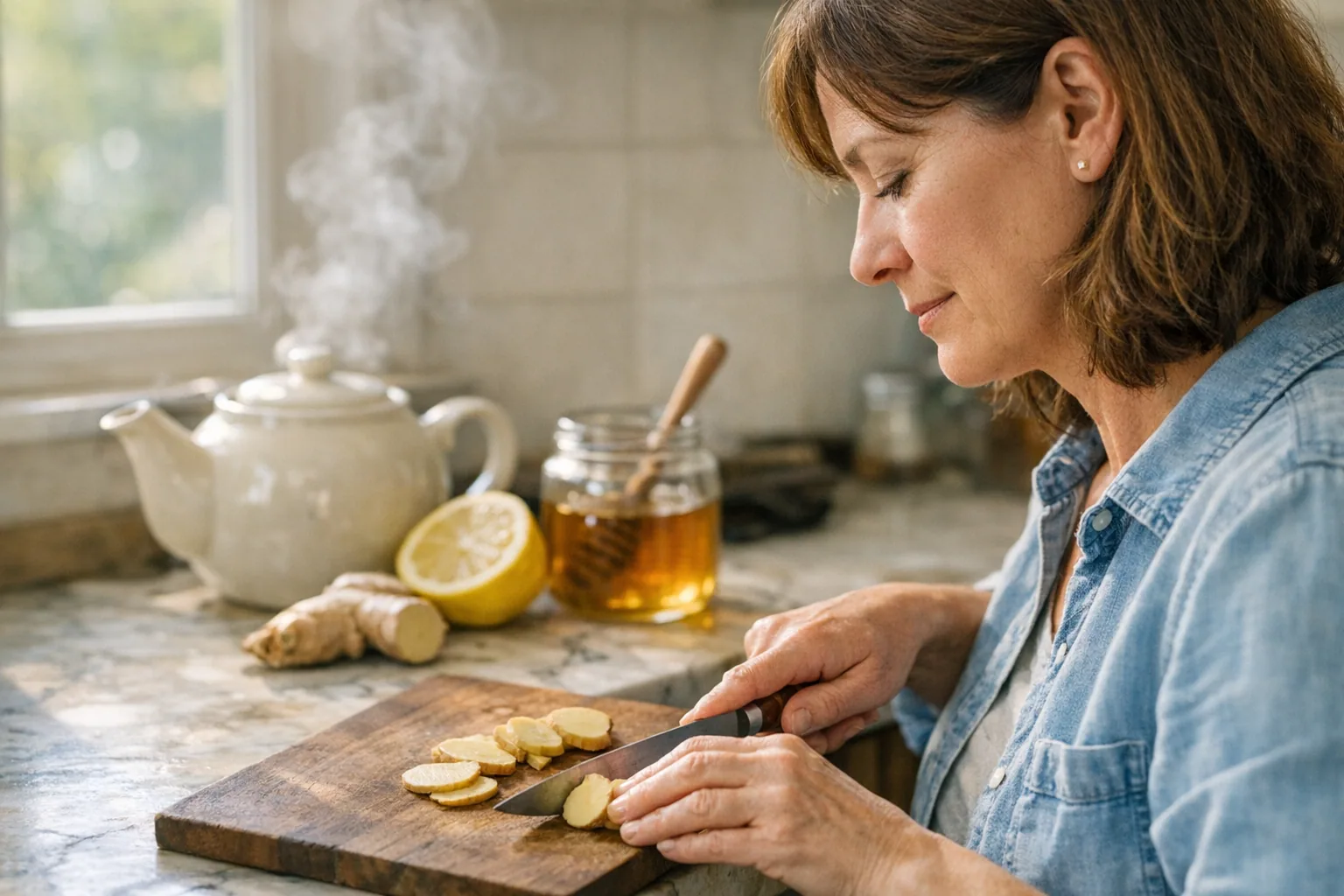
- Wash the ginger under running water. Peel it if you prefer, or scrub the skin well with a small brush. Slice it thinly, around 2 mm thick, or lightly crush the slices with the side of a knife. More exposed surface means a stronger infusion. For a balanced cup, 10 g is enough; for a stronger drink, use 12-15 g.
- Heat 250 ml water in a small saucepan until it reaches a gentle boil. If you use a thermometer, aim for about 95 °C. Add the ginger, reduce the heat to low and let it simmer gently. Avoid a harsh rolling boil, which can make the infusion taste rough and overly sharp.
- Simmer for 8-10 minutes for a standard cup. If you prefer a more intense flavour, extend the time to 12-15 minutes, but avoid going much longer. Keep the pan partly covered to preserve aroma. The liquid should turn pale golden and smell fresh, warm and slightly spicy.
- Turn off the heat and let it rest for 2 minutes. Strain into a cup using a fine sieve. If you added lemon peel, remove it at this stage. This short resting time rounds out the flavour and allows the tea to cool slightly before adding honey.
- When the drink is hot but no longer boiling, ideally below 50 °C, add the lemon juice and honey. Stir until the honey dissolves completely. Adding honey and lemon at the end keeps the flavour brighter and avoids unnecessary bitterness from overheated lemon.
- Taste and adjust. If it is too strong, add 30-50 ml hot water. If it is too acidic, add honey in very small amounts. If it tastes flat, add a few extra drops of lemon or let a fresh slice of ginger sit in the cup for 1 minute.
Variations
Gentle evening version
Use 6-8 g fresh ginger, 10 ml lemon juice and 5 g honey per cup. Infuse for only 6-8 minutes and skip the lemon peel. This version is less spicy and less acidic, so it is usually more comfortable in the evening. It is not a sedative, but it can be a good alternative to caffeinated drinks.
Stronger cold-weather version
Use 12-15 g ginger per cup and simmer for 12 minutes. Add a strip of lemon peel during cooking, then finish with 15 ml lemon juice and 7-10 g honey. The result is sharper, warmer and more aromatic. If it irritates your throat or stomach, reduce the amount of ginger; stronger does not always mean better.
Simple Ayurvedic-style adjustment
In practical Ayurvedic terms, ginger is considered warming and stimulating. People who often feel cold or heavy after meals may prefer a slightly stronger cup. Those prone to heat, acidity, reflux or irritation should reduce both ginger and lemon, or drink it only occasionally. The most useful guide is your own response: the drink should feel comforting, not burning or drying.
Iced version
Make a concentrate with 500 ml water and 30 g ginger. Simmer for 10 minutes, strain and let it cool. Add 30 ml lemon juice and 15-20 g honey while still slightly warm, then top up with another 500 ml cold water. Serve with ice and a lemon slice. Keep the sweetness moderate, because cold drinks can hide sugar and become heavy quickly.
Storage in the fridge and freezer
This tea tastes best freshly made, especially because lemon aroma fades over time. Still, you can prepare a larger batch and keep it in the fridge for 24-48 hours in a sealed glass bottle or jar. Reheat gently over low heat or in the microwave at medium power, without boiling. A few drops of fresh lemon before serving will bring back brightness.
For better flavour, store only the ginger concentrate without lemon or honey. Simmer 40 g ginger in 1 litre water for 12 minutes, strain and chill. This concentrate keeps for up to 2 days in the fridge. When you want a cup, heat a portion and add lemon and honey just before drinking.
You can also freeze the ginger concentrate in ice cube trays for 2-3 months. Add one or two cubes to hot water for a quick infusion. Freezing the finished drink with lemon and honey is possible, but the flavour becomes flatter after thawing. Label the container with the date if you prepare homemade infusions regularly.
Reasonable benefits
The main benefit of this drink is that it makes hydration easier when you want something warm and flavourful. During cold weather or when your throat feels dry, a warm infusion can be more pleasant than plain water. Honey gives a smooth texture and may temporarily soothe throat irritation, although it does not treat the underlying cause. The steam from the cup can also give a short-lived feeling of clearer breathing.
Ginger has a long culinary tradition as a digestive ingredient, and many people enjoy it after heavy meals. Its spicy flavour stimulates saliva and creates a warming sensation. However, tolerance varies. In some people, ginger and lemon can increase heartburn or stomach discomfort. Start with a moderate amount, such as 8-10 g fresh ginger per cup, before trying stronger versions.
Lemon adds freshness and a modest amount of vitamin C, but it does not make the tea an immune shield. Overall diet, sleep, movement and medical care when needed matter far more than a single drink. Honey should also be treated as a sweetener, even when it is natural and aromatic. Around 7 g per cup is usually enough to balance the lemon without making the drink overly sweet.
Precautions: who should avoid it
Do not give honey to babies under 12 months because of the risk of infant botulism. For young children, ginger should also be used cautiously and in mild amounts. If symptoms include high fever, breathing difficulty, severe pain, persistent worsening or dehydration, tea is not a substitute for medical advice. It can support comfort and fluids, but it is not a treatment.
People with reflux, active gastritis, ulcers, frequent heartburn or sensitivity to spicy foods may find this drink irritating. In that case, try a very mild version or avoid it. It can also feel harsh on an empty stomach if made too concentrated. If you notice burning, nausea or pain, reduce the amount or stop drinking it.
If you take anticoagulants, antiplatelet medication, diabetes medication or blood pressure medication, speak with a healthcare professional before consuming strong ginger tea daily. The same applies if you have gallstones, a bleeding disorder or scheduled surgery. During pregnancy, ginger is sometimes used for nausea, but dose and suitability should be personalised. Honey should be moderated in diabetes or insulin resistance.
Lemon is acidic and may affect tooth enamel if taken very frequently or in concentrated form. To reduce this effect, avoid sipping it for long periods, drink some water afterwards and wait about 30 minutes before brushing your teeth.
FAQ
Can I use ground ginger instead of fresh ginger?
Yes, but the flavour will be different. Use 1/4 level teaspoon per cup, steep for 5 minutes and strain well. Ground ginger tastes drier and less fresh than the root. For regular use, fresh ginger gives better aroma and more control.
How many cups a day are reasonable?
For most healthy adults, 1 or 2 cups a day with 8-10 g fresh ginger per cup is a sensible amount. There is no need to drink it all day or make it very concentrated. If you feel heartburn, digestive discomfort or unpleasant heat, reduce the amount. If you take medication or have a chronic condition, ask a professional before making it a daily habit.
Should I boil the lemon with the ginger?
Usually, no. Lemon tastes fresher when added at the end, away from direct heat. Boiling it can make the drink more bitter, especially if the white part of the peel is included. If you want citrus aroma during cooking, add only a thin strip of yellow peel and remove it before serving.
Can I drink it on an empty stomach?
It depends on your tolerance. Some people enjoy it in the morning, while others feel acidity or irritation. If you try it on an empty stomach, make it mild: 6-8 g ginger, a little lemon and a small amount of honey. If you have reflux or gastritis, it is better after food or not at all.
Closing
Ginger, lemon and honey tea works best when it is balanced: enough ginger to give character, lemon added at the end, and just enough honey to soften the acidity. The recipe is simple, but the details of temperature, steeping time and proportion make the difference between a pleasant infusion and one that feels too aggressive.
Ready for your next retreat?
Explore hundreds of retreats across Spain with transparent pricing.
Explore retreats