Homemade Miso Soup: A Simplified Traditional Method
Retiru Team
The Retiru content team — yoga, meditation and ayurveda.
Introduction
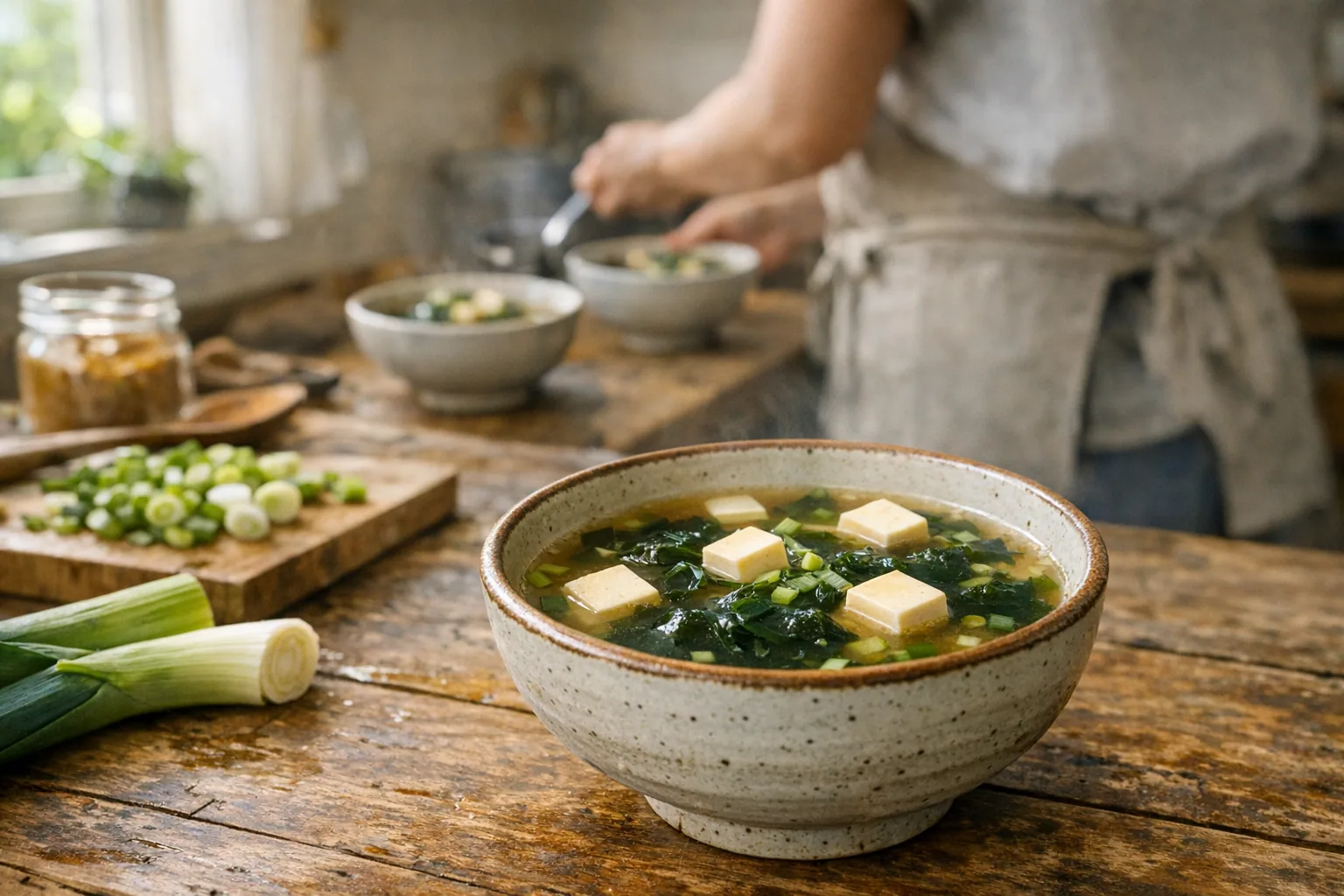
Miso soup is one of the most familiar dishes in everyday Japanese cooking. At its simplest, it combines dashi broth, miso paste, tofu, wakame seaweed and spring onion, although home versions vary widely. It is not meant to be thick or heavy. Its appeal lies in the balance between the umami of the broth, the saltiness of the miso and the soft texture of the ingredients in the bowl.
This simplified version keeps the traditional logic without making the process complicated. Classic dashi is made with kombu seaweed and katsuobushi, dried bonito flakes that give the broth depth and a clean savoury taste. A plant-based version can be made with kombu and dried shiitake mushrooms. The most important rule is simple: miso should not be boiled. It is dissolved at the end, off the heat or over very gentle heat, so the aroma stays round and fresh.
Miso soup works well as a starter, a light dinner or a side dish with rice, vegetables or fish. It is especially pleasant on cold days, when you want something warm but not overly filling. It should not be treated as a cure or a miracle food; it is simply a practical, warming and flexible recipe. Once you understand the order of the steps, it can become a quick everyday dish.
Ingredients with exact amounts
For 4 medium bowls:
- 1 litre cold water
- 10 g dried kombu seaweed
- 15 g katsuobushi, dried bonito flakes, for the traditional version
- 8 g dried wakame seaweed
- 180 g firm or silken tofu
- 60 g miso paste, about 3 heaped tablespoons
- 40 g spring onion or tender leek
- 5 ml soy sauce, optional and only if the broth tastes too mild
- Extra hot water, if needed for soaking or rinsing ingredients
For a plant-based dashi:
- Replace the 15 g katsuobushi with 10 g dried shiitake mushrooms
- Keep the 10 g kombu
- Use the same amount of water, 1 litre
White miso, or shiro miso, is milder and slightly sweet. Red miso, or aka miso, is stronger and saltier. Mixed miso, often called awase miso, is a good middle ground. If this is your first time making miso soup, start with 50 g of miso, taste, and increase to 60 g if needed. Saltiness varies a lot between brands.
Step-by-step preparation
- Soak the wakame for 5 minutes. Place the 8 g dried wakame in a bowl of cold or lukewarm water. It will expand significantly, so do not add more than the recipe suggests. Drain well and cut into smaller pieces if necessary. Set aside; wakame only needs brief heating.
- Prepare the kombu gently. Wipe the surface with a slightly damp cloth to remove dust, but do not scrub it thoroughly. The pale coating on kombu contributes to umami. Put the kombu in a saucepan with 1 litre of cold water. If you have time, let it soak for 20 minutes before heating.
- Heat without boiling the kombu. Warm the pan over medium heat until the water reaches about 80–85 °C. If you do not have a thermometer, look for small bubbles forming at the bottom and sides of the pan, but remove the kombu before a rolling boil. Boiling kombu can make the broth taste bitter or overly marine. This usually takes 8 to 10 minutes.
- Add the bonito flakes. Turn off the heat and add the 15 g katsuobushi. Let it infuse for 5 minutes without stirring too much. The flakes will slowly sink and release their flavour. Strain through a fine sieve. Avoid pressing the flakes hard, as this can make the broth cloudy and slightly harsh.
- For plant-based dashi, adjust the method. Soak the kombu and 10 g dried shiitake in 1 litre of water for at least 30 minutes, or up to 2 hours if possible. Heat gently to 80–85 °C, remove the kombu and leave the shiitake for another 5 minutes. Strain. The soaked mushrooms can be sliced and added to the soup, removing any tough stems.
- Cut the tofu and spring onion. Dice the 180 g tofu into roughly 1.5 cm cubes. Silken tofu gives a delicate texture but breaks easily; firm tofu is easier to handle. Slice the spring onion thinly and keep some of the green part for serving. It should add freshness, not dominate the soup.
- Warm the solid ingredients. Return the strained dashi to the pan over low heat. Add the tofu and soaked wakame. Heat for 2 to 3 minutes, just until the tofu is warm and the seaweed is tender. Avoid vigorous boiling. The soup should be hot but calm.
- Dissolve the miso separately. Turn off the heat. Take a ladle of hot broth and mix it with the 60 g miso in a small bowl. Stir with chopsticks, a small whisk or a spoon until smooth. This prevents salty lumps from settling at the bottom of the soup.
- Add the miso off the heat. Pour the dissolved miso back into the pan and stir gently. The ideal serving temperature is around 65–75 °C: hot, but not boiling. If the soup has cooled too much, warm it over very low heat for 1 minute, making sure it does not boil. Taste before adding soy sauce; it is often unnecessary.
- Serve immediately. Divide the soup into bowls, making sure each portion has tofu, wakame and enough broth. Add spring onion just before serving. The final texture should be light and clear, with warm tofu, tender seaweed and a savoury but not overpowering broth.
Variations
Gluten-free version
Miso soup can be gluten-free, but it is not automatically so. Some miso pastes are made with barley or wheat, so read the label and choose rice miso or soy miso certified gluten-free. Soy sauce is another point to check; use gluten-free tamari or leave it out. Traditional kombu and bonito dashi is naturally gluten-free, but instant dashi powders may contain additives or traces.
Higher-protein version
To make the soup more filling, increase the tofu to 250 g for 4 portions or add cooked edamame, a separately poached egg or cooked chicken strips. You can also serve it with rice for a more complete meal. If adding soba noodles, cook them separately so they do not cloud the broth. The soup should remain light and brothy rather than crowded.
Gentle plant-based version
For a good vegan umami base, use kombu and dried shiitake. You can add sliced mushrooms, very thin carrot or pak choi, but keep the quantities moderate. Hard vegetables should be cut finely so they cook in 3 or 4 minutes without boiling the soup aggressively. This version tastes earthier and less marine than bonito dashi.
Storage in the fridge and freezer
Miso soup is best freshly made, especially because miso keeps its aroma better when added just before serving. If you want to prepare ahead, make the dashi and store it without miso, tofu or wakame. It keeps well in the fridge for up to 3 days in a sealed container. You can also freeze dashi for 2 to 3 months, ideally in 250–500 ml portions.
Once miso has been added, the soup can be refrigerated for about 24 hours, but it will lose some freshness. Reheat it over low heat and do not let it boil. Boiling does not make it unsafe, but it dulls the aroma and can affect the tofu texture. Freezing finished miso soup with tofu and wakame is not recommended, as both change texture.
A practical approach is to keep dashi ready, tofu in the fridge and dried wakame in the pantry. Then you can make miso soup in under 10 minutes: heat the broth, add tofu and soaked wakame, turn off the heat and dissolve the miso.
Reasonable benefits
Miso soup is a simple way to include a warm, hydrating and savoury dish in a meal. The broth gives volume without heaviness, while tofu adds a moderate amount of plant protein. Wakame contributes minerals and a little fibre, although it should not be exaggerated as a nutritional solution. As a starter, it can help create a slower, more grounded meal.
Miso is a fermented paste usually made from soybeans with rice or barley, depending on the type. Fermentation gives it aroma and a distinctive umami flavour. Still, it is not a miracle food and should be seen as part of a varied diet. It is also salty, so the amount matters. In this recipe, 60 g for 4 servings is enough to flavour the soup without making it excessively salty.
The recipe is also useful for people who want to cook more at home without spending much time. Once the method is clear, you can adapt it with homemade vegetable broth, prepared dashi or a kombu-based infusion. The order is what matters most: broth first, ingredients second, miso at the end.
Precautions and who should avoid it
The main caution is sodium. Miso, soy sauce and some instant dashi products can add a significant amount of salt. If you have high blood pressure, kidney disease, fluid retention or follow a low-sodium diet, reduce the miso, avoid soy sauce and ask a health professional if unsure. You can start with 35–40 g miso per litre and adjust gently.
Seaweed also requires moderation. Kombu and wakame contain iodine, which is necessary but can be problematic in excess, especially for people with thyroid conditions. If you have hyperthyroidism, treated hypothyroidism, thyroiditis or are under endocrine monitoring, avoid eating seaweed daily without professional guidance.
This soup is not suitable for people with soy allergy if made with soy miso and tofu. Those sensitive to histamine may also react to fermented foods such as miso. For coeliac disease, choose gluten-free miso and check all broths, sauces and seasonings carefully.
FAQ
Can I make miso soup without dashi?
Yes, but the flavour will be less traditional. Use a mild vegetable broth, preferably homemade and not too salty. To get closer to dashi-like umami, add kombu while heating or soak dried shiitake in the broth. Avoid heavily spiced stock.
Why should miso not be boiled?
Miso is added at the end to preserve its aroma and delicate fermented character. If it boils, the soup is not ruined or unsafe, but the flavour becomes flatter. A strong boil can also make the texture less smooth. Dissolving it separately helps it blend evenly.
Which tofu is best?
It depends on the texture you want. Silken tofu is soft and delicate but breaks easily. Firm tofu is easier for beginners and holds its shape well. For everyday cooking, firm or medium tofu is usually the most practical choice.
How much miso should I use per person?
A useful guide is 12–15 g miso per person, depending on the strength of the paste. For 1 litre of broth and 4 servings, 50–60 g usually works well. If using red or very salty miso, start with less. It is easier to add more than to fix an overly salty soup.
Brief closing
Homemade miso soup depends on a few small but important details: make a clean broth, warm the ingredients gently and add the miso away from boiling heat. With that base, you can adapt the soup to your pantry, your salt tolerance and the kind of meal you need that day.
Ready for your next retreat?
Explore hundreds of retreats across Spain with transparent pricing.
Explore retreats