Sesame Oil in Ayurveda: Uses, Quality and Precautions
Retiru Team
The Retiru content team — yoga, meditation and ayurveda.
Introduction
Sesame oil holds a central place in many Ayurvedic routines because it is rich, stable, warming and well suited to body oiling practices. In Ayurveda it is traditionally associated with nourishment, lubrication and grounding, which is why it is often used for dryness, stiffness, coldness or a sense of restlessness. Still, it should be approached with precision. Sesame oil is not a universal remedy, it does not replace medical care, and not every skin type or constitution responds to it in the same way.
Its best-known use is abhyanga, the Ayurvedic practice of applying warm oil to the body through massage. It also appears in traditional oral care practices, such as oil rinsing, and in more specific applications that should be guided by trained professionals. Because sesame oil is so popular, many claims around it have become exaggerated. This guide focuses on what is practical: what sesame oil is, how it is used, how to choose a good-quality product and when it is better to avoid it.
What sesame oil means in Ayurveda
Sesame oil is extracted from the seeds of Sesamum indicum. In Ayurvedic language, it is considered one of the most important base oils, especially when the aim is to bring warmth, moisture and stability. Traditionally, it is often recommended for balancing vata, the dosha associated with movement, dryness, lightness, coldness and irregularity. This is why it is commonly used in colder seasons, in dry climates and for people who experience dry skin or bodily tension.
This traditional framework should not be confused with a medical diagnosis. When Ayurveda speaks about dryness, coldness or stiffness, it is using its own observational language around the body and lifestyle. That language can be useful for choosing self-care routines, but it should not be used to diagnose skin disease, joint problems or digestive disorders. Persistent pain, inflammation, fever, infection, wounds or allergic reactions require appropriate professional care.
In Ayurvedic practice, sesame oil may be used plain or as a carrier for herbal preparations. Many classical medicated oils are made by processing herbs in an oily base, and sesame is a common choice. For home use, however, it is usually wiser to start with simple, good-quality sesame oil and assess tolerance before using complex herbal formulas or strongly aromatic blends.
Uses and traditionally attributed benefits
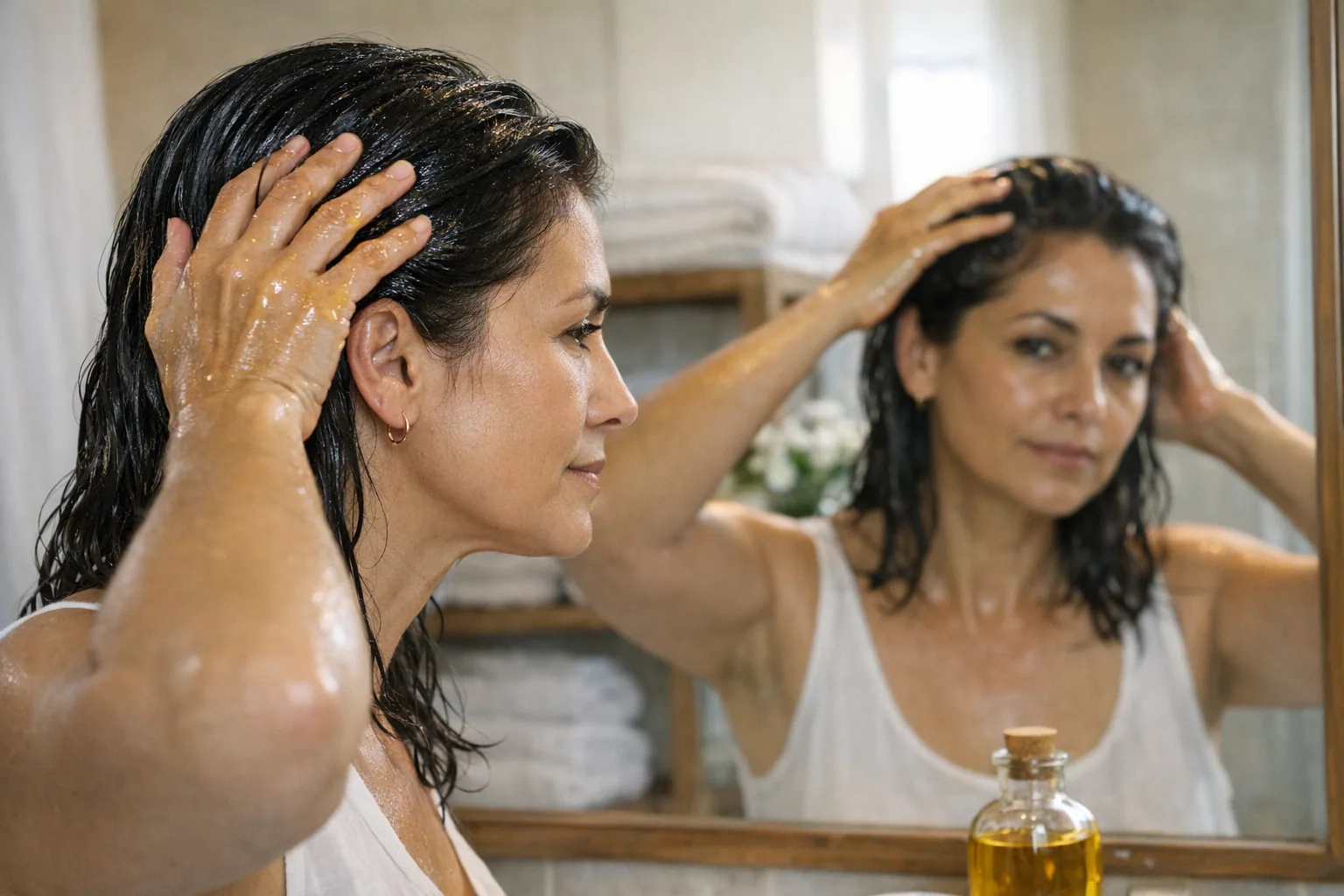
The most common use is abhyanga, a warm oil massage applied with steady, rhythmic movements. Traditionally, it is described as a practice that nourishes tissues, calms the nervous system, cares for the skin and prepares the body before bathing. In practical terms, many people experience it as a way to reduce the feeling of tight skin, soften mild muscular tension and create a quiet pause in the day.
Sesame oil is also used on specific dry areas such as feet, hands, elbows, knees and the lower back. In winter, or for people who spend long hours sitting, warm oil can feel particularly comforting because it combines local heat, touch and gentle movement. The routine does not need to be long to be useful. A simple 10-minute application done consistently is often more realistic than an elaborate ritual that becomes difficult to maintain.
Another classic use is oral care through kavala or gandusha, practices that involve rinsing or holding oil in the mouth. In modern language this is often called oil pulling. Some descriptions mention vigorous rinsing with sesame oil for around 20 minutes, although that may be too long for beginners. A more practical approach is to start with 3–5 minutes and increase only if it feels comfortable. The oil should always be spat out, not swallowed.
Sesame oil is also mentioned in certain nasal practices, such as nasya, where small amounts of oil or prepared formulas are applied to the nostrils. This requires caution. Not every oil is suitable for nasal use, and it should be avoided during acute congestion, sinus infection, nosebleeds, respiratory difficulty or irritation. For most people at home, body massage and local application to dry areas are the safer options.
How to apply it: oil, massage, timing and temperature
For abhyanga, the oil is usually warmed slightly before use. A good reference is body temperature, around 37–40 °C. Place a small amount in a glass container and warm it in a water bath for a few minutes. Avoid overheating it, and be careful with microwaves, as they can create hot spots that increase the risk of burns.
The amount depends on the area and your skin type. For a full self-massage, 2–4 tablespoons of oil, roughly 30–60 ml, are usually enough. For a short routine focusing on feet, hands and abdomen, one tablespoon may be sufficient. The goal is not to soak the body in oil, but to create enough glide for the hands to move without friction. If your skin remains excessively greasy for hours, you are probably using too much.
A practical sequence is to apply oil to the feet, legs, arms, abdomen and any accessible areas of the back. Use long strokes on long bones and circular movements around joints. Pressure should be moderate and comfortable, never painful. On the abdomen, move gently in a clockwise direction and avoid pressure if there is pain, heavy digestion or menstrual discomfort.
A realistic home routine lasts 10 to 20 minutes. If you have time, let the oil sit for another 10–30 minutes before taking a warm shower. You do not need to scrub the entire body with soap; washing areas such as armpits and groin may be enough, while leaving some softness on the skin. Be careful in the shower, as oil makes surfaces slippery. Use a non-slip mat and clean the floor afterwards.
For oral rinsing, use a teaspoon or a small tablespoon, not more than you can comfortably move around. Swish gently between the teeth without straining the jaw, spit it into the bin rather than the sink, then rinse with water and brush as usual. Oil pulling does not replace brushing, flossing or dental check-ups.
How to choose good-quality sesame oil
Quality matters because the oil is in direct contact with the skin and, in oral practices, with the mouth. For massage, look for cold-pressed sesame oil, preferably unrefined and from a reliable food-grade or cosmetic-grade source. A high-quality culinary oil can be suitable for the skin as long as it is pure, unflavoured and not blended with lower-quality oils.
It is useful to distinguish between light sesame oil and toasted sesame oil. Toasted sesame oil, commonly used in Asian cooking, has a strong aroma and darker colour. It may be excellent in food, but it is not always ideal for massage. The smell can be overpowering, it may stain more easily and some people find it heavy on the skin. For abhyanga, a lighter, untoasted sesame oil is usually more comfortable.
Check the label. Ideally, it should say 100% sesame oil, with no added perfumes, mineral oils, unnecessary preservatives or undeclared blends. If it is sold as a medicated Ayurvedic oil, ingredients and instructions should be clearly listed. Avoid oils with no traceability, no best-before date or a rancid smell. Oxidised oil can irritate the skin and is unpleasant to use.
Store it in a cool place, away from light, and keep the bottle tightly closed. If you buy a large bottle, decant a small weekly amount into a smaller container and keep the rest protected. The smell should be pleasant, mildly nutty or seed-like. If it smells like old frying oil, paint, dampness or rancidity, discard it.
Choosing according to dosha or season
From an Ayurvedic perspective, sesame oil is especially linked to vata because of its warm, oily and grounding qualities. It may be a good fit in autumn and winter, in dry or cold climates, and for people who notice dry skin, light sleep, restlessness or physical tension. In these cases, a warm application in the evening or before a shower can feel very supportive.
For pitta states — heat, redness, irritability, sweating or reactive skin — sesame oil should be used more carefully. Because it is warming, it may feel too intense in hot weather or on inflamed skin. Some traditions prefer more cooling oils, such as coconut or sunflower, depending on the person and context.
For kapha states — heaviness, sluggishness, water retention or very oily skin — sesame oil may feel excessive if applied generously. This does not mean it is forbidden, but it may be better to use less, reduce frequency or apply it only to dry areas such as feet or joints. A shorter, more invigorating massage before showering may be more suitable than a long, heavy oiling session.
Precautions and when to seek advice
The first precaution is allergy. Sesame is a recognised food allergen, and some people may also react to it on the skin. If you have never used it before, apply a small amount to the inner forearm and wait 24 hours. If itching, redness, hives, burning or swelling appears, do not use it.
Do not apply sesame oil to open wounds, recent burns, active dermatitis, infected skin, oozing eczema or intensely inflamed areas. Although some traditional sources mention oil use for skin complaints, self-treatment may worsen certain conditions by trapping heat, moisture or irritants. If there is pus, spreading redness, fever, pain or heat in the area, seek medical advice.
Avoid deep massage over marked varicose veins, suspected thrombosis, phlebitis, significant bruising or a leg that is swollen and painful on one side. In these cases the issue is not only the oil but the mechanical pressure of massage. People with neuropathy, diabetes-related sensory changes, circulation problems or recent surgery should also be cautious.
During pregnancy, gentle external oiling may be well tolerated if there is no allergy, but deep pressure, intense abdominal massage and medicated oils should be avoided unless professionally advised. For babies and children, use very small amounts and simple products only. Nasal, internal or therapeutic uses should not be improvised at home.
At home vs in a professional setting
At home, sesame oil works best as a simple, repeatable routine. You might use it once or twice a week in winter, or more often for short periods if your skin responds well. Create safe conditions: warm oil, a warm room, towels that can be stained, a protected floor and enough time not to rush afterwards.
A home session does not need to reproduce a full Ayurvedic treatment. Ten minutes of mindful self-massage, calm breathing and a warm shower can be enough. This version is useful for people with busy schedules, mild stiffness or a desire to build a steadier relationship with rest and body care.
In a professional setting, sesame oil may be part of broader treatments such as full abhyanga, medicated oils, local applications or gentle sweating afterwards. The advantage is that a trained practitioner can adapt pressure, amount, oil choice and contraindications. A good session should include a basic intake and should avoid exaggerated promises such as curing disease or “detoxifying everything”.
FAQ
Can I use sesame oil every day?
It depends on your skin, climate, season and how your body responds. Dry skin in cold weather may tolerate frequent use well. Oily skin, humid climates or a tendency to breakouts may require less. Start with 2–3 times per week and adjust.
Is toasted sesame oil suitable for massage?
It can be used if it is pure and well tolerated, but it is usually not the most comfortable option. Its smell is strong, its colour is darker and it may feel heavy. A lighter, cold-pressed sesame oil is generally preferred for body massage.
How long should oil pulling last?
Some versions mention up to 20 minutes, but beginners do not need to start there. Begin with 3–5 minutes and increase only if there is no jaw discomfort, nausea or irritation. Always spit the oil out and continue normal dental hygiene.
Will sesame oil stain clothes?
Yes, it can leave greasy marks, especially if too much is used. Wear old clothes or a washable robe, shower before dressing and keep a dedicated towel for oil massage.
Closing
Sesame oil is a simple, versatile and affordable tool within Ayurvedic self-care when used with good judgement. Its value lies not in grand claims, but in something practical: warmth, lubrication, touch and a pause in the body. Choosing a good oil, warming it gently, using the right amount and respecting precautions makes the difference between a helpful routine and an uncomfortable one.
As with any traditional practice, the key is adaptation. If your skin tolerates it and it helps you rest, sesame oil can become a steady self-care habit. If it causes irritation, heaviness or uncertainty, stop and seek appropriate advice.
Ready for your next retreat?
Explore hundreds of retreats across Spain with transparent pricing.
Explore retreats