Plant Protein: Complete Sources Without Overcomplicating It
Retiru Team
The Retiru content team — yoga, meditation and ayurveda.
Context and why plant protein feels confusing
Plant protein is often presented in two exaggerated ways. Some people assume that a few salads and vegetables are enough, while others believe that without meat, eggs or dairy it is impossible to meet protein needs. The truth is more practical: a plant-based diet can provide enough high-quality protein, but it needs protein-dense foods, not only vegetables, fruit and refined grains.
The key is to understand two things: how much protein you need and how amino acids are distributed in plant foods. You do not need to calculate every gram or combine rice and lentils in the same meal every single time. But you do need a basic structure. If your meals regularly include legumes, soy foods, nuts, seeds, whole grains and, when useful, a simple protein powder, reaching your target becomes much easier.
This guide is for vegans, vegetarians, flexitarians or anyone who wants to eat more plant-based meals without losing nutritional quality. It is also useful if you exercise, want more filling meals or need simple weekly meal ideas that do not rely on highly processed meat substitutes.
What plant protein is and what complete means
Protein is a macronutrient made of amino acids. Some amino acids can be produced by the body, while others are essential and must come from food. A complete protein provides all nine essential amino acids in adequate proportions for human needs.
Animal proteins usually have this amino acid profile naturally. Plant proteins are more varied. Some plant foods are complete on their own, such as soy and soy products, quinoa, buckwheat, amaranth and hemp seeds. Others are rich in protein but lower in one essential amino acid. Legumes tend to be lower in methionine, while many grains are lower in lysine.
This does not mean plant proteins are poor or useless. It means variety matters. A day that includes oats with seeds, lentils with rice and tofu with vegetables will provide a much better amino acid profile than relying on one single plant food.
As a general reference, many nutrition guidelines use 0.8 g of protein per kilogram of body weight per day for healthy sedentary adults. A 70 kg adult would start at around 56 g per day. Needs may be higher with strength training, older age, pregnancy, breastfeeding, injury recovery or weight-loss diets, so individual advice can be helpful.
Benefits, with realistic expectations
Plant protein often comes packaged with fiber, minerals, antioxidants and complex carbohydrates. This is one of its main advantages. A bowl of chickpeas does not only provide protein; it also brings soluble fiber, folate, iron and steady energy. This can support fullness, regular bowel movements and a more diverse gut microbiota.
Plant protein can also be affordable and easy to store. Lentils, beans, chickpeas, textured soy protein, peanut butter, seeds and oats can help build complete meals without special products. Canned legumes are especially useful when time is limited; rinsing them improves flavor and reduces sodium.
The nuance is that not all plant protein sources play the same role. Quinoa is complete, but a normal cooked portion provides less protein than tofu or tempeh. Nuts contain protein, but they are also high in fat, so they are nutritious but not always the most efficient way to raise protein intake. Plant milks only contribute meaningful protein when they are soy-based or specifically fortified with enough protein.
It also helps to distinguish minimally processed foods from highly processed meat alternatives. Plant burgers, sausages and nuggets can be convenient occasionally, but some are high in salt, refined oils or starches and may contain little protein. Reading the label matters: a useful product should provide a clear amount of protein per serving.
Complete plant protein sources and useful combinations
Practical complete sources
- Firm tofu: usually provides around 12–17 g of protein per 100 g, depending on the brand and water content. It works well baked, pan-fried, scrambled or blended into sauces.
- Tempeh: often provides 18–20 g per 100 g. Because it is fermented, it has a firmer texture and stronger flavor.
- Edamame and whole soybeans: edamame provides roughly 11 g per 100 g and is easy to add to salads, bowls and stir-fries.
- Soy milk: usually contains about 3 g of protein per 100 ml. A 250 ml glass can add 7–8 g if the product is not diluted.
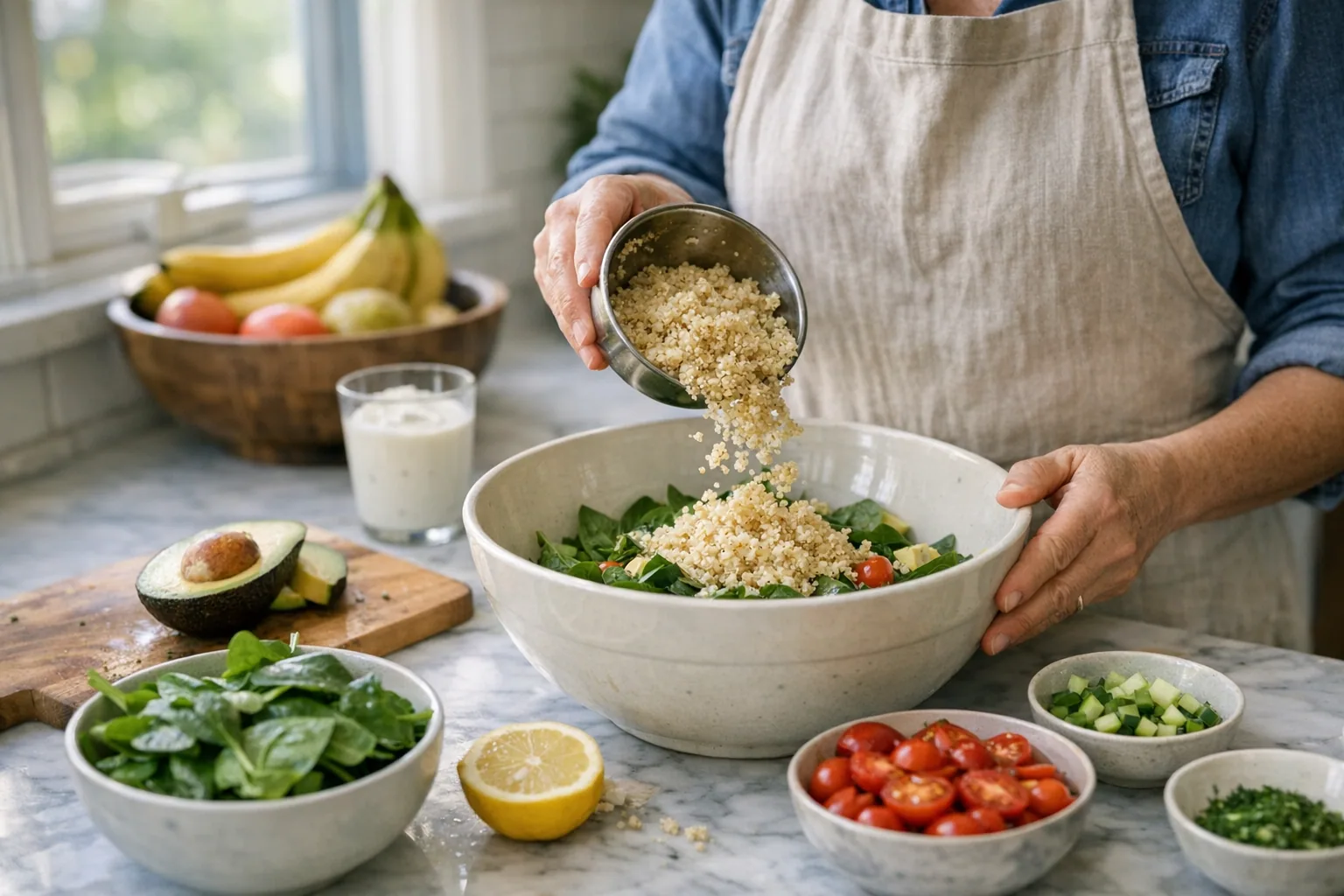
- Quinoa: provides about 4 g per 100 g cooked. It is complete, but for a higher-protein meal it pairs well with legumes, tofu or seeds.
- Buckwheat: naturally gluten-free and useful as groats, flour or 100% buckwheat noodles.
- Amaranth: less common, but useful in porridge, soups or mixed with other grains.
- Shelled hemp seeds: a complete source that also provides healthy fats. A 20–30 g serving may add around 6–10 g of protein, depending on the product.
Not complete, but still valuable
- Cooked lentils: around 9 g of protein per 100 g. They combine well with rice, wholegrain bread, couscous or potatoes.
- Cooked chickpeas: about 8–9 g per 100 g. Useful in stews, hummus, salads or roasted snacks.
- Beans: often 7–9 g per 100 g cooked, with plenty of fiber and fullness.
- Peas: useful in soups, stir-fries and legume-based pasta.
- Seitan: can exceed 20 g per 100 g, but it is not complete and is unsuitable for coeliac disease or gluten sensitivity.
- Oats: higher in protein than many common grains and easy to combine with soy milk, hemp seeds and nut butter.
- Nuts and nut butters: almonds, peanuts and pistachios add protein, though they should also be counted as fat sources.
- Pumpkin, chia, flax, sesame and sunflower seeds: not usually the main protein source, but they improve the nutritional value of breakfasts, salads and soups.
Simple combinations that work
You do not need to combine amino acids mathematically at every meal. Still, traditional combinations make nutritional sense. Legumes plus grains are the classic example: lentils with rice, chickpeas with wholegrain couscous, beans with corn or hummus with wholegrain bread. Grains plus nuts or seeds also work well, such as oats with hemp seeds and peanut butter.
A practical plate formula is: one main plant protein, one quality carbohydrate, vegetables and one healthy fat. Examples include tofu with brown rice and broccoli, chickpeas with quinoa and roasted vegetables, tempeh with potatoes and salad, or lentil pasta with tomato sauce and olive oil.
Signs of too little or too much protein
Low protein intake over several weeks or months can show up in non-specific ways. Possible signs include loss of muscle mass, weakness, persistent tiredness, slower recovery after exercise, poor wound healing, fragile hair or nails, and increased hunger between meals. Severe deficiency can cause edema, but this is uncommon when total food intake is adequate.
In plant-based diets, the issue is often not zero protein but low protein density. This happens when meals are large in volume but low in actual protein: salads without legumes, fruit-only breakfasts, vegetable soups without tofu or seeds, or white pasta with little topping. It can also happen in older adults, people with low appetite, athletes with high training loads or those following overly restrictive weight-loss diets.
Excess protein deserves some attention too, especially when it comes mainly from powders and processed products. Large amounts of protein powder may displace fiber-rich foods, fruit, vegetables and healthy fats. Some people also experience bloating, gas or digestive discomfort with high amounts of pea protein, textured soy protein or sweeteners used in supplements.
Healthy people usually tolerate moderately high protein intakes well, but anyone with kidney disease, liver disease or specific medical advice should not raise protein intake without professional guidance.
How to include it day to day
A simple strategy is to spread protein across three or four meals instead of leaving it all for dinner. This improves satiety and makes the daily total easier to reach. A breakfast with soy milk, oats, hemp seeds and peanut butter provides much more protein than coffee with white toast and jam.
At lunch and dinner, make sure there is a visible protein source. Vegetables and brown rice are nutritious, but they are not enough on their own. Add 150–200 g of cooked legumes, 120–180 g of tofu or tempeh, a serving of seitan if you tolerate gluten, or legume pasta when you need a fast meal.
Soy can be especially useful. Including tofu, tempeh, edamame, unsweetened soy yogurt or soy milk several times per week makes it easier to meet protein needs without complicated planning. If you dislike tofu, press it, marinate it with low-salt soy sauce, lemon, garlic and smoked paprika, then bake it for 20–25 minutes at 200 °C until firm and golden.
To improve legume digestion, start with small portions and increase gradually. Red split lentils, tofu, tempeh and hummus are often easier to tolerate than large portions of whole beans. Soaking dried legumes, discarding the soaking water, cooking them thoroughly and using spices such as cumin, bay leaf or fennel may also help.
Protein powder is optional. It can be useful if you train, eat little, travel often or struggle to meet your needs with food alone. Common options include pea, rice, soy or blends. A typical serving provides 20–25 g of protein. It should complement a solid diet, not replace balanced meals every day.
Precautions and special situations
Plant protein is not automatically suitable for everyone in every form. Soy is safe for most people, but not for those with soy allergy. If you take levothyroxine for thyroid treatment, it is sensible to separate the medication from very high-fiber meals, soy-heavy meals or mineral supplements according to medical advice, as absorption can be affected.
Seitan must be avoided in coeliac disease and gluten sensitivity. People with irritable bowel syndrome may tolerate some legumes poorly because of FODMAPs. In that case, firm tofu, tempeh, small portions of edamame, red split lentils or well-rinsed canned legumes may be easier. Tolerance is individual, and forcing foods that cause strong symptoms is unnecessary.
During pregnancy and breastfeeding, vegetarian and vegan diets can be appropriate, but they need planning. Protein is only one part of the picture; vitamin B12, iodine, iron, vitamin D, calcium and omega-3 also matter. In vegan diets, B12 should not be left to chance and usually requires supplementation or reliable fortified foods.
Children, teenagers, older adults, people with kidney disease, eating disorders or those recovering from surgery should avoid improvising. Protein matters, but total energy, micronutrients, digestion and appetite matter too.
FAQ
Do I need to combine rice and lentils in the same meal?
No. Combining legumes and grains is useful, but it does not have to happen in the same meal. If you eat varied plant protein sources across the day, your body can access the essential amino acids it needs.
What is the most complete plant protein?
Soy stands out because of its amino acid quality, protein density and versatility. Tofu, tempeh, edamame, soy milk and soy yogurt are simple ways to increase intake. Quinoa, buckwheat, amaranth and hemp seeds are complete too, though some provide less protein per usual serving.
Can you build muscle with plant protein?
Yes, if total protein, energy intake and progressive strength training are in place. In practice, it helps to use dense sources such as tofu, tempeh, textured soy protein, legumes, seitan if tolerated and plant protein powder when needed.
Is plant protein powder necessary?
No. It is a convenience, not a requirement. It can help athletes, busy people or those with low appetite. Choose products with a simple ingredient list, a clear protein amount per serving and sweeteners you tolerate well.
Closing
Plant protein does not require perfect menus or complicated food rules. It requires real protein sources every day, variety across legumes, soy foods, whole grains, seeds and nuts, and portions that match your needs. Once you understand which foods are complete, which combinations work well and which signs suggest you may be falling short, eating more plant-based meals becomes much easier and nutritionally reliable.
Ready for your next retreat?
Explore hundreds of retreats across Spain with transparent pricing.
Explore retreats