Pizhichil: a complete guide to continuous Ayurvedic oiling
Retiru Team
The Retiru content team — yoga, meditation and ayurveda.
Introduction
Pizhichil is one of the most recognizable Ayurvedic body therapies: warm oil flowing continuously over the body, slow movements, and a deep sensation of heat and containment. It is often described as an oil bath, although the person is not immersed in oil. Instead, warm medicated oil is poured or squeezed over the skin while one or more therapists distribute it with gentle, rhythmic massage. The practice is strongly associated with the Ayurvedic tradition of Kerala, in South India, where oil and heat therapies have long been part of body care.
It is useful to approach Pizhichil with both respect and realism. It is not a simple relaxation massage, but it should not be presented as a miracle therapy either. Traditionally, it has been used in Ayurveda to support states of stiffness, dryness, fatigue, muscular tension and the need for deep rest. In a modern context, it may be understood as an intensive oiling and warming treatment that can promote comfort, body awareness and nervous system downshifting when applied appropriately.
The essence of the therapy lies in three elements: warm oil, continuous application and synchronized manual rhythm. Oil provides lubrication and steady contact; warmth softens the feeling of rigidity; and repetitive touch can help the body move from alertness toward rest. However, as with any treatment involving heat, oil and sustained bodywork, it is not suitable for everyone. Knowing when it helps and when it should be avoided is part of receiving it safely.
What Pizhichil is in the Ayurvedic tradition
Pizhichil, sometimes referred to in related contexts as Sarvanga Dhara, belongs to the external therapies of Ayurveda. The term is linked to the action of squeezing or pouring, because the oil is traditionally applied in a continuous stream, often by soaking cloths in warm oil and squeezing them over the body. This is not simply a matter of rubbing oil into the skin. The defining feature is the sustained flow of warm medicated oil combined with gentle massage.
In classical practice, Pizhichil may be performed by two or more therapists working in coordination. One therapist pours or squeezes the oil while another spreads it with long, symmetrical movements. This coordination matters. If the oil is too hot, the rhythm is irregular or the pressure is too strong, the treatment can quickly become uncomfortable. Pizhichil requires attention to temperature, quantity of oil, body positioning and the person’s ongoing response.
From an Ayurvedic perspective, Pizhichil is a form of snehana, or oleation, combined with mild heat. It is traditionally associated with balancing Vata, the dosha related to dryness, coldness, movement, irregularity and nervous sensitivity. This does not mean that doshas should be treated as medical diagnoses. They are traditional categories that may guide the choice of oil, pace and duration, but they do not replace medical evaluation when symptoms are persistent, new or severe.
What it is used for and attributed benefits
Pizhichil is most often associated with the feeling of bodily stiffness. Warm oil and slow, continuous movements may be pleasant for people who experience muscular tightness, reduced flexibility or a sense of dryness and contraction. The heat can make tissues feel more relaxed, while the oil allows the therapist to work without friction. Unlike a deep-tissue massage, the effect is not sought through intensity or strong pressure, but through warmth, repetition and continuity.
It is also valued for its calming effect. Predictable touch, a stable rhythm and the absence of abrupt stimulation can help many people enter a more restful state. The body feels held, breathing may become slower, and the mind often settles. This does not require mystical explanations. Safe touch, comfortable warmth and a repeated pattern are practical signals of safety for the nervous system.
In traditional Ayurveda, Pizhichil is used in contexts of exhaustion, dry skin, muscular discomfort, poor rest and sensitivity to cold. Some sources also describe it as supportive for circulation and physical recovery. A careful wording is important: it may support comfort, relaxation and a sense of mobility, but it should not replace physiotherapy, medical treatment or prescribed medication. If there is arthritis, chronic pain, neurological disease, autoimmune illness or vascular issues, the decision should be individualized.
The skin may also benefit from prolonged contact with warm oil, especially when it is dry or rough. After the session, many people report softer, more protected skin. But oily treatments are not suitable for every skin type. Acne-prone body skin, active dermatitis, folliculitis, rashes or infections may worsen with heavy oiling. Natural does not automatically mean appropriate.
How it is applied: oil, massage, duration and temperature
A professional Pizhichil session usually begins with a short assessment: general health, heat sensitivity, sleep, digestion, body tension, medication and contraindications. The medicated oil is warmed and kept comfortably warm and consistent throughout the session. It should never feel burning or aggressive. The safest reference is the person’s perception: pleasantly warm, never something to endure.
The treatment is usually performed on a prepared table or surface that allows oil to be collected safely. The person is covered where possible for warmth, comfort and privacy. Oil is poured continuously or squeezed through soaked cloths while therapists distribute it over the arms, legs, back, abdomen, shoulders and chest according to the protocol and individual tolerance. Some traditions include several body positions, while others simplify the session to prioritize comfort and safety.
A commonly recommended duration for Pizhichil is 45 to 60 minutes. This may include preparation, initial massage, continuous oiling and a brief rest period. For a first session, a moderate duration is often wiser than a very long one. The aim is not to overwhelm the body with oil and heat, but to create a steady, nourishing experience that can be integrated well.
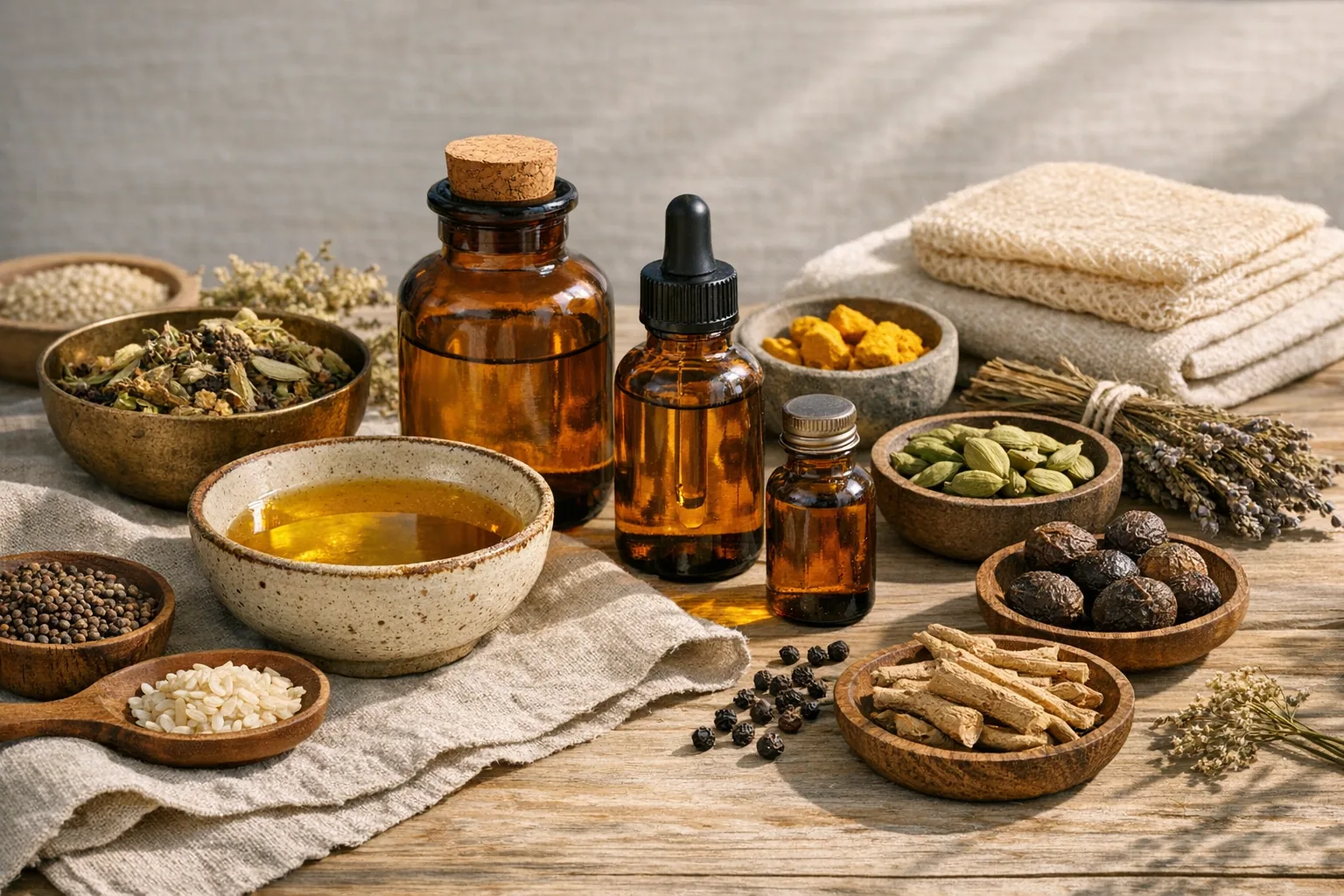
The oil is not always the same. Ayurveda uses base oils such as sesame or coconut, as well as medicated herbal oils prepared according to specific traditions. Sesame oil is generally considered warming and nourishing, often chosen when dryness and coldness are present. Coconut oil is perceived as cooler and may be more appropriate in hot seasons or for people who tend to overheat, provided the skin tolerates it. Medicated oils should be selected by someone trained, as some herbal preparations are strong in smell, action or skin reactivity.
After the session, rest is usually recommended. It is not ideal to go straight into cold weather, intense exercise or a very hot shower. Many people shower with lukewarm water to remove excess oil, using only a small amount of soap so the skin does not feel stripped. Drinking water, eating lightly and avoiding demanding activities for a few hours can help. Pizhichil works best when the rest of the day supports the treatment: warmth, calm and simple digestion.
Choosing according to dosha or season
The choice of oil and pace can be adapted through an Ayurvedic lens, without making it rigid. When coldness, dryness, restlessness, light sleep or shifting tension are present, practitioners often think in terms of Vata. In that case, the treatment tends to be warm, stable and nourishing, with slower movements and richer oils. The aim is to regulate rather than stimulate.
If there is a tendency toward heat, reactive skin, easy sweating, irritability or active inflammation, more caution is needed. In Ayurvedic language this may relate to Pitta, and prolonged heat is not always appropriate. A lighter or cooler oil may be chosen, the duration may be reduced, or a less heating technique may be preferred. If the skin is already red, inflamed or sensitive, continuous warmth can aggravate discomfort.
For people who feel heavy, sluggish, fluid-retentive or slow in digestion, traditionally associated with Kapha, a long and very oily Pizhichil may feel excessive. Some therapists may choose shorter sessions, less heavy oils or more mobilizing preparation. The point is not to label a person, but to avoid increasing what is already out of balance.
Season also matters. In autumn and winter, when warmth and lubrication are often more welcome, Pizhichil may feel especially comforting. In very hot, humid weather, or for people who overheat easily, it may be too much. A skilled practitioner adjusts temperature, oil quantity, room ventilation and duration rather than applying the same protocol to everyone.
Precautions and when to consult a professional
Pizhichil should be avoided during fever, acute infection, gastroenteritis, vomiting, diarrhea or significant general malaise. It should not be applied over wounds, burns, active rashes, dermatitis, skin infections, painful varicose veins or areas of marked inflammation. Known allergies to oils, herbs or fragrances must be disclosed in advance. For very reactive skin, a small patch test may be sensible.
People with cardiovascular disease, uncontrolled hypertension, kidney disease, diabetes with reduced sensation, previous thrombosis, cancer treatment, neurological conditions or significant chronic pain should seek medical advice before receiving the therapy. Heat and massage, even when gentle, can affect the body’s response. During pregnancy, especially in the first trimester or in high-risk pregnancy, it should only be considered with specialized guidance and a therapist trained in prenatal care.
Caution is also needed when taking anticoagulants, corticosteroids or other medications that affect skin, bruising or inflammation. What feels like light pressure for one person may be too much for another. Consent is essential: the person receiving Pizhichil should be able to ask for less heat, less pressure or to stop the session at any time.
After treatment, persistent dizziness, strong headache, rash, intense itching, palpitations, nausea or unusual exhaustion are signs that the session may not have suited the body. It is better not to repeat it without reviewing what happened: oil choice, heat, duration, pressure, digestion and health status. In Ayurveda, more is not always better. The right treatment is the one the person can actually assimilate.
At home vs in a professional center
Authentic Pizhichil is difficult to reproduce at home. It requires a large amount of oil, temperature control, a prepared space, towels, safe oil collection and trained hands. Pouring warm oil over the whole body without assistance can lead to slipping, overheating or a stressful cleanup. For a complete Pizhichil experience, a professional setting is the safer option.
What can be done at home is a simpler practice inspired by Ayurvedic oleation, without calling it Pizhichil. Self-massage with warm oil, known as abhyanga, is a practical alternative. Warm the oil gently until it feels pleasant to the touch, apply it with long strokes on the limbs and circular movements around the joints, leave it on for 10 to 20 minutes, then shower with lukewarm water. Protect the floor to prevent slipping and avoid irritated skin.
At home, less is usually better. One or two tablespoons of oil may be enough for feet, legs, arms and shoulders. There is no need to soak the body. If done in the evening, allow time to shower before bed. If done in the morning, choose a slow day. The underlying principle is simple: warm oil, slow touch, calm breathing and an unhurried transition back into daily activity.
FAQ
Is Pizhichil the same as Abhyanga?
No. Abhyanga is an Ayurvedic oil massage that may be performed by a therapist or practiced as self-massage. Pizhichil is more specific: it involves continuous warm oiling, often with cloths or repeated pouring, and is commonly performed by two or more synchronized therapists. Both use oil, but the experience and complexity are different.
How many sessions are needed?
Some people feel relaxed and physically softer after one session, especially if they arrive with tension or dryness. For longer-term support, Ayurvedic centers may suggest a series of treatments, but there is no universal number. Frequency should depend on health status, heat tolerance, recovery time and professional advice.
Should the oil be very hot?
No. The oil should be warm and pleasant, never burning. Excessive heat can irritate the skin, cause dizziness or make the session feel like something to endure. Temperature should be checked regularly and adjusted immediately if the person feels uncomfortable.
Can Pizhichil help with muscle pain?
It depends on the pain. Mild tension, stress-related stiffness or general muscular overload may respond well to warmth and gentle oiling. Intense pain, recent injury, swelling, fever, weakness, tingling or unexplained pain should be assessed by a healthcare professional first. Pizhichil is not a substitute for clinical evaluation or physiotherapy when needed.
Closing
Pizhichil is a sophisticated Ayurvedic therapy based on continuous warm medicated oil and gentle synchronized massage. Its value is not in spectacle, but in the combination of heat, rhythm, safe touch and individual adaptation. It may be suitable for people seeking a calming, nourishing body experience, particularly when stiffness, dryness or fatigue are present.
The best way to approach it is with realistic expectations. It is not a universal cure, and it should not be applied in the same way to everyone. Done well, it can offer rest, softness and a clear pause for the body. Done without proper assessment, it may feel heavy, irritating or excessive. In serious Ayurvedic care, the quality lies in discernment: choosing the right oil, respecting the body’s current state and knowing when less is better.
Ready for your next retreat?
Explore hundreds of retreats across Spain with transparent pricing.
Explore retreats