MBSR Mindfulness: origins and what the practice involves
Retiru Team
The Retiru content team — yoga, meditation and ayurveda.
Introduction
Mindfulness is often defined as the capacity to be present with what is happening, while being aware of where we are and what we are doing, without reacting automatically. In practical terms, it means noticing thoughts, body sensations, emotions and impulses as they arise, instead of being immediately carried away by them.
MBSR stands for Mindfulness-Based Stress Reduction. It is one of the most established and structured ways of learning mindfulness. The program was developed in 1979 by Jon Kabat-Zinn at the University of Massachusetts Medical Center, in a clinical context, initially to support people living with stress, chronic pain and health-related difficulties. It was not created as a lifestyle trend, but as a secular, teachable training method inspired by contemplative traditions and adapted to healthcare and education.
Since then, MBSR has been used in hospitals, universities, workplaces and mental health settings. This does not make it a miracle solution. Its strength is more modest and more useful: it offers a progressive training in how to relate differently to stress, discomfort and reactivity.
What this practice is and how it differs
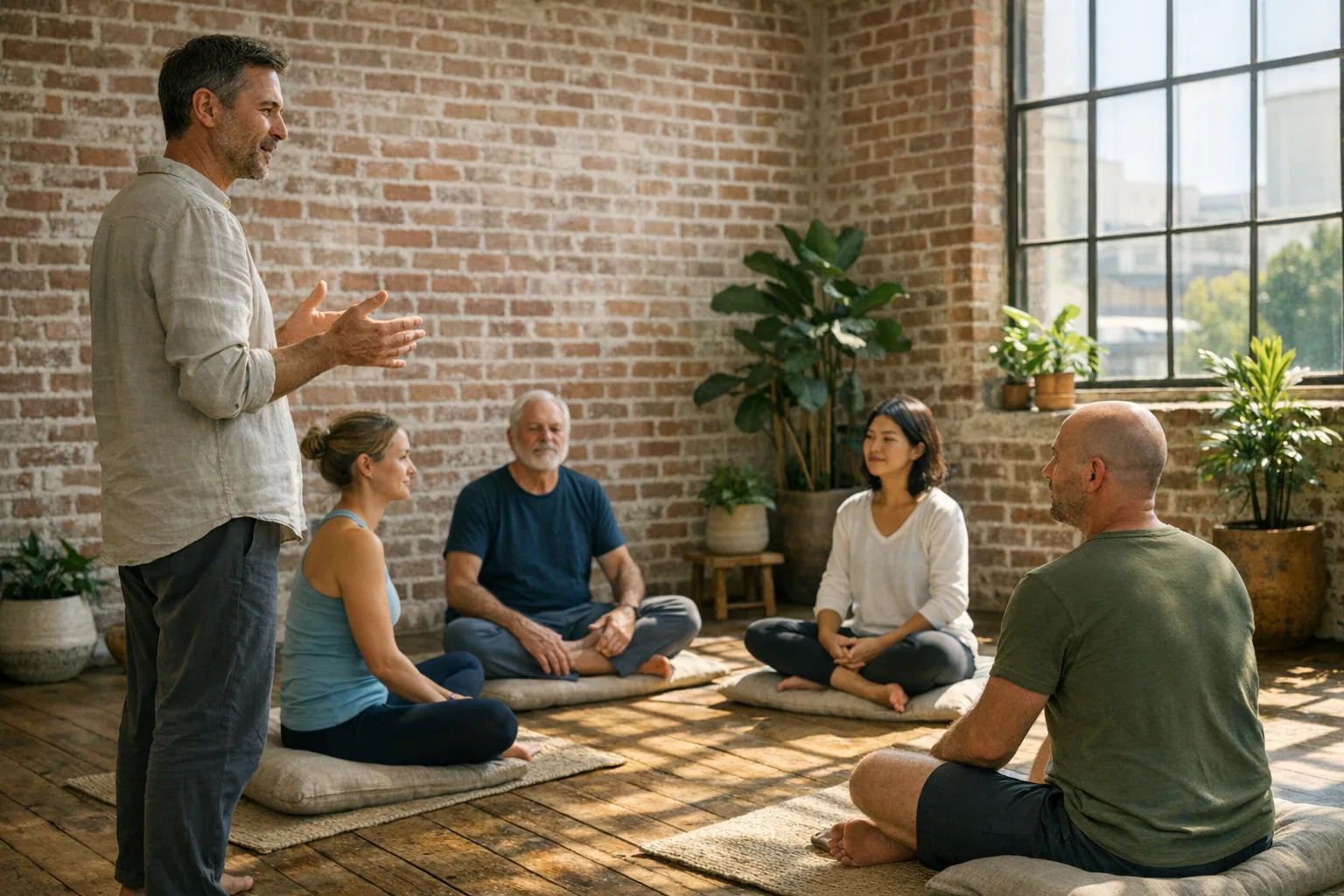
MBSR is typically an 8-week program designed to cultivate mindfulness in a systematic way. It usually includes weekly group sessions, home practice and a combination of formal and informal exercises. Common formal practices include the body scan, sitting meditation, awareness of breathing, mindful walking and gentle mindful movement inspired by yoga.
What makes MBSR different from simply trying mindfulness on your own is its structure. It is not only about sitting down to breathe when you feel overwhelmed. The program teaches participants to recognize stress patterns, emotional reactivity, body tension and repetitive thinking. Practice is repeated even on days when it feels boring, restless or inconvenient, because the aim is not a pleasant moment but a stable skill.
It is also different from relaxation training. Mindfulness may sometimes feel relaxing, but relaxation is not the main goal. In MBSR, you learn to be with what is present: calm, irritation, sadness, pain, fatigue or impatience. The point is not to manufacture peace, but to meet experience with more clarity and less automatic resistance.
MBSR is not psychotherapy either, although it can complement therapy. It is a psychoeducational intervention: it teaches skills and provides practice, but it does not replace clinical assessment or treatment. This distinction matters especially when someone is dealing with severe depression, trauma, panic attacks, dissociation or other significant mental health symptoms.
Benefits and realistic limits
The most common benefits associated with MBSR relate to reduced perceived stress, improved emotional regulation and a greater capacity to respond rather than react. In everyday life, this may mean noticing tension before it becomes overwhelming, interrupting a worry spiral or recognizing a thought as a mental event rather than an absolute fact.
MBSR is also used as support for anxiety symptoms, mild to moderate depressive symptoms, chronic pain and high-pressure work or caregiving situations. However, it does not remove the external causes of stress. If someone is working excessive hours, sleeping too little or living in an unsafe environment, meditation alone will not solve those conditions. What it may offer is more awareness, better boundaries and less added rumination.
Another important benefit is body awareness. Many people notice their bodies only when pain, fatigue or anxiety becomes intense. Practices such as the body scan train the ability to notice pressure, heat, tightness, numbness or subtle changes in breathing. This is not about performance or flexibility; it is about listening to information that is already present.
The limits are just as important. MBSR requires consistency. An 8-week course can be a strong beginning, but it is not a passive treatment. Difficult emotions or memories may arise during meditation, and not everyone benefits from long silent practice without appropriate guidance. Mindfulness should increase contact with reality, not become another way to force yourself through harmful conditions.
Step-by-step protocol
Traditional MBSR home practices often last between 30 and 45 minutes. For beginners, a shorter and well-structured 20-minute session can be more sustainable. Regularity matters more than intensity at the start.
A 20-minute beginner practice
- Prepare the space, 1 minute
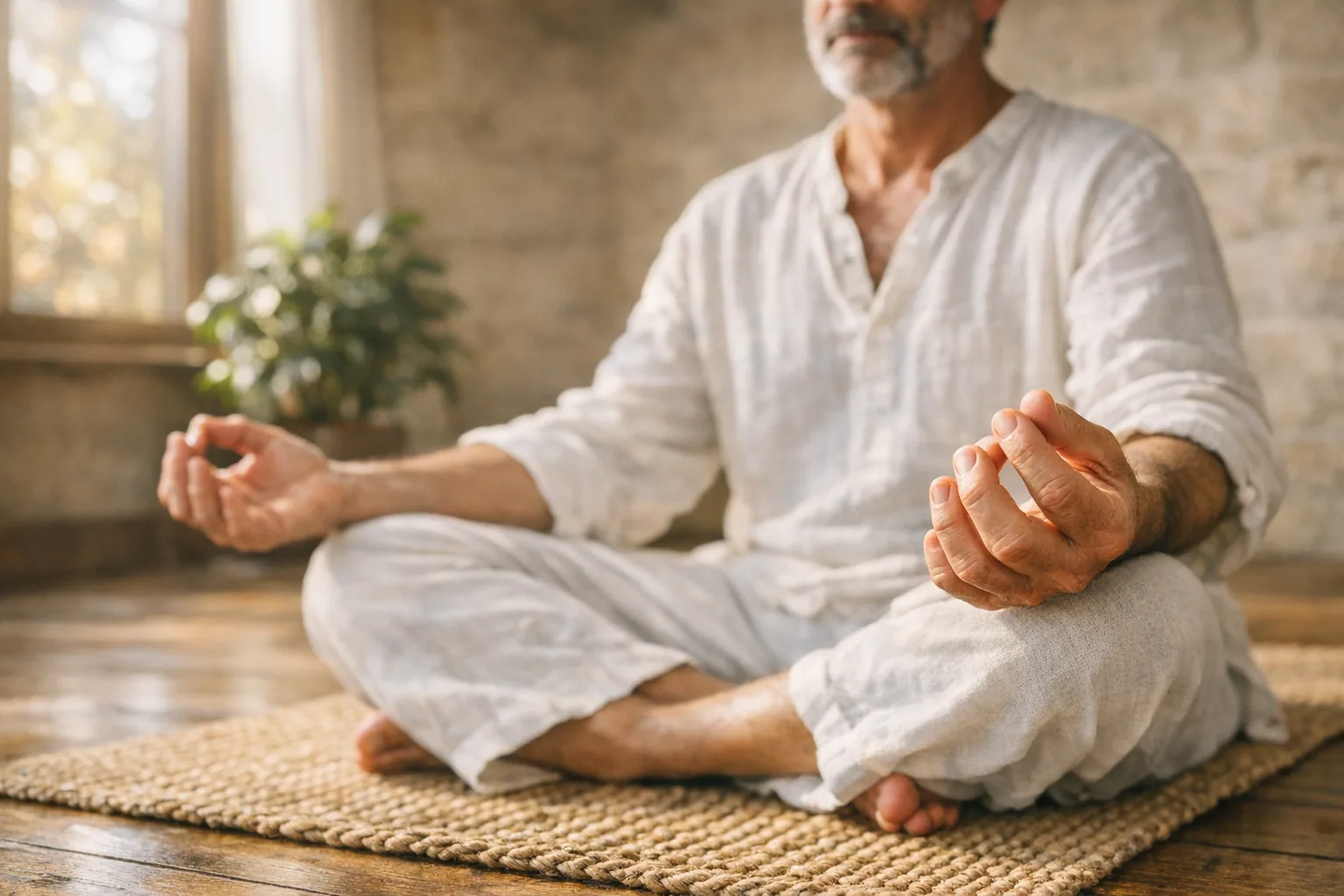
Choose a quiet place, without needing perfect silence. Sit on a chair or cushion with an upright but not rigid spine. If you are on a chair, place both feet on the floor. Rest your hands on your thighs. The posture should support alertness and stability, not create strain.
- Arrive in the body, 2 minutes
Close your eyes or lower your gaze. Feel the contact points: feet on the floor, legs on the chair, hands resting. Notice the jaw, shoulders, belly and back. You do not need to fix everything; simply acknowledge what is there and make small adjustments if needed.
- Breath awareness, 5 minutes
Bring attention to one area where the breath is noticeable: nostrils, chest or abdomen. Do not try to control the breath. When the mind wanders to planning, remembering or worrying, silently note “thinking” and return to the physical sensation of breathing. Returning is the practice, not a failure.
- Short body scan, 5 minutes
Move attention through the body: feet, legs, pelvis, abdomen, chest, back, shoulders, arms, neck and face. In each area, notice warmth, pressure, tingling, tightness or even a lack of clear sensation. If discomfort appears, see whether you can make space for it for a few breaths. If pain increases or feels overwhelming, adjust your posture mindfully.
- Sounds, thoughts and emotions, 5 minutes
Open awareness to sounds, noticing them as events that arise and pass. Then observe thoughts in the same way. You do not need to follow them or fight them. If an emotion is present, locate how it appears in the body. You may name it softly: “restlessness”, “sadness”, “anger” or “worry”.
- Closing, 2 minutes
Feel the whole body sitting. Notice the breath and contact with the ground. Before ending, ask yourself what the next mindful action is: standing up slowly, drinking water, writing something down or simply continuing the day with a little more presence.
Common mistakes
A frequent mistake is believing that good meditation means having no thoughts. The mind produces thoughts; that is part of what it does. In MBSR, you learn to notice when attention has wandered and return with patience. Every recognized distraction is a repetition of the training.
Another mistake is using mindfulness to avoid what hurts. Some people practice in order not to feel anger, sadness or fear. MBSR points in the opposite direction: feeling more clearly, while identifying less with the experience. If mindfulness becomes a way of tolerating harmful situations without taking action, the practice needs to be reconsidered.
Beginners also often start with sessions that are too long. Sitting for 45 minutes on the first day may create frustration and resistance. It is usually better to practice 10 or 20 minutes daily for several weeks than to do one intense session and stop. Familiarity grows through repetition.
Finally, many people judge each session as good or bad. Calm means good; anxiety means bad. In MBSR, the value of a session is not measured by how pleasant it felt, but by the willingness to observe what appeared.
Who it suits and contraindications
MBSR may suit people experiencing ongoing stress, rumination, physical tension, difficulty slowing down or a sense of living on autopilot. It can also support people in therapy, those living with chronic pain or anyone who wants a structured self-care practice based on trainable skills.
No previous experience is required, and mindful movement can be adapted to different bodies. Practices can be done seated, standing or lying down. The important element is curiosity, not flexibility, endurance or performance. For highly self-critical people, the most important lesson may be practicing without turning meditation into another task to perfect.
There are situations where caution is necessary. If you are dealing with recent trauma, frequent panic attacks, severe depression, suicidal thoughts, psychosis, strong dissociation or problematic substance use, consult a qualified mental health professional before doing long silent practices. Sustained attention to the body can be destabilizing for some people without proper support.
During acute pain, extreme insomnia or intense emotional activation, shorter practices may be safer. Try 2 to 3 minutes with eyes open, feeling the feet on the floor and naming objects in the room. Safety comes before completing a meditation session.
Suggested weekly routine
If you are not joining a formal 8-week MBSR course, you can follow a simple progression inspired by its structure. The goal is to combine formal meditation with informal mindfulness in daily life.
- Week 1: 10 minutes a day of breath awareness. Add one mindful pause before a meal.
- Week 2: 15 minutes a day, alternating breath awareness and a short body scan.
- Week 3: 20 minutes a day. Use the mental label “thinking” when you notice distraction.
- Week 4: 20 to 25 minutes. Add 5 minutes of mindful walking.
- Week 5: 25 minutes. Notice emotions as body sensations before analyzing them.
- Week 6: 30 minutes, 5 days a week. Include gentle mindful movement if appropriate.
- Week 7: 30 to 35 minutes. Practice mindful listening in one conversation each day.
- Week 8: Try one or two sessions of 35 to 45 minutes, while keeping shorter days when needed.
This routine is not a full MBSR program, but it reflects its logic: repetition, curiosity and application in ordinary life. If you miss a day, do not compensate with guilt. Simply begin again.
FAQ
Is MBSR the same as mindfulness?
Not exactly. Mindfulness is the capacity or practice of present-moment awareness. MBSR is a specific 8-week program that teaches mindfulness through structured exercises, daily practice and reflection on stress.
How long should I meditate to notice changes?
It depends on the person and the context. MBSR programs usually work over 8 weeks with frequent practice. For beginners, 10 to 20 minutes a day is a reasonable starting point, later increasing to 30 or 45 minutes if it is sustainable.
What if meditation makes me more anxious?
Shorten the practice. Keep your eyes open, feel your feet on the floor and focus on sounds or visible objects. If anxiety is intense or difficult memories arise, seek professional support before continuing with longer silent practices.
Can I practice lying down?
Yes, especially for the body scan. The main risk is falling asleep. For sitting meditation, an upright posture is usually recommended, but if you are exhausted or in pain, lying down may be the most realistic option.
Closing
MBSR became influential because it made mindfulness clear, secular and applicable to daily life. It does not promise permanent calm or a life without stress. Instead, it trains the ability to know what is happening while it is happening.
That may sound small, but it changes the relationship with thoughts, emotions and body sensations. Progress is not about controlling experience. It is about returning, again and again, with less judgment and more steadiness.
Ready for your next retreat?
Explore hundreds of retreats across Spain with transparent pricing.
Explore retreats