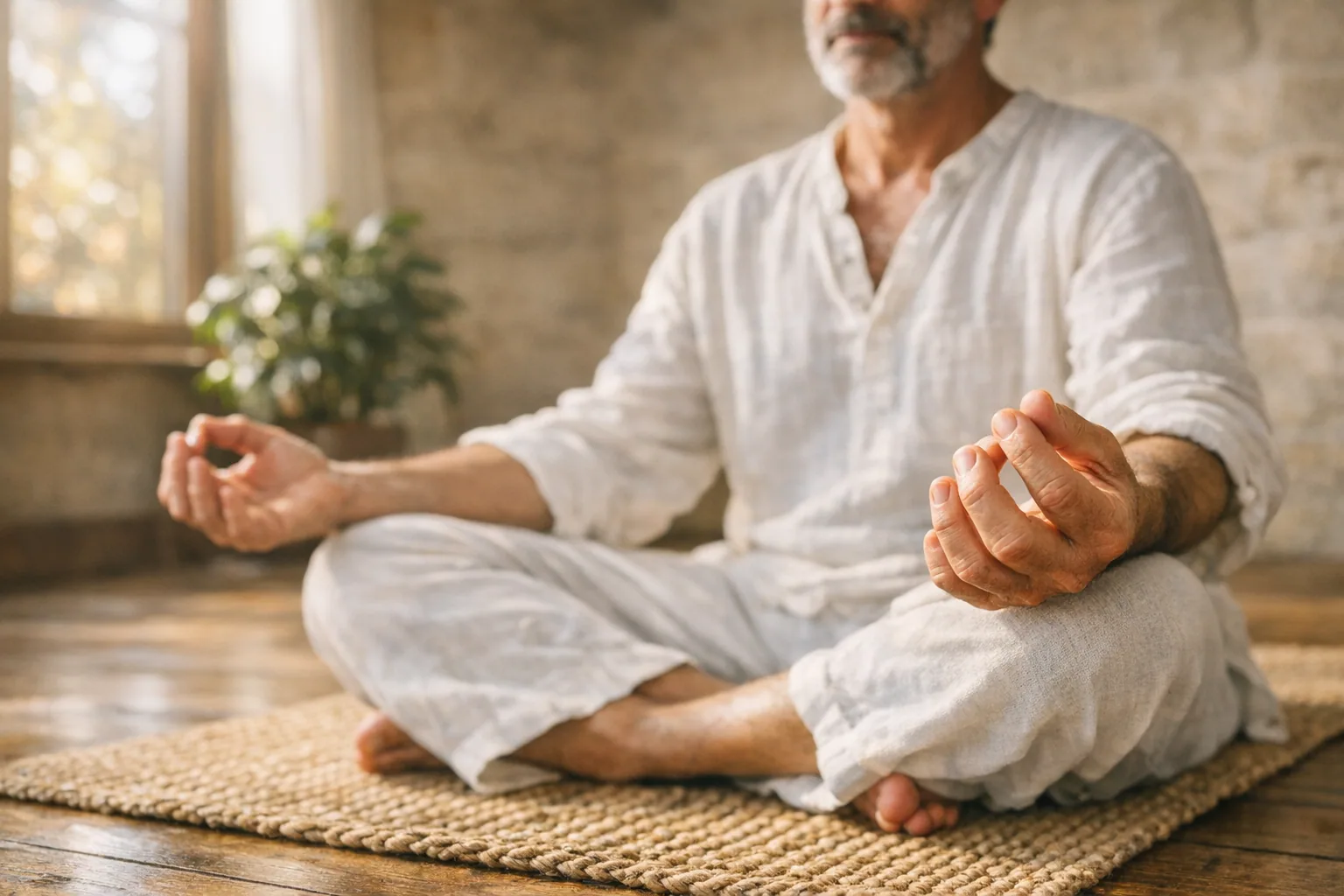
Transcendental Meditation: mantra and daily routine
Retiru Team
The Retiru content team — yoga, meditation and ayurveda.
Introduction
Transcendental Meditation is one of the best-known mantra-based meditation practices in the West. It became widely popular from the 1950s onward through Maharishi Mahesh Yogi, and its classic format is simple: sit comfortably, close the eyes and silently repeat a mantra for a set period of time. Unlike practices that ask you to observe the breath, scan the body or cultivate a specific attitude, this approach uses a sound as the main anchor.
A useful distinction is needed from the start. Transcendental Meditation, as a formal registered method, is taught by certified instructors and includes a specific way of receiving a mantra. In this guide, we will focus on a safe, secular mantra meditation routine inspired by that general structure. It does not replace formal instruction if you want the official method, but it can help you understand the principles and build a realistic daily practice.
The appeal is practical. You do not need flexibility, a complex posture or any particular belief system. The common recommendation is to practise seated, eyes closed, for 15 to 20 minutes, once or twice a day. The goal is not to empty the mind. The mantra simply gives attention a gentle place to return to whenever thoughts, sensations or distractions appear.
What this practice is and how it differs
This style belongs to the broader family of mantra meditation. A mantra is a word, syllable or sound repeated silently in the mind. In this context, the sound is not mainly used for its meaning, but for its simplicity and stability. Some traditions use devotional mantras; in a secular setting, many people choose neutral sounds or short words that do not trigger too much analysis.
The main difference from mindfulness meditation is the object of attention. In mindfulness, you may observe the breath, body sensations, sounds or thoughts as they arise. In mantra meditation, attention rests on the quiet repetition of the sound. When the mind wanders, you do not need to investigate the thought in detail. You simply return to the mantra with as little friction as possible.
It is also different from strict concentration training. The mantra is not meant to be held with force. The repetition should feel more like remembering a quiet melody than mentally pushing a word into place. If the sound becomes faint, changes rhythm or disappears for a while, that is not a failure. The practice is the act of returning gently.
The classic teaching of Transcendental Meditation often emphasizes effortlessness. You sit comfortably, do not control the breath and do not try to manufacture a special state. From a practical point of view, this makes it accessible for people who find highly detailed meditation instructions tiring. The mantra provides just enough structure to prevent the mind from being completely pulled along by every thought.
Benefits and realistic limits
The most common benefit associated with this practice is reduced perceived stress. That makes sense: sitting quietly for 15 to 20 minutes, closing the eyes, reducing external stimulation and repeating a simple sound can support a state of rest. Many people report feeling calmer, clearer or less reactive after practice. There is no need to promise extraordinary results to acknowledge that a regular pause can change the tone of the day.
Mantra meditation may also improve your relationship with thoughts. Instead of fighting them, you learn to notice that they arise, mix with the mantra and pass. This repeated experience trains a useful skill: not reacting immediately to every mental event. Over time, some people feel they have a little more space before answering a difficult email, entering an argument or following a worry spiral.
The limits are equally important. This practice is not a complete treatment for severe anxiety, depression, trauma or persistent insomnia. It may complement professional care, but it should not replace medical or psychological support when symptoms are significant. It is also unhelpful to treat meditation purely as a productivity tool, as if its purpose were simply to tolerate more pressure.
Another common limitation is expecting instant calm. Some sessions will feel pleasant; others may be full of thoughts, restlessness or sleepiness. That does not mean the practice is failing. In meditation, the cumulative effect usually depends more on regularity than on the quality of one session. Twelve minutes five days a week is often more useful than one perfect forty-minute session once a month.
Step-by-step protocol
1. Choose the time and set the space
Start with a time when you can be undisturbed for 15 minutes. The well-known format of this practice is 20 minutes, twice a day, often in the morning and again in the late afternoon or early evening. If you are new, begin with 10 to 12 minutes for the first week and increase gradually. It is better to finish with a sense of ease than to turn meditation into another heavy obligation.
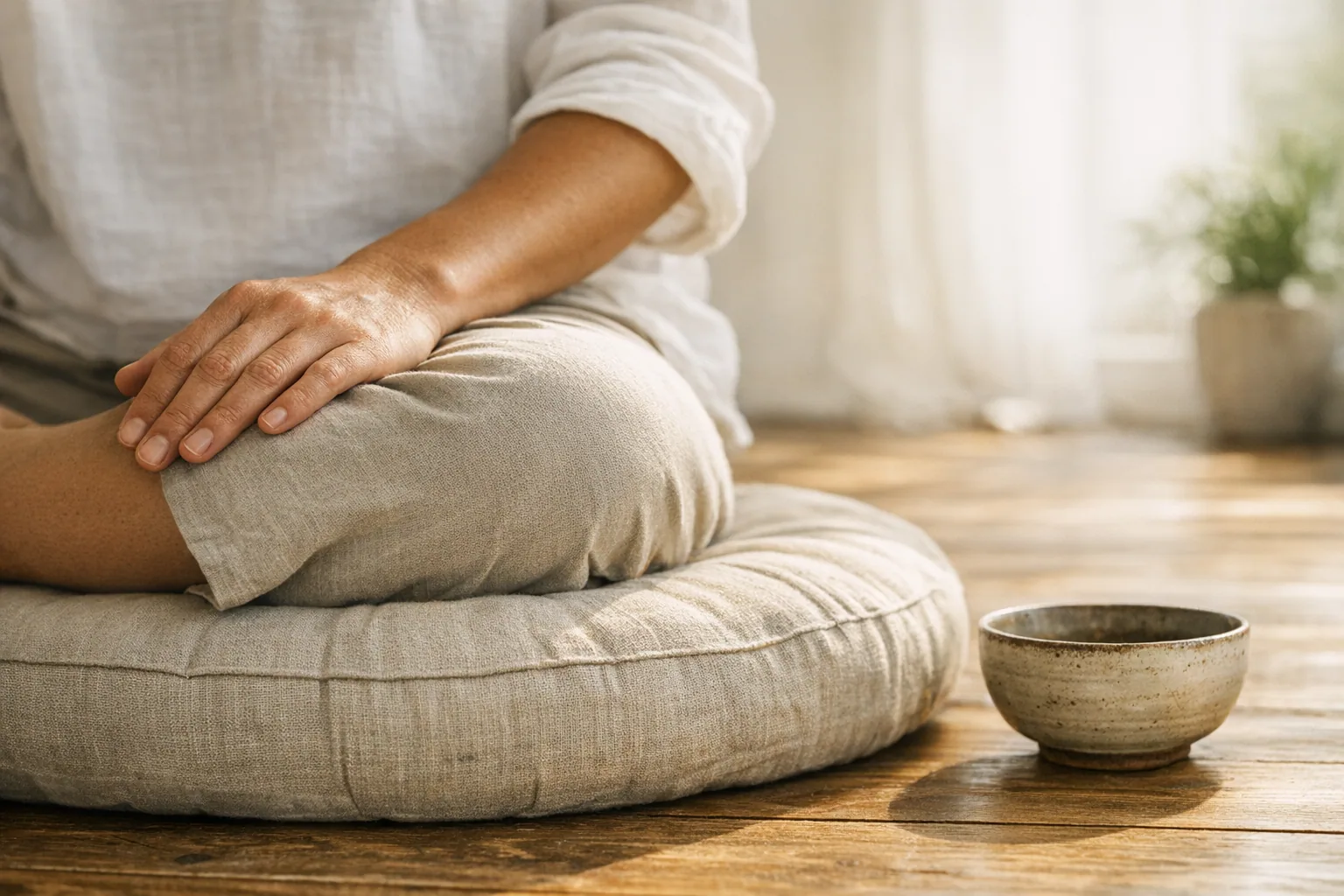
Sit on a chair, a firm cushion or the edge of a bed. You do not need a lotus posture or a rigid spine. Let the back be upright but relaxed, feet grounded if you are in a chair, and hands resting on the thighs. Silence your phone or use a timer with a soft ending sound.
2. Close the eyes and take one minute to arrive
Before introducing the mantra, take about 60 seconds to settle. Close your eyes, feel the weight of the body and allow the breath to move naturally. You do not need deep breathing unless it feels comfortable. This transition prevents the mantra from becoming a harsh command to calm down.
If you have just come from intense activity, you may take three slightly longer exhalations. Then let go of breath control. Mantra meditation does not require a parallel breathing technique. The simpler the entry, the easier it is to repeat every day.
3. Introduce the mantra silently
Repeat the mantra mentally, not out loud. You might use a neutral syllable such as so-ham, a short word such as calm, or another simple sound that does not carry strong personal associations. If you want the official Transcendental Meditation method, the mantra is given by a qualified instructor. For a secular mantra practice, choose something simple, stable and not overly meaningful.
Repeat it naturally. You do not have to coordinate it with the breath, although that may happen on its own. You also do not need to pronounce it perfectly in the mind. Sometimes it will be clear; sometimes it will be faint. Keep the effort low.
4. When thoughts appear, return without arguing
Thoughts are not abnormal interruptions; they are part of the session. A shopping list, a memory, a song or a concern may appear. As soon as you notice you have drifted, return to the mantra gently. Do not measure how long you were distracted or criticize yourself for thinking.
A useful instruction is: thought noticed, kind return. That repeated sequence is the training. If you return to the mantra 40 times in 15 minutes, you have practised 40 times.
5. End with two minutes of rest
When the timer rings, do not open your eyes abruptly. Let go of the mantra and remain seated for one or two minutes. Notice the body, sounds and breath. This closing phase is especially useful if you practise before work or before returning to household tasks.
Standing up too quickly can feel abrupt, especially when you are tired or the session has been quiet. A gradual ending integrates the practice better. Then open your eyes, stretch the neck or shoulders if needed and move into a simple activity.
Common mistakes
The first mistake is trying to make the mind blank. The mind produces thoughts just as the ears perceive sounds. The point is not to stop that process, but to stop following every thought automatically. The mantra is a place to return to, not a wall against mental activity.
Another mistake is repeating the mantra too forcefully. Some people try to drive it into the mind in order to push everything else away. This often creates tension in the forehead, jaw or breathing. If you notice strain, soften the repetition until it feels like an inner whisper.
A third mistake is changing the mantra every few days. Novelty can be attractive, but it prevents the mind from recognizing a stable anchor. If you have chosen a simple sound and it does not feel unpleasant, keep it for at least three or four weeks before changing it. Depth comes less from finding the perfect word and more from becoming familiar with returning.
Finally, many people meditate only when they are already overwhelmed. The practice can help during stress, but it works better as preventive mental hygiene. If you reserve it only for crisis moments, frustration is more likely. A daily routine creates the base that supports difficult sessions.
Who it suits and when to be cautious
This practice may suit people who want a simple form of meditation without many technical instructions. It can work well for those who get tired of highly guided practices or need a short, repeatable pause. It also fits demanding workdays because a 15 to 20 minute session can fit into the morning, a midday break or the end of the afternoon.
It may be useful if you tend to ruminate, as long as you do not expect thoughts to disappear immediately. The mantra gives the mind a light task, simple enough not to create more analysis. For people with a lot of physical restlessness, starting with 8 to 10 minutes may be more realistic than jumping straight to 20.
Caution is needed in some situations. If you have a history of trauma, panic attacks, dissociation, psychosis, severe depression or intense anxiety, speak with a mental health professional before beginning long silent practices. Some people feel worse when they close their eyes and sit quietly, not because meditation is wrong, but because it increases contact with difficult inner material.
Do not force the practice if you experience dizziness, strong distress, unreality or discomfort that does not ease when you open your eyes. Stop, look around, feel your feet on the floor and return to a concrete activity. Meditation should be trainable and safe, not an endurance test.
Suggested weekly routine
Week 1: build the habit
Practise once a day for 10 to 12 minutes. Choose the same time each day, such as after showering in the morning or before dinner. The goal is not depth, but repetition: sit, close the eyes, repeat the mantra and end calmly. If one day is difficult, do 5 minutes to keep the thread alive.
Week 2: stabilize the duration
Increase to 15 minutes daily. Keep the same mantra and avoid rating each session as good or bad. You can write one brief note about how you arrived and how you left: tired, clear, restless, sleepy. This is not meant to be a complex journal, only a way to notice patterns.
Week 3: add an optional second session
If the practice no longer feels forced, add a second session of 10 to 15 minutes two or three days a week. Late afternoon often works well, before returning to tasks or after work. Avoid practising right after a very heavy meal, as sleepiness may take over. If the second session complicates your day, return to one.
Week 4: move toward the classic format
You can try 20 minutes in the morning and 15 to 20 minutes later in the day, three to five days a week. Notice whether the increase supports you or becomes a burden. A sustainable routine might be 20 minutes once a day, or 15 minutes twice a day, depending on your real life. The best practice is the one you can repeat without negotiating every time.
FAQ
What mantra should I use?
In the official Transcendental Meditation method, the mantra is given by a trained instructor. For a general mantra meditation practice, choose a short, simple and emotionally neutral sound. It can be a soft syllable, a short word or a combination that does not invite analysis. Keep it stable for several weeks.
Should the mantra follow the breath?
It does not have to. Some people naturally feel the mantra align with inhalation and exhalation, which is fine. But if you coordinate it too precisely, you may create tension. Let the breath remain natural and repeat the mantra lightly.
Can I practise lying down?
You can, but it is usually not ideal if your goal is clear meditation. Lying down makes it easier to fall asleep, especially at night. For daily practice, sitting with comfortable support is usually better. If pain or a health condition prevents sitting, adapt the posture and prioritize safety.
How long before I notice an effect?
Some people feel calmer after the first session; others need several weeks. A practical reference is to maintain 10 to 20 minutes daily for 21 to 30 days before drawing conclusions. Benefits do not always appear as immediate relaxation. Sometimes they show up as more pause, less reactivity or better recovery after a demanding day.
Closing
Transcendental Meditation and related mantra practices stand out because of their simplicity: sit, close the eyes, repeat a sound internally and return to it whenever the mind wanders. Their strength is not in dramatic experiences, but in the daily repetition of a calming gesture. Practised well, mantra meditation can reduce mental noise, create real pauses and change the way you relate to thoughts.
Start small, keep the same mantra, avoid chasing special states and respect your limits. If the practice suits you, you can gradually expand to 15 or 20 minutes, once or twice a day. If it creates intense discomfort, stop and seek appropriate guidance. Meditation should not take you away from life, but help you inhabit it with more clarity.
Ready for your next retreat?
Explore hundreds of retreats across Spain with transparent pricing.
Explore retreats