Iron in a Vegetarian Diet: Foods and Combinations That Improve Absorption
Retiru Team
The Retiru content team — yoga, meditation and ayurveda.
Introduction: why iron matters in a vegetarian diet
Iron is one of the nutrients that raises the most questions when someone reduces or removes animal foods. The issue is not that vegetarian diets are automatically low in iron. The real point is that plant-based iron behaves differently in the body, and its absorption depends heavily on the whole meal.
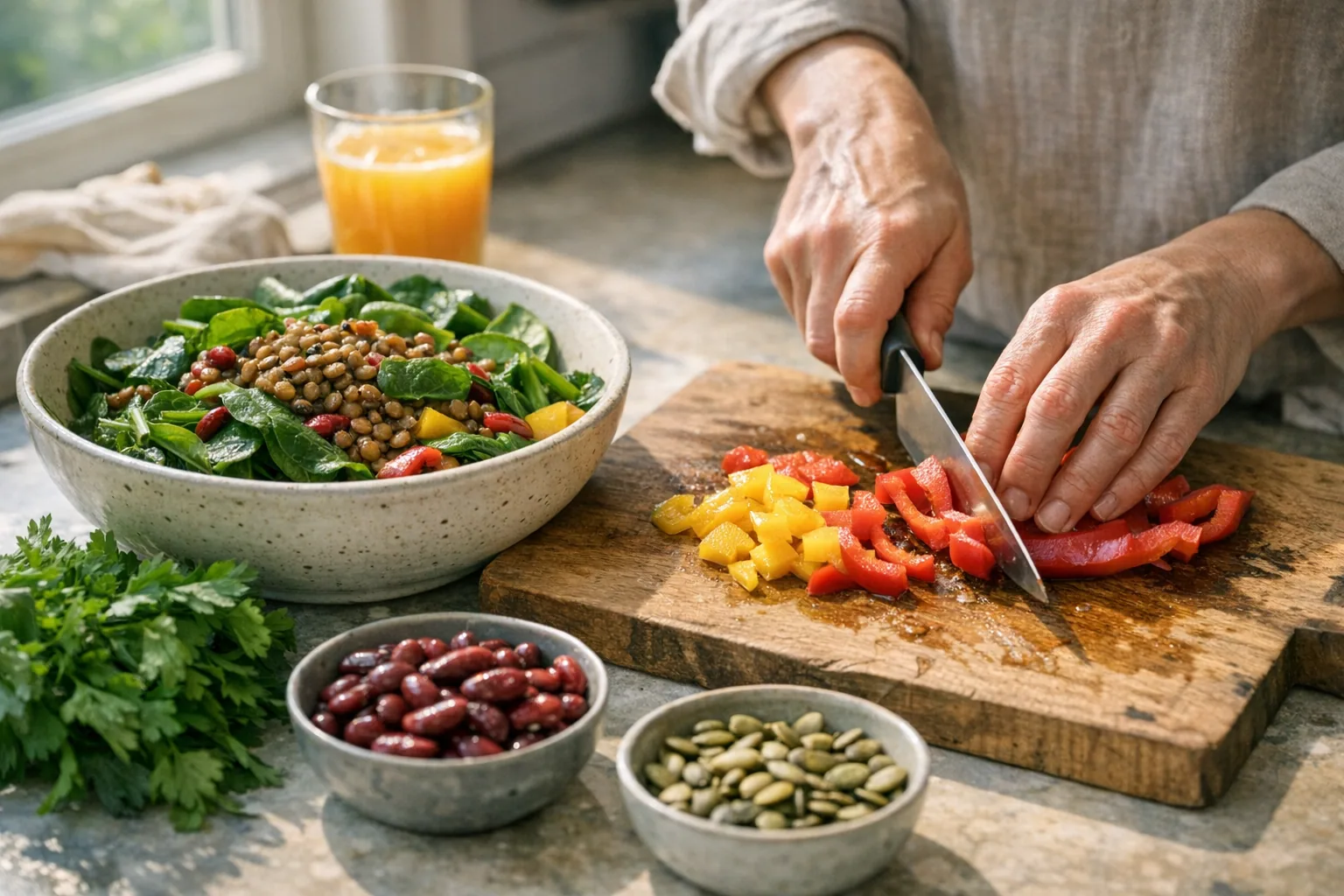
A bowl of lentils with red pepper, tomato and lemon is not the same as lentils eaten with black tea and a calcium-rich dessert. The first meal supports iron absorption; the second may reduce it. This is why vegetarian iron planning is less about obsessing over single foods and more about building useful combinations.
A well-planned vegetarian diet can provide iron through legumes, soy foods, nuts, seeds, whole grains, leafy greens and fortified foods when appropriate. Individual needs still matter: menstruating women, pregnant people, endurance athletes, teenagers and people with low ferritin may need closer monitoring.
What iron is and what changes in vegetarian eating
Iron is an essential mineral involved in oxygen transport, energy metabolism and normal immune function. It is part of haemoglobin, the protein in red blood cells that carries oxygen from the lungs to the tissues, and myoglobin, which helps store oxygen in muscles.
There are two main forms of dietary iron. Heme iron, found in meat, fish and seafood, is generally absorbed more easily. Non-heme iron, found in plant foods and also in some animal foods, has a more variable absorption rate. In vegetarian and vegan diets, most or all iron comes from the non-heme form.
This does not make plant-based iron inadequate. It simply means absorption needs support. The most useful strategy is pairing iron-rich plant foods with vitamin C in the same meal. Kiwi, oranges, strawberries, mango, melon, red pepper, broccoli, tomato and lemon are practical examples.
As a general reference, adult men often need around 8 mg of iron per day, while menstruating women often need around 18 mg per day. Requirements increase during pregnancy, so professional guidance is important. Some recommendations suggest higher intakes for vegetarians because plant-based iron is less bioavailable, but blood tests, symptoms and the overall diet are what matter most in practice.
Benefits of adequate iron, with important nuance
Good iron status supports energy, concentration, physical performance and normal oxygen delivery. When iron stores fall, the body may still keep haemoglobin within the normal range for a while, but the margin becomes smaller. Ferritin, a marker of iron stores, can drop before clear anaemia appears.
Iron is also important for immune function and for life stages or situations with higher demand, such as adolescence, pregnancy, postpartum recovery and intense training. For people with heavy periods, improving iron intake and absorption can make a meaningful difference.
However, more iron is not always better. The goal is not to take supplements without testing or to rely on fortified products without context. Excess iron from unnecessary supplementation can cause digestive symptoms and may be risky for people with iron overload disorders. Persistent fatigue, hair loss, paleness or poor exercise tolerance should be assessed with blood work rather than self-diagnosed.
Vegetarian sources of iron
The best vegetarian iron sources are usually everyday foods. Consistency matters more than rare superfoods.
Legumes
Legumes are one of the strongest foundations for plant-based iron. Lentils, chickpeas, beans, dried broad beans, peas and soy provide iron, protein, fibre and minerals. Some food composition lists place dried broad beans at around 8.5 mg of iron per 100 g, lentils around 7.1 mg, chickpeas around 6.7 mg and beans around 6.7 mg, although values vary depending on the variety and whether the food is measured dry or cooked.
Cooked legumes contain less iron per 100 g than dry legumes because they absorb water. Even so, generous portions several times a week are one of the most effective habits. Soaking, discarding the soaking water and cooking thoroughly can improve both tolerance and mineral availability.
Soy foods
Soybeans, tofu, tempeh and fortified soy drinks can contribute significantly. Tempeh is especially interesting because fermentation may reduce some compounds that limit mineral absorption. Tofu is practical in stir-fries, salads and bowls, especially when paired with vitamin C-rich vegetables.
A simple example is tofu stir-fried with broccoli and red pepper, finished with lemon or lime. The goal is not to make every meal a calculation, but to create a pattern: an iron source plus an absorption enhancer.
Nuts and seeds
Sesame, pumpkin, hemp and sunflower seeds, along with pistachios, almonds and hazelnuts, can add useful iron. Some references place pistachios around 7.3 mg per 100 g and almonds around 4.2 mg per 100 g. Sesame is also useful, especially as tahini in hummus, sauces or toast toppings.
Portion size matters. Most people do not eat 100 g of nuts or seeds daily. A realistic serving of 20 to 30 g is a helpful addition, not the whole strategy.
Whole grains and pseudocereals
Oats, quinoa, buckwheat, amaranth, wholegrain sourdough bread and brown rice provide moderate amounts of iron. Amaranth is often mentioned in plant-based nutrition because of its mineral density. Sourdough bread can also be useful because fermentation helps reduce phytates, compounds that can limit mineral absorption.
These foods work best alongside legumes rather than replacing them. Lentils with brown rice, vegetables and lemon make a more complete meal than rice alone.
Leafy greens and herbs
Spinach, chard, watercress, kale, parsley and other greens contribute iron, although absorption may be limited by oxalates and other compounds. Parsley is often described as iron-rich, but it is usually eaten in small amounts. Still, using fresh herbs regularly adds micronutrients and flavour.
Leafy greens are most useful as part of a meal: chickpeas with spinach and tomato, lentil salad with parsley and pepper, or tofu with kale and lemon.
Food combinations that improve iron absorption
The most practical rule is: plant iron + vitamin C in the same meal. You do not need a supplement. Fruit, vegetables or lemon juice are enough in many cases.
Useful combinations include:
- Lentils with red pepper, tomato and lemon.
- Hummus with tahini and raw pepper sticks.
- Bean salad with parsley, tomato, onion and orange.
- Tofu with broccoli and lime juice.
- Oats with pumpkin seeds and strawberries or kiwi.
- Sourdough toast with tahini and citrus fruit on the side.
Preparation methods also help. Soaking legumes, seeds and some grains can reduce phytates. Sprouting may improve mineral availability in legumes and seeds. Fermentation, as in tempeh or sourdough bread, can also support better use of iron.
Some foods and drinks can reduce non-heme iron absorption when taken with iron-rich meals. Tea, coffee and tannin-rich infusions can interfere. Calcium, especially in high-dose supplements, may also compete when taken at the same time. A practical approach is to separate coffee, tea and calcium supplements by one to two hours from the meals richest in iron, especially if ferritin is low.
Signs of deficiency or excess
Iron deficiency often develops gradually. First, iron stores fall, reflected in ferritin. Later, red blood cell production may be affected and iron-deficiency anaemia can appear. This means someone can feel tired or perform worse even before haemoglobin is clearly low.
Possible signs of low iron include:
- Persistent fatigue or weakness.
- Shortness of breath during usual effort.
- Paleness, dizziness or frequent headaches.
- Brittle nails, hair shedding or dry skin.
- Restless legs or poor recovery after exercise.
- Increased sensitivity to cold.
These symptoms are not specific to iron. They can also relate to low vitamin B12, thyroid issues, poor sleep, stress or other medical causes. Blood tests such as a full blood count and ferritin, interpreted by a professional, are the safest way to decide whether diet changes are enough or supplementation is needed.
Excess iron from plant foods is uncommon in healthy people because the body regulates non-heme iron absorption reasonably well. The risk is higher with unnecessary supplements, multivitamins containing iron or conditions such as haemochromatosis. Iron supplements may also cause nausea, constipation, abdominal discomfort or dark stools.
How to include enough iron day to day
A useful habit is to check whether main meals include three elements: an iron source, a vitamin C source and a preparation or food choice that supports absorption. For example, well-cooked soaked legumes with tomato or pepper already cover much of this.
For breakfast, oats with soy drink, pumpkin or sesame seeds and kiwi, strawberries or orange can work well. If you drink coffee, consider having it later if your ferritin is low. It does not need to be banned; timing is often enough.
At lunch, legumes should appear regularly. Lentil stew with vegetables, chickpea salad with lemon or beans in tomato sauce are simple, reliable meals. Adding brown rice, quinoa or sourdough bread can make the meal more satisfying and nutritionally balanced.
At dinner, tofu, tempeh or a legume-based soup can be useful. A tofu stir-fry with broccoli and red pepper, finished with lemon, is quick and balanced. If dinner includes dairy, it may be worth avoiding making dairy coincide every day with the most iron-rich meal, especially for people with low ferritin.
Precautions, interactions and pregnancy
Some groups need extra attention: people with heavy periods, teenagers, pregnant people, endurance athletes, frequent blood donors and anyone with a history of anaemia or low ferritin. In these cases, diet matters, but periodic blood testing may be equally important.
During pregnancy, iron needs rise significantly. Some people meet part of the requirement through food, while others need prescribed supplements. Self-supplementing can be ineffective, excessive or poorly tolerated, so medical or dietetic guidance is recommended.
If iron supplements are prescribed, they are often taken away from coffee, tea, dairy and calcium supplements. Taking them with a vitamin C source may improve absorption, but the exact plan depends on the supplement type, dose and digestive tolerance.
People with haemochromatosis, liver disease, active inflammatory bowel disease or specific medical treatments should seek professional advice before increasing iron intake or using supplements.
FAQ
Can a vegetarian diet provide enough iron without meat?
Yes, if it is well planned. Legumes, soy foods, tofu, tempeh, seeds, nuts, whole grains and some vegetables all contribute. Pairing them with vitamin C and timing tea, coffee and calcium away from iron-rich meals improves the overall picture.
Do I need vitamin C with every meal?
Not necessarily, but it is one of the most effective strategies for plant-based iron. Including pepper, tomato, broccoli, kiwi, strawberries, orange, mango or lemon with main meals is especially useful when ferritin is low or needs are higher.
Are spinach and leafy greens the best iron sources?
They can help, but they are not always the most reliable base because some compounds reduce absorption. Legumes, tofu, tempeh, seeds and whole grains are usually more practical. Leafy greens are best used as part of a varied plate.
When should I get blood tests?
Consider testing if you have persistent fatigue, heavy periods, hair loss, dizziness, shortness of breath with effort or a history of anaemia. Testing is also useful during pregnancy, adolescence, intense training or after switching to a poorly planned vegetarian diet.
Closing
Iron in a vegetarian diet is not about one miracle food. It is about a pattern: frequent legumes, realistic portions of seeds and nuts, whole grains, tofu or tempeh, vegetables and vitamin C-rich fruits.
The simplest strategy is to include plant-based iron daily, pair it with vitamin C and keep coffee, tea and calcium supplements away from the most iron-rich meals. With planning and testing when needed, vegetarian eating can cover iron in a complete and practical way.
Ready for your next retreat?
Explore hundreds of retreats across Spain with transparent pricing.
Explore retreats