Balanced Ayurvedic Breakfast: Three Simple Ideas
Retiru Team
The Retiru content team — yoga, meditation and ayurveda.
Introduction
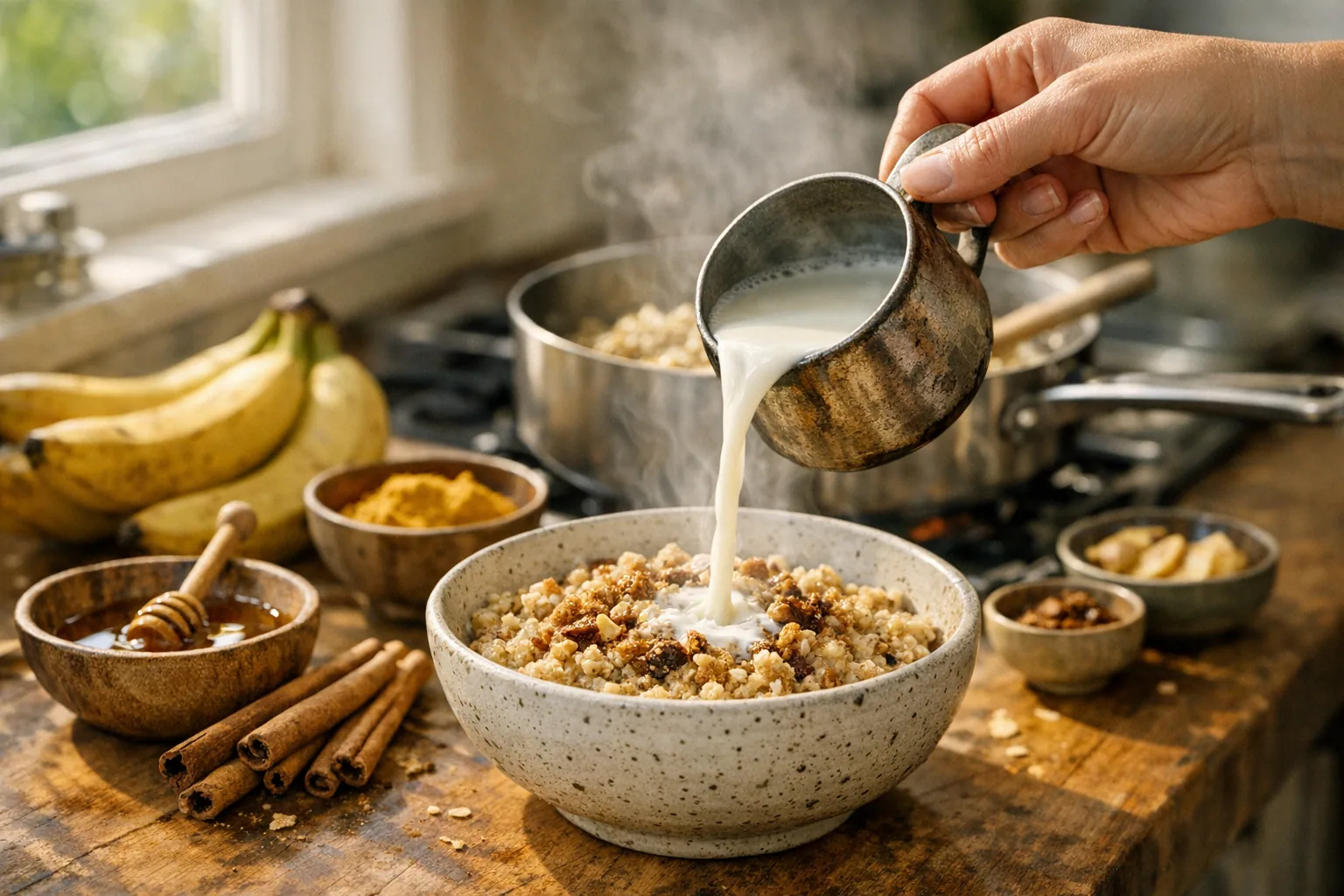
A balanced Ayurvedic breakfast does not need to be exotic, expensive or complicated. In practical terms, it is usually warm or gently cooked, easy to digest and adjusted to the season, your appetite and your daily rhythm. Ayurveda places great importance on agni, the digestive capacity, which is why cooked breakfasts are often preferred over very cold, dry or rushed meals. The point is not to eat a large breakfast at all costs, but to begin the day with steady, comfortable nourishment.
This approach can be useful if you wake up with moderate hunger, sensitive digestion, bloating or the need for something more grounding than a quick piece of toast. The three recipes below cover different needs: creamy apple oat porridge, warm quinoa pudding with berries and coconut, and a savoury millet cream with vegetables and spices. They use common ingredients, exact quantities and simple cooking methods: low heat, enough liquid, mild spices and soft textures.
The best time to eat them is usually after your morning hygiene routine and, if you practise it, after a few minutes of breathing or gentle movement. Sit down, eat without screens and allow at least 10–15 minutes to chew and notice fullness. If you are not hungry on waking, Ayurveda would not usually encourage forcing a heavy breakfast; warm water or herbal tea may be enough until your appetite appears. If you are pregnant, training intensely, taking medication or following a clinical nutrition plan, adjust the portions with professional guidance.
Ingredients with exact amounts
Quantities are for 1 adult serving. For two people, double all ingredients except spices, which can be increased by about 50% and adjusted at the end.
Option 1: spiced apple oat porridge
- 50 g fine rolled oats
- 200 ml water
- 150 ml unsweetened almond drink or semi-skimmed milk
- 120 g apple, peeled and diced
- 5 g ghee or virgin coconut oil
- 10 g raw almonds, chopped
- 8 g raisins or chopped dates, optional
- 1 g ground cinnamon
- 0.5 g ground cardamom
- 0.5 g fresh grated ginger or 0.3 g dried ginger
- 0.5 g fine salt
Option 2: warm quinoa, coconut and berry pudding
- 60 g dry white quinoa
- 180 ml water
- 120 ml light coconut milk or unsweetened coconut drink
- 80 g fresh or frozen berries
- 8 g chia seeds
- 6 g unsweetened desiccated coconut
- 5 g maple syrup or honey, optional; add honey only at the end
- 0.7 g ground cardamom
- 0.5 g ground cinnamon
- 0.5 g fine salt
Option 3: savoury millet cream with courgette and cumin
- 55 g hulled millet
- 280 ml water
- 100 g courgette, finely diced
- 40 g grated carrot
- 30 g fresh spinach, chopped
- 5 g ghee or extra virgin olive oil
- 1 g cumin seeds
- 0.7 g ground turmeric
- 0.2 g ground black pepper
- 1 g fine salt, or less if needed
- 5 ml lemon juice, optional, to serve
Step-by-step preparation
1. Spiced apple oat porridge
- Heat a small saucepan over medium-low heat and add the ghee. Once melted, add the apple, cinnamon, cardamom, ginger and salt. Cook for 3–4 minutes, stirring, until the apple begins to soften and smell fragrant.
- Add the oats, water and almond drink or milk. Stir well so no dry oats stick to the bottom.
- Cook over low heat with a gentle simmer for 8–10 minutes. The mixture should bubble softly rather than boil hard; if using a thermometer, it will be around 90–95°C.
- When creamy and tender, turn off the heat. If it is too thick, add 30–50 ml hot water and stir.
- Serve with chopped almonds and, if desired, raisins or dates. The ideal texture is soft and creamy, not dry or watery.
2. Warm quinoa, coconut and berry pudding
- Rinse the quinoa in a fine sieve under running water for 30–40 seconds, rubbing it lightly with your fingers. This helps remove some of the bitter-tasting saponins.
- Put the rinsed quinoa in a saucepan with the water and salt. Bring to the boil, reduce the heat and cook covered for 12 minutes.
- Add the coconut milk, cardamom, cinnamon and chia seeds. Stir and cook uncovered for 5–6 minutes, until the mixture thickens.
- Add the berries and cook for 1–2 minutes if fresh, or 3–4 minutes if frozen. They should warm through and release some juice without collapsing completely.
- Turn off the heat, rest for 3 minutes and serve with desiccated coconut. If using honey, add it when the pudding is warm rather than boiling.
3. Savoury millet cream with courgette and cumin
- Rinse the millet in a fine sieve and drain well. If you have two extra minutes, toast it dry in the pan until it smells lightly nutty.
- Add the ghee or olive oil, cumin seeds and turmeric. Stir for 30–45 seconds over low heat so the spices bloom without burning.
- Add the courgette, carrot and salt. Cook for 2–3 minutes, until the vegetables begin to soften.
- Add the water, bring to the boil and reduce the heat. Cook covered for 18–20 minutes, stirring once halfway through.
- When the millet is very tender, add the spinach and black pepper. Cook for 1 minute more. For a creamier texture, mash lightly with a spoon or blend one third of the mixture.
- Serve hot with a few drops of lemon if you like. The final texture should be thick and creamy, not soupy.
Variations
By dosha tendency
For a vata tendency —coldness, dryness, irregular appetite or a restless mind— the oat porridge is often the most grounding option. Cook it well, keep it creamy and do not eat it straight from the fridge. You can increase the ghee to 7 g if you tolerate it.
For a pitta tendency —heat, acidity, strong hunger or irritability when meals are delayed— the quinoa pudding can work well if spices stay mild. Use cardamom and a little cinnamon, avoid too much ginger and choose pear instead of berries if acidity is an issue.
For a kapha tendency —morning heaviness, mucus, slow digestion or low appetite— the savoury millet cream is usually the lightest choice. Keep the fat modest, increase cumin slightly and skip sweeteners. A smaller serving may be enough.
Gluten-free, dairy-free or higher-protein
Quinoa and millet are naturally gluten-free, but choose certified products if you have coeliac disease because cross-contamination is possible. Oats must also be certified gluten-free when needed. For a dairy-free version, use plant drinks and coconut or olive oil instead of ghee.
To increase protein, stir 15–20 g of neutral plant protein into the finished breakfast off the heat, using extra liquid to prevent lumps. Another option is to serve the porridge with 125 g plain yoghurt if you tolerate it, or add 20 g ground almonds. In the savoury millet cream, 60 g cooked red lentils can be added for a denser meal.
Storage in the fridge and freezer
All three breakfasts are best freshly made, but they can be prepared ahead. Store them in an airtight container once the main steam has gone, ideally within 2 hours of cooking. They keep for up to 3 days at 4°C or below. Oats and quinoa pudding will thicken as they rest.
To reheat, add 30–80 ml water or plant drink and warm gently for 4–6 minutes, stirring until creamy again. You can also microwave in 45-second intervals, stirring between each one. Avoid reheating the same portion more than once.
Freezing is possible but not perfect. The millet cream freezes best and can be kept for up to 1 month. Defrost overnight in the fridge and reheat with extra liquid. Quinoa pudding may change texture slightly because of the chia and coconut, but it can still work if stirred well.
Reasonable benefits
A well-designed Ayurvedic breakfast may support a more comfortable start to the day because it combines warmth, moisture and moderate spices. Oats provide complex carbohydrates and soluble fibre, which is why they often feel satisfying when cooked properly. Cooked apple is gentler than raw apple for many people and brings natural sweetness without much added sugar.
Quinoa offers a lighter texture and useful nutritional density for a sweet breakfast that is not based only on refined cereals. Combined with chia and berries, it adds fibre and varied texture. Millet allows for a savoury breakfast, which can be helpful for people who do not feel well starting the day with sweet flavours.
Spices should not be treated as cures. Cinnamon, cardamom, cumin, ginger and turmeric improve aroma, warmth and palatability. The key is dosage: a small, well-used amount is usually better than an intense mixture that irritates the stomach.
Precautions and who should avoid it
These breakfasts do not replace individual medical or nutritional advice. If you have diabetes, insulin resistance or need to control carbohydrate intake, review the quantities of grains, fruit and sweeteners with a professional. The recipes are not very sweet, but oats, quinoa, millet and fruit still provide carbohydrates.
If you have coeliac disease, use certified gluten-free oats, quinoa or millet. If you are allergic to nuts, remove almonds and coconut or replace them with tolerated seeds. If you have irritable bowel syndrome, chia, raisins, berries or a high-fibre breakfast may not suit you; start with smaller portions.
Spices also require common sense. Ginger, turmeric and black pepper may irritate some people with active gastritis, reflux or digestive sensitivity. If you are pregnant, taking anticoagulants or have a diagnosed digestive condition, keep spices at culinary levels and ask for advice before increasing doses.
FAQ
Does an Ayurvedic breakfast always have to be hot?
Not always, but warm or hot breakfasts are often easier to digest, especially in cold weather or when bloating is common. In summer, a lukewarm version may be enough. The best guide is how your digestion responds.
Can I make these recipes the night before?
Yes, but reheat them and adjust the texture with water or plant drink. Freshly cooked food is preferred in Ayurveda, but a homemade reheated breakfast can be more realistic than skipping breakfast or eating something ultra-processed.
Which option is the lightest?
The savoury millet cream is usually the lightest if you use little fat and keep the portion moderate. Quinoa pudding sits in the middle, while oat porridge with nuts is more filling. Appetite, timing and digestion also matter.
Can I drink coffee afterwards?
You can, but notice whether it causes acidity, nervousness or an energy dip later. Many people tolerate it better after breakfast than on an empty stomach. Mild ginger, cardamom or cinnamon infusions can be gentler alternatives if they suit you.
Closing
A balanced Ayurvedic breakfast is not about rigid rules. It is about paying attention to digestion, appetite, weather and the quality of what you cook. With three simple bases —oats, quinoa and millet— you can vary flavour, texture and effect without making breakfast complicated.
Ready for your next retreat?
Explore hundreds of retreats across Spain with transparent pricing.
Explore retreats