Beetroot Hummus: A Complete Creamy and Balanced Recipe
Retiru Team
The Retiru content team — yoga, meditation and ayurveda.
Beetroot hummus: a complete creamy and balanced recipe
Beetroot hummus is a colourful variation of classic hummus made with cooked chickpeas, tahini, lemon juice, olive oil, cumin and cooked beetroot. The foundation remains the same: a legume-based spread with fibre and plant protein, but beetroot adds earthy sweetness, a striking colour and a slightly lighter feel. When made well, it should not taste only of beetroot or feel heavy; the secret is balancing acidity, fat, salt, cumin and garlic.
It is worth making because it is simple, affordable and highly versatile. You can serve it as a starter, spread it on wholegrain toast, use it as a dip for raw vegetables or spoon it into grain bowls with roasted vegetables. If you use cooked chickpeas and ready-cooked beetroot, it takes about 10 minutes. If you cook everything from scratch, the flavour is often cleaner and the salt level easier to control, but you will need more planning.
A sensible serving is around 60-100 g per person as a snack or starter, and 120-150 g if it is part of a main plate. It works well mid-morning with carrot or cucumber sticks, as a light dinner with pita bread, or as a nourishing addition after a walk or a gentle yoga session. The recipe below makes about 650-700 g of hummus, enough for roughly six appetizer portions.
Ingredients with exact quantities
- 400 g cooked chickpeas, drained weight, or 160 g dried chickpeas to cook at home
- 200 g cooked beetroot, not pickled, drained and diced
- 45 g tahini, about 2 generous tablespoons
- 35 g freshly squeezed lemon juice, about 2-3 tablespoons
- 35 g extra virgin olive oil, plus a little more to serve
- 1 small garlic clove, inner sprout removed if present
- 3 g ground cumin, about 1 level teaspoon
- 5 g fine salt, about 1 level teaspoon, adjustable
- 40-80 ml cold water or chickpea cooking liquid, to adjust texture
- 1 teaspoon sesame seeds, optional, to serve
- Fresh parsley, coriander or dill, optional
- Freshly ground black pepper, optional
If using canned chickpeas, choose a low-salt option when possible and rinse them until the water runs clear. If using packaged cooked beetroot, make sure it is not preserved in vinegar, as pickled beetroot will change the whole flavour profile. Plain steamed, boiled or roasted beetroot is best.
Step-by-step method
- Cook the chickpeas if starting from dried. Soak 160 g dried chickpeas in plenty of water for 8-12 hours. Drain, rinse and cook in fresh water until very tender, usually 60-90 minutes in a regular pot depending on the chickpeas and water hardness. For smooth hummus, they should crush easily between your fingers. Keep some of the cooking liquid and let the chickpeas cool slightly.
- Prepare the beetroot. If using ready-cooked beetroot, dice and drain it well. If cooking it at home, boil whole unpeeled beetroot for 35-50 minutes, depending on size, until a knife slides in easily. You can also roast it wrapped in baking paper at 180 °C for 45-60 minutes; this gives a sweeter, more concentrated flavour. Let it cool before peeling.
- Blend the flavour base first. Add tahini, lemon juice, garlic, cumin, salt and 40 ml cold water to a blender or food processor. Blend for 30-45 seconds until the mixture becomes lighter and creamier. This helps emulsify the tahini and gives the final hummus a smoother texture.
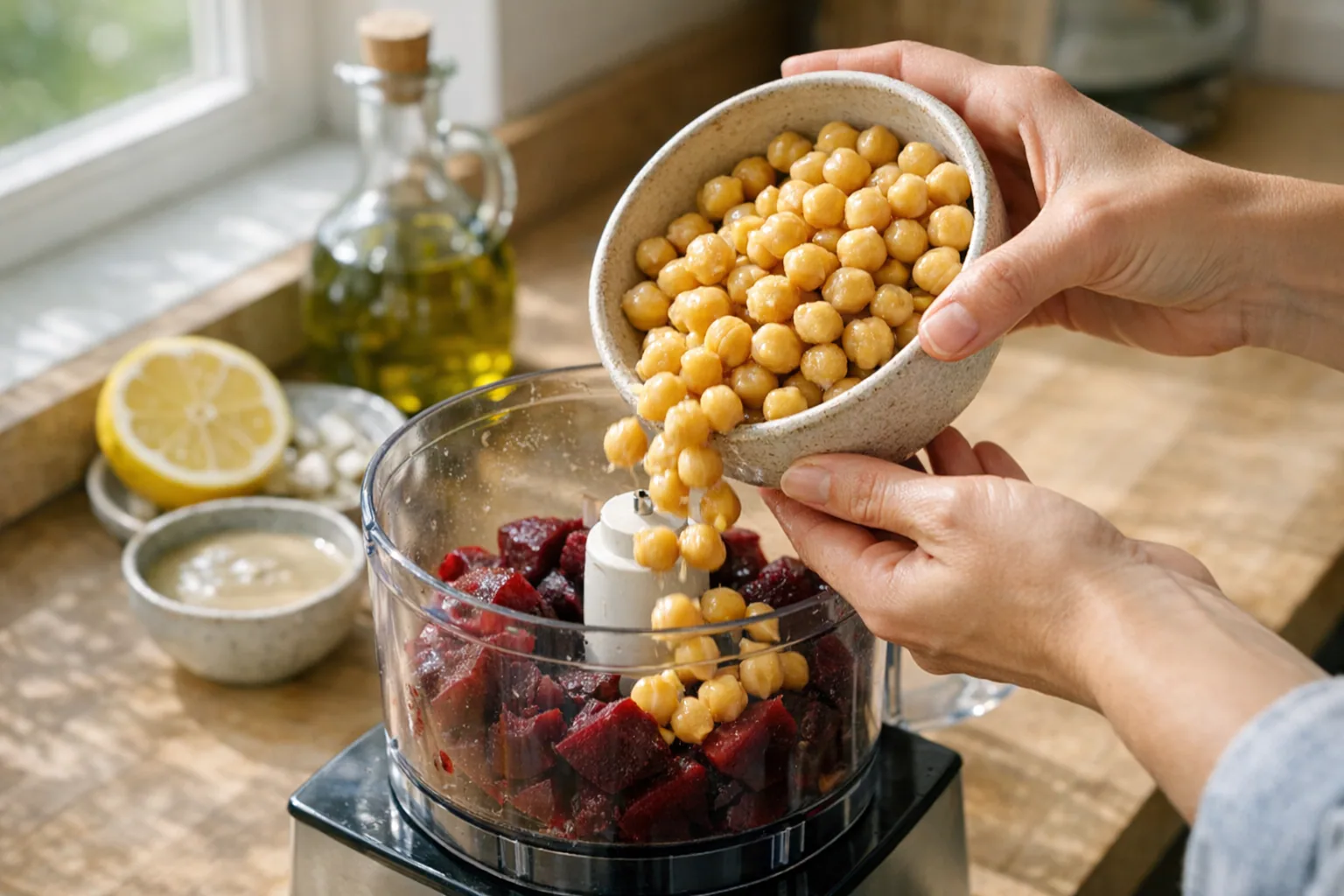
- Add chickpeas and beetroot. Add the 400 g cooked chickpeas and 200 g cooked beetroot. Blend for 1-2 minutes, stopping to scrape down the sides. At first the mixture may look thick and slightly grainy. Do not add all the liquid at once; adjust gradually.
- Adjust the texture. Add the olive oil and blend for another minute. For a silkier hummus, add cold water or chickpea cooking liquid in 10-15 ml additions until you reach the texture you prefer. For spreading on bread, keep it thick but easy to smooth. For dipping vegetables, you can make it a little looser. A powerful blender usually needs 3-4 minutes total blending time for a very smooth result.
- Taste and correct. Let it rest for 5 minutes, then taste again. If it tastes flat, add a pinch of salt or a few drops of lemon juice. If beetroot dominates too much, add a little more cumin or tahini. If the garlic is strong, chill the hummus; its sharpness will soften slightly.
- Serve well. Spoon the hummus onto a shallow plate, make a small swirl with the back of a spoon and drizzle with olive oil. Finish with sesame seeds, herbs or a pinch of cumin. Serve with carrot sticks, cucumber, radishes, wholegrain bread, simple crackers or toasted pita.
Variations
Gentler on digestion
If chickpeas feel heavy for you, cook them until very soft and rinse canned chickpeas thoroughly. You can also rub off some of the skins under running water, which is not essential but improves texture. Use half a garlic clove or roasted garlic instead of raw garlic for a sweeter, milder flavour. A little extra cumin or a small amount of grated fresh ginger can also make the recipe feel lighter.
Gluten-free serving option
The hummus itself is naturally gluten-free if all ingredients are pure, but the accompaniments matter. Serve it with raw vegetables, cooled boiled potato wedges, 100% corn cakes or certified gluten-free crackers. Avoid pita bread, breadsticks and regular toast unless labelled gluten-free. If cooking for someone with coeliac disease, use clean utensils and avoid cross-contamination.
Higher-protein version
To increase protein without making the hummus too dense, add 30 g hulled hemp seeds before blending. If you do not need the recipe to remain vegan, you can stir in 40-60 g plain Greek yoghurt for a tangier, creamier finish. Another good approach is to keep the hummus as it is and serve it with boiled eggs, grilled tofu, quinoa or a lentil salad. Protein powders are not ideal here because they often create a chalky texture.
Storage in the fridge and freezer
Store beetroot hummus in an airtight container, preferably glass, and smooth the surface with a spoon. It keeps well in the fridge for 3-4 days if made with fresh ingredients and clean utensils. A thin layer of olive oil on top can help protect the surface from air, but it does not replace proper refrigeration. Keep it below 4 °C and avoid leaving it on the table for long periods, especially in warm weather.
To freeze it, divide it into 100-150 g portions. Freeze for up to 2 months for best quality. Defrost in the fridge for several hours and stir vigorously before serving; some water separation is normal in legume-based dips. If it becomes too thick, add a spoonful of cold water or olive oil and blend briefly again.
Do not freeze and thaw the same portion repeatedly. If it smells sour, bubbles, shows mould or tastes fermented, discard it.
Reasonable nutritional benefits
The main strength of this recipe is that it combines legumes, seeds and vegetables in a form that is easy to use. Chickpeas provide complex carbohydrates, fibre and plant protein, which makes hummus satisfying. Tahini, made from sesame seeds, contributes unsaturated fats, minerals and creaminess. Extra virgin olive oil adds flavour and good-quality fat in a moderate amount.
Beetroot contains folates, natural pigments such as betalains and naturally occurring nitrates. These nitrates are linked to nitric oxide production, which plays a role in vascular function, but beetroot hummus should not be presented as a treatment for blood pressure or circulation problems. In a varied diet, beetroot is simply a useful way to add colour, natural sweetness and vegetable diversity.
This hummus can also help people eat more legumes, especially if they do not always enjoy stews or soups. Because it is blended with lemon, spices and fat, it may feel more appealing and easier to include in everyday meals. Portion size still matters: a moderate bowl with vegetables is different from eating large amounts with salty chips or crackers.
Precautions: who should be careful
Beetroot hummus suits many people, but not everyone. If you are allergic to sesame, avoid tahini completely and use a safe alternative, or simply rely on chickpeas, olive oil and lemon for texture. If you follow a low-FODMAP diet or have irritable bowel syndrome, chickpeas and raw garlic may cause gas, bloating or discomfort. In that case, use small portions, well-rinsed canned chickpeas and garlic-infused oil instead of raw garlic.
People with a history of calcium oxalate kidney stones may be advised to moderate higher-oxalate foods, and beetroot may be one of them depending on individual guidance. This does not mean it is forbidden for everyone, but it is worth checking if you have a medical history. Beetroot can also colour urine or stools pink or red, a harmless effect known as beeturia; however, pain or uncertainty should not be automatically dismissed as food-related.
If you have high blood pressure, a normal serving is not generally a problem, but salt should be controlled, especially with canned chickpeas and salty accompaniments. For young children, reduce salt and garlic, and choose soft, safe accompaniments rather than hard raw pieces.
FAQ
Can I make beetroot hummus with canned chickpeas?
Yes. It is the fastest method. A large 400 g can often gives around 240-250 g drained chickpeas, so you may need more than one can to reach 400 g. Rinse well and taste before adding all the salt. For a smoother texture, warm the chickpeas in hot water for 3-4 minutes, then drain and blend.
Why is my hummus grainy?
The most common reasons are chickpeas that are not soft enough, too little liquid or not enough blending time. Add cold water gradually and continue blending, stopping to scrape down the sides. Blending tahini, lemon and water first also helps. If your blender is small or not very powerful, make the hummus in two batches.
Can I make it without tahini?
Yes, but the flavour will be less classic and the texture less silky. You can replace it with 20-30 g ground sesame seeds, a spoonful of mild almond butter or a little extra olive oil. If you omit it entirely, adjust with more lemon, chickpeas and water so the hummus does not taste flat. If sesame allergy is the reason, do not use sesame in any form.
Should it be served cold or at room temperature?
It can be served cold, but the flavour is usually better if it sits out for 10-15 minutes before serving. Lemon, cumin and olive oil are more noticeable when the hummus is not fridge-cold. Do not leave it out for more than 2 hours, and less in hot weather. Refrigerate leftovers promptly.
Final note
Beetroot hummus is simple, colourful and practical when the balance is right: very tender chickpeas, plain cooked beetroot, good tahini, enough lemon and a texture adjusted slowly. Serve it with vegetables, whole grains or an extra protein source and it becomes much more than a dip.
Ready for your next retreat?
Explore hundreds of retreats across Spain with transparent pricing.
Explore retreats