Digestive Green Smoothie: Ingredients and Exact Ratios
Retiru Team
The Retiru content team — yoga, meditation and ayurveda.
Introduction
A digestive green smoothie is a simple blend of leafy greens, fruit, water and small aromatic ingredients such as mint, ginger or lemon. Unlike a green juice, it is not strained, so it keeps the fiber from the vegetables and fruit. This makes it more filling and helps the natural sugars from the fruit enter the bloodstream more gradually. The secret is not adding as many ingredients as possible, but balancing the ratios so the smoothie is fresh, smooth and easy to digest.
This type of smoothie can be useful as part of breakfast, as a light afternoon snack or after a heavier meal when you want something fresh but not too dense. Cucumber adds water and softness, spinach gives color and nutrients without a strong flavor, green apple brings moderate sweetness, and lemon adds brightness. Mint and ginger should be used in small amounts: enough to support a fresh digestive profile, but not so much that the drink becomes sharp or irritating.
The best time to drink it depends on your tolerance. Many people enjoy it in the morning or mid-afternoon. If your digestion is sensitive, drink it slowly and avoid making it ice-cold. Even though it is liquid, it still contains fiber and volume, so it is better sipped over 10 to 15 minutes than swallowed quickly. It can complement a simple meal, but it should not regularly replace a complete meal if you need protein, healthy fats and enough energy.
Ingredients with exact measurements
Makes 1 large serving or 2 small servings:
- 60 g fresh spinach, preferably tender leaves
- 120 g cucumber, well washed, ends removed
- 120 g green apple such as Granny Smith, core removed
- 15 g freshly squeezed lemon juice, about 1 tablespoon
- 3 g fresh peeled ginger, about a small 1 cm piece
- 4 g fresh mint leaves, around 8–10 medium leaves
- 200 ml cold water
- 3–4 ice cubes, optional
- 5 g chia seeds or ground flaxseed, optional for extra fiber
- 1 small pinch of fine sea salt, optional, especially after sweating
These amounts make around 500–550 ml, depending on the water content of the produce and the size of the ice cubes. The basic ratio is easy to remember: one part gentle leafy greens, two parts watery fruit and vegetables, and enough liquid for the blender to work without heating the mixture. For a lighter texture, increase the water to 250 ml. For a creamier texture, reduce it to 160–180 ml and blend a little longer.
Step-by-step preparation
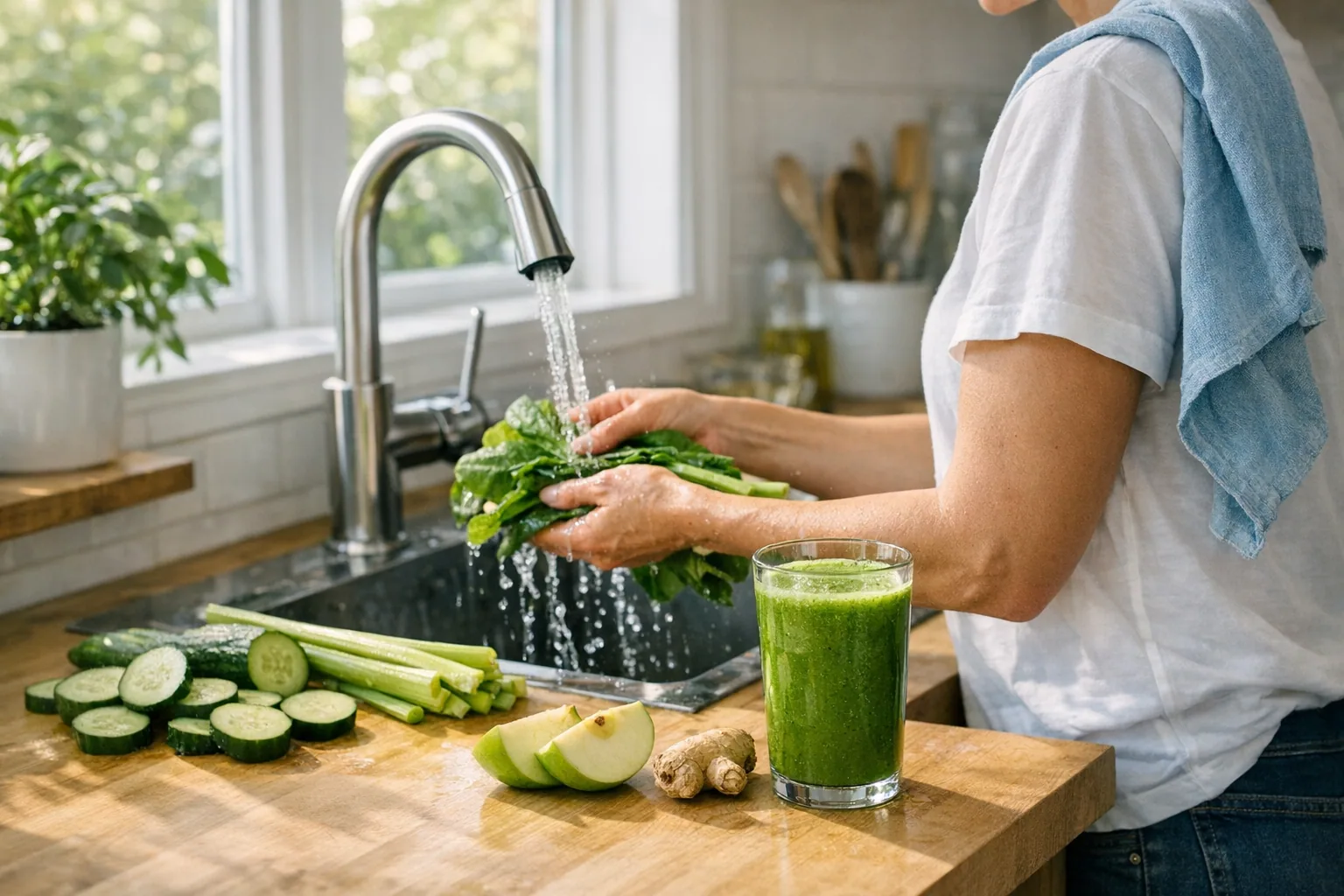
- Wash the spinach, mint, cucumber and apple under cold water. Remove the apple core and cut the cucumber into slices. You do not need to peel the apple if the skin is clean, as it adds fiber and aroma.
- Chill the ingredients before blending. Ideally, the apple and cucumber should come from the fridge, around 4–8 °C. This gives a fresh result without needing too much ice, which can dilute the flavor. If cold drinks make your stomach uncomfortable, skip the ice and use cool or room-temperature water.
- Pour the water into the blender first. Add the cucumber, apple, spinach, mint, ginger and lemon juice. Adding the liquid first helps the blades move smoothly and prevents you from stopping the blender repeatedly. If using chia or ground flaxseed, add it last.
- Blend for 45–60 seconds on medium-high speed. The texture should be even, bright green and free from visible pieces of leaf. If your blender is not very powerful, blend the water, spinach and mint first for 20 seconds, then add the remaining ingredients.
- Adjust the consistency. If it is too thick, add 30–50 ml more water and blend for 10 seconds. If it tastes too acidic, add 20–30 g more apple or a small piece of ripe pear. If the ginger is too strong, soften it with more cucumber or water rather than adding extra lemon.
- Serve immediately in a large glass. Drink slowly over 10–15 minutes. This improves tolerance and makes the smoothie feel more like food than a quick drink.
Variations
Gentler version for sensitive stomachs
Reduce the ginger to 1 g or leave it out, use only 10 g lemon juice and replace the green apple with 120 g ripe pear. Pear gives a softer texture and a sweeter flavor, although it may not suit everyone with FODMAP sensitivity. You can also peel the cucumber if cucumber skin tends to repeat on you. This version is less acidic and often works better as a snack than on an empty stomach.
More filling version with oats
Add 20 g fine rolled oats and increase the water to 250 ml. Let the mixture sit for 5 minutes before blending so the oats hydrate and the texture becomes smoother. This version has more body and can work as a light breakfast if paired with protein, such as plain yogurt, kefir or a small handful of nuts. If you need it gluten-free, choose certified gluten-free oats or skip them.
Higher-protein version
Add 125 g plain unsweetened yogurt or kefir and reduce the water to 120 ml. The result is creamier and more balanced for after a walk, a gentle yoga session or an active morning. For a plant-based option, use unsweetened soy yogurt. Avoid strongly flavored protein powders if your goal is a fresh digestive smoothie, as they can make it overly sweet and heavy.
Warmer Ayurvedic-inspired adjustment
From a practical Ayurvedic point of view, not everyone tolerates cold smoothies well. If cold drinks make you feel bloated, use room-temperature water and leave out the ice. You can keep just 1–2 g ginger for gentle warmth without making the smoothie irritating. On cold days, a warm breakfast, compote or herbal infusion may be more suitable than a chilled smoothie.
Storage in the fridge and freezer
This smoothie is best enjoyed freshly made, when the color, texture and mint aroma are at their peak. If you need to prepare it ahead, store it in a clean glass bottle filled almost to the top to reduce contact with oxygen. Keep it in the fridge at 4 °C and drink it within 24 hours. Shake well or blend again for 5–10 seconds before serving, as the fiber naturally separates from the liquid.
To freeze it, pour the smoothie into ice cube trays or a freezer-safe container, leaving some room for expansion. It keeps well for about 1 month, although the texture will be less fresh after thawing. The best method is to blend the frozen cubes directly with a little water or kefir. Avoid leaving it to thaw at room temperature for hours; thaw it in the fridge overnight or blend from frozen.
You can also prep the ingredients without blending: wash and chop the cucumber, apple and ginger, then store them in an airtight container for up to 24 hours. Add the spinach, mint and lemon just before blending to preserve color and flavor.
Reasonable benefits
A digestive green smoothie can help increase your intake of vegetables and fruit in a convenient way. Spinach provides folate, carotenoids and minerals; cucumber adds water and volume; apple contributes soluble and insoluble fiber; and mint gives a fresh sensation. Because it is not strained, it keeps the fiber, making it more filling than many green juices.
It can also replace less useful choices such as sugary drinks or low-nutrient snacks. However, it does not need to be described as detox. Your liver, kidneys, gut and skin already take part in the body’s normal elimination processes. The value of this recipe is that it is fresh, light, hydrating and easy to adapt, not that it promises dramatic effects.
If consumed slowly, it may feel helpful after a heavy or fatty meal. Still, persistent pain, strong reflux, frequent nausea or significant bowel changes should not be managed with smoothies alone. Food can support wellbeing, but it should not hide symptoms that need professional assessment.
Precautions and who should avoid it
Green smoothies do not suit everyone. If you have irritable bowel syndrome, frequent gas or sensitivity to fermentable carbohydrates, start with half a serving and observe your response. Apple and pear can be problematic in some low-FODMAP approaches, and a sudden increase in raw greens may worsen bloating.
People taking anticoagulant medication such as warfarin should speak with a healthcare professional before making major changes in leafy green intake because of vitamin K. This does not mean spinach is forbidden for everyone, but consistency matters. If you have a history of calcium oxalate kidney stones, it is also wise not to rely heavily on raw spinach every day; alternate with romaine lettuce or lamb’s lettuce.
If you have reflux, active gastritis or strong acidity, lemon and ginger may aggravate symptoms. In that case, reduce the lemon, remove the ginger and avoid drinking it on an empty stomach. For people with diabetes or insulin resistance, reduce the apple to 60 g and increase the cucumber, while monitoring individual response.
FAQ
Is a smoothie better than green juice?
For most people, a smoothie is more useful because it keeps the fiber and is more filling. Juice may feel lighter, but it removes much of the pulp. For everyday digestive support, blending usually makes more sense than straining.
Can I drink it every day?
Yes, if it agrees with you, but vary the greens. Do not rely only on raw spinach. Alternate with romaine lettuce, lamb’s lettuce or a small amount of parsley, and change the fruit with the seasons.
Can I drink it on an empty stomach?
It depends on your digestion. If you tolerate acidity and cold drinks well, it may be fine. If you notice reflux, nausea, bloating or a cold sensation, try it mid-morning or with a light meal instead.
How do I prevent bitterness?
Do not overdo the leafy greens or use the white part of the lemon. Keep spinach around 60 g per large serving and use lemon juice only. If it still tastes bitter, add 20 g pear or reduce the mint.
Closing
A good digestive green smoothie does not need unusual ingredients. It needs clear ratios, a balanced texture and small adjustments based on your own tolerance. Prepared this way, it can be a simple and realistic way to add freshness, fiber and vegetables to your routine.
Ready for your next retreat?
Explore hundreds of retreats across Spain with transparent pricing.
Explore retreats