Anti-Inflammatory Foods: A Practical Shopping List
Retiru Team
The Retiru content team — yoga, meditation and ayurveda.
Introduction: a better shopping basket for a lower-inflammatory diet
The term anti-inflammatory is everywhere, from product labels to social media posts. Still, it deserves a clear and realistic explanation. No single food “turns off” inflammation. What food can do is help create a healthier internal environment: more fiber, more protective plant compounds, better-quality fats, fewer ultra-processed products and a more diverse gut microbiome.
Inflammation itself is not always harmful. It is a normal biological response to infection, injury or intense physical stress. The problem is chronic, low-grade inflammation, which may be encouraged by poor sleep, inactivity, smoking, high alcohol intake, chronic stress and a diet high in added sugars, refined flour, processed meats and low-quality fats.
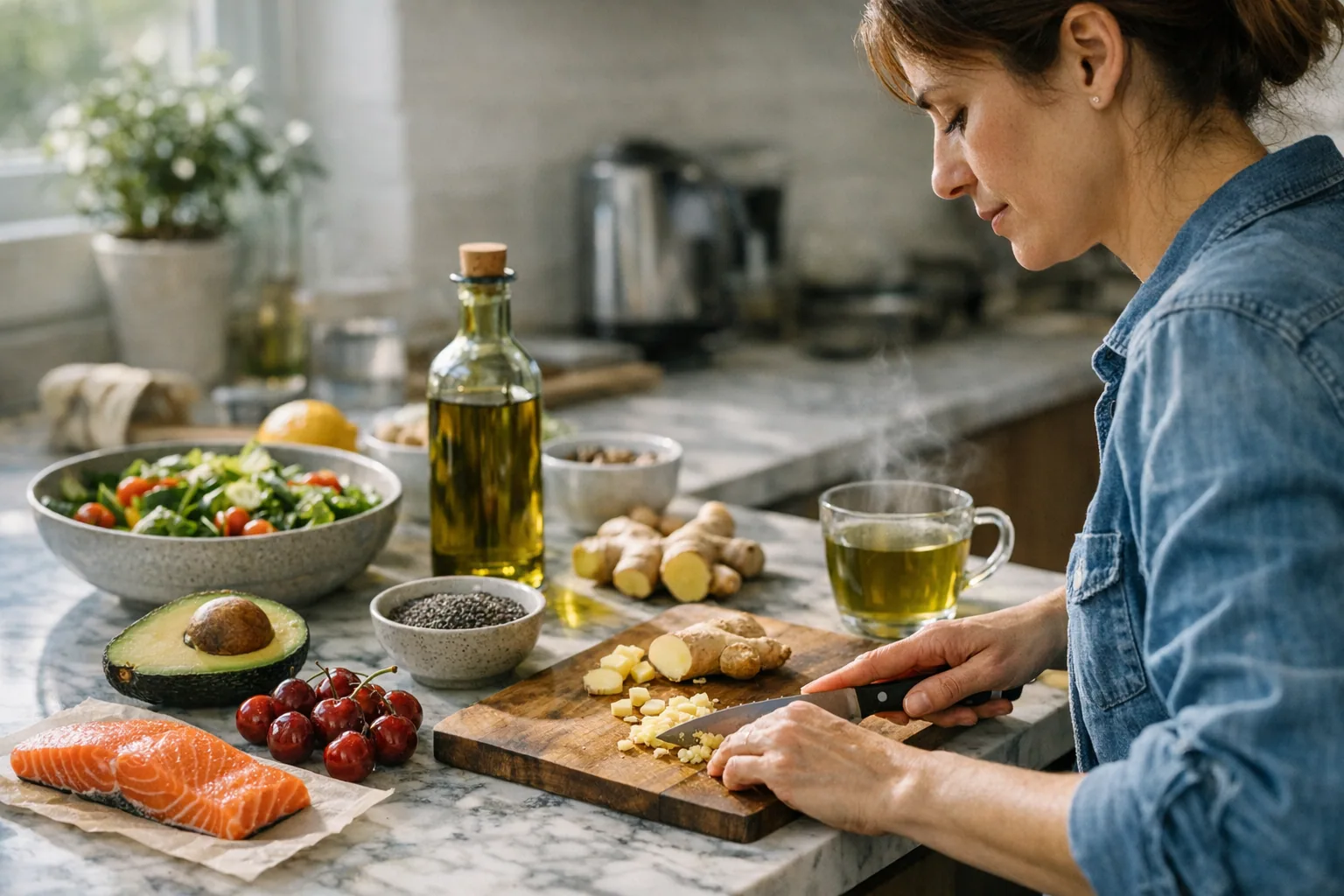
This guide has one practical purpose: to help you shop better. You do not need rare superfoods or a rigid diet. The most useful anti-inflammatory pattern looks very close to a well-built Mediterranean-style diet: extra virgin olive oil, plenty of vegetables, whole fruit, legumes, nuts, seeds, whole grains, oily fish, herbs and spices.
What makes a food anti-inflammatory?
A food can be described as having an anti-inflammatory profile when it provides nutrients or compounds that may help regulate inflammatory pathways as part of an overall diet. Examples include omega-3 fats from oily fish, fermentable fiber from legumes and whole grains, polyphenols from extra virgin olive oil and berries, and carotenoids from orange, red and dark-green vegetables.
It also matters what these foods replace. If your basket contains chickpeas, sardines, spinach, walnuts and fruit, it will probably contain fewer pastries, sugary drinks, salty snacks and ready meals. That shift may be just as important as any individual nutrient. An anti-inflammatory diet is not about collecting superfoods; it is about repeating simple choices consistently.
Food is also different from supplementation. Turmeric capsules, concentrated omega-3 or antioxidant extracts are not the same as eating a balanced diet. Supplements may be useful in specific clinical situations, but they should be assessed individually, especially if you take blood thinners, are pregnant, have liver disease, digestive disorders or surgery scheduled.
Potential benefits, with realistic expectations
A shopping list based on anti-inflammatory foods usually improves overall diet quality. It increases fiber, vitamins, minerals and bioactive compounds, while reducing reliance on calorie-dense, nutrient-poor products. Over time, this may support satiety, bowel regularity, blood lipid levels and blood sugar control, especially when combined with movement, sleep and stress management.
The most noticeable benefit is often routine: less sugary breakfasts, more vegetables at meals, lighter dinners and better-quality fats. People who often feel hungry soon after eating, have low vegetable intake or rely heavily on packaged foods may notice a meaningful difference. However, persistent pain, fever, unexplained weight loss, anemia, chronic diarrhea or significant joint swelling should always be assessed medically.
It is also important not to overpromise. Eating blueberries, broccoli or salmon does not compensate for four hours of sleep, daily alcohol intake or constant stress. Chronic inflammation is multifactorial. Diet is a powerful part of the picture, but not the whole picture.
The practical anti-inflammatory shopping list
Vegetables: the foundation
Aim to include vegetables in at least two main meals each day. Choose different colors and textures: leafy greens, cruciferous vegetables, carotenoid-rich vegetables and easy options for quick cooking. Frozen vegetables are perfectly valid and often make consistency easier.
- Leafy greens: spinach, chard, kale, rocket, romaine lettuce, lamb’s lettuce.
- Cruciferous vegetables: broccoli, cauliflower, Brussels sprouts, cabbage, red cabbage.
- Orange and red vegetables: carrots, pumpkin, red peppers, tomatoes, sweet potatoes.
- Everyday vegetables: courgette, green beans, aubergine, leek, celery.
- Mushrooms: button mushrooms, portobello, shiitake or seasonal varieties.
A useful visual rule is to make half your plate vegetables at lunch and dinner. If that feels too much, start with one daily serving of 200–250 g cooked vegetables or one large salad. Broccoli, for example, can be steamed in 5–7 minutes so it stays bright and pleasant rather than overcooked and bitter.
Fruit: whole is better than juice
Fruit provides water, fiber, vitamins and polyphenols. For an anti-inflammatory approach, choose whole seasonal fruit. Berries are especially interesting because of their anthocyanins, but they do not need to be fresh all year: frozen blueberries, raspberries or cherries are practical options.
- Berries: blueberries, raspberries, blackberries, strawberries, cherries.
- Citrus fruits: oranges, mandarins, grapefruit, lemon.
- Fiber-rich fruit: apples, pears, kiwi.
- Energy and potassium options: bananas, grapes, peaches, apricots.
A simple target is 2–3 portions of fruit per day. One portion might be an apple, two mandarins, a small bowl of berries or two kiwis. Juice, even when freshly squeezed, concentrates sugars and removes much of the fiber, so it is best kept occasional.
Legumes: fiber, plant protein and gut health
Legumes are among the most useful and affordable anti-inflammatory foods. They provide fermentable fiber, plant protein, minerals and slow-digesting carbohydrates. They also feed gut bacteria that produce short-chain fatty acids, which are linked to a healthier intestinal environment.
- Chickpeas, lentils, beans, pinto beans, soybeans, edamame.
- Simple hummus with chickpeas, tahini, lemon, olive oil and cumin.
- Canned cooked legumes, rinsed well, for quick salads.
A practical frequency is 3–5 servings per week, or more if you tolerate them well. One serving is roughly 150–200 g cooked legumes. If they cause gas, start with small portions, choose red lentils or peeled legumes, rinse canned varieties thoroughly and cook with cumin, bay leaf or fennel.
Healthy fats: olive oil, nuts and seeds
Fat quality matters more than avoiding fat altogether. Extra virgin olive oil is an excellent main fat for dressing and moderate-temperature cooking. It provides oleic acid and polyphenols, especially when stored away from heat and light.
- Extra virgin olive oil as the main culinary fat.
- Walnuts, almonds, hazelnuts, pistachios or cashews, preferably unsalted.
- Chia, ground flaxseed, sesame, pumpkin and sunflower seeds.
- Avocado as an optional food, not a requirement.
A reasonable portion of nuts is a small handful per day, around 25–30 g. For seeds, one tablespoon of chia or ground flaxseed can be added to yogurt, porridge or salads. Flaxseed is best ground, as whole seeds often pass through the digestive tract without being fully used.
Oily fish and omega-3 fats
Long-chain omega-3 fats, EPA and DHA, are found mainly in oily fish. You do not need to rely only on salmon. Sardines, mackerel, anchovies, horse mackerel, trout and bonito are excellent options. Smaller oily fish are often affordable and may contain fewer contaminants than large predatory fish.
- Fresh or canned sardines in olive oil.
- Mackerel, anchovies, horse mackerel, trout, bonito and salmon.
- Quality canned seafood for quick meals: sardines, mackerel or mussels.
A common guideline is fish 2–4 times per week, alternating oily and white fish, with at least 1–2 servings of oily fish. If you follow a vegetarian or vegan diet, chia, flaxseed and walnuts provide ALA, although conversion to EPA and DHA is limited. In that case, an algae-based DHA/EPA supplement may be worth discussing with a professional.
Whole grains and tubers
Carbohydrates are not the enemy. Quality, portion size and meal context matter. Oats, brown rice, quinoa, buckwheat, real wholegrain bread, potatoes and sweet potatoes can all fit into an anti-inflammatory diet, especially when paired with vegetables, protein and healthy fats.
- Oats, brown rice, quinoa, millet, buckwheat.
- 100% wholegrain bread or sourdough made mainly with wholegrain flour.
- Potatoes, sweet potatoes and cassava in simple preparations.
One useful trick is to cook potatoes, rice or sweet potatoes and let them cool in the fridge. As they cool, some starch becomes resistant starch, which behaves more like fiber and may support gut bacteria. They can then be eaten cold in salads or gently reheated.
Spices, herbs and drinks
Spices do not compensate for a poor diet, but they improve flavor and variety without relying on sugary or salty sauces. Turmeric, ginger, garlic, onion, rosemary, oregano and cinnamon are easy to use in everyday cooking. Turmeric is better absorbed with black pepper and fat, such as in a stew cooked with olive oil.
- Turmeric, ginger, black pepper, cinnamon, cumin, paprika.
- Garlic, onion, leek, parsley, coriander, rosemary, thyme, oregano.
- Green tea or unsweetened herbal infusions instead of soft drinks.
- Unsweetened cocoa powder in small amounts.
For green tea, 1–3 cups per day is usually reasonable for people who tolerate caffeine. If you have anxiety, insomnia, pregnancy-related sensitivity or digestive discomfort, keep it moderate and drink it earlier in the day.
Signs your diet may be lacking balance
There is no formal diagnosis of “anti-inflammatory food deficiency.” What can happen is a low intake of fiber, omega-3, micronutrients or high-quality protein. Clues include frequent constipation, hunger soon after meals, very little vegetable variety, daily ultra-processed foods, almost no legumes or fish, and regular sugary drinks.
There can also be excess under a healthy label. Large amounts of nuts, oil, avocado or nut butters can displace other foods and raise total energy intake considerably. Smoothies loaded with fruit, dates, cocoa, seeds and nut butter may be nutritious, but they are not automatically light or suitable for everyone.
Another warning sign is turning an anti-inflammatory diet into a rigid list of bans. If eating creates fear, guilt or social restriction, the approach needs adjusting. Better nutrition should provide more tools, not constant surveillance.
How to use this in everyday life
The easiest method is to plan by building blocks rather than complicated recipes. Before shopping, choose three vegetables, two fruits, one legume, one animal or plant protein, one whole grain and one healthy fat. With those basics, you can create different meals throughout the week.
A weekly basket for one person might include: spinach, broccoli, courgette, mushrooms, seasonal fruit, two jars of cooked legumes, oats, brown rice or quinoa, two tins of sardines, one fresh fish option, plain yogurt or kefir if tolerated, walnuts, chia seeds and extra virgin olive oil.
Breakfast could be plain yogurt with oats, berries and walnuts, or wholegrain toast with tomato, olive oil and egg. Lunch might be lentils with vegetables or a warm chickpea salad with spinach, peppers and sardines. Dinner could be baked fish with sweet potato and broccoli, or tofu stir-fried with vegetables and brown rice.
Consistency depends on flavor. Use different spices, cuts and cooking methods: roasting, steaming, grilling, stewing or warm salads. A dressing made with olive oil, lemon, mustard, herbs and pepper can turn simple vegetables into something you actually want to repeat.
Precautions, interactions and when to seek advice
A diet rich in vegetables, legumes and healthy fats is safe for most people, but sudden changes are not always ideal. If you have irritable bowel syndrome, active inflammatory bowel disease, recent diverticulitis or FODMAP sensitivity, rapidly increasing legumes, cruciferous vegetables and fiber may worsen gas, pain or diarrhea. Progress gradually and seek professional guidance if needed.
If you take anticoagulant medication, ask your clinician before using concentrated omega-3, turmeric, garlic capsules or herbal extracts. Normal culinary amounts are different from supplementation. Extra care is also needed with advanced kidney disease, eating disorders, fish or nut allergies, pregnancy, breastfeeding and young children.
During pregnancy, small oily fish can be a useful choice, but large high-mercury species should be avoided according to local health guidance. Herbal infusions and extracts are not automatically safe just because they are natural.
FAQ
How long does it take to notice changes?
It depends on your starting point. Some people notice better digestion and satiety within one or two weeks after increasing fiber and reducing ultra-processed foods. Deeper changes, such as blood lipids or glucose control, usually require months of consistency and medical monitoring when relevant.
Do I need to avoid gluten, dairy or meat?
Not necessarily. If you have coeliac disease, allergy or a diagnosed intolerance, your diet should be adapted. Otherwise, removing entire food groups can make eating harder and less varied. For many people, the priority is simply to choose minimally processed foods and reduce processed meats.
Are frozen foods acceptable?
Yes. Frozen spinach, broccoli, cauliflower, kale, green beans and berries are practical and nutritious. The key is to check that they do not include sauces, coatings or added sugar.
What should I reduce?
Focus on reducing frequency, not creating fear. Limit sugary drinks, pastries, processed meats, frequent fried foods, alcohol, salty snacks, sweetened cereals and ready meals high in salt, refined flour and low-quality fats.
Closing
An anti-inflammatory shopping list does not begin with a miracle product. It begins with a simple idea: fill your kitchen with foods that make balanced eating easier. Vegetables, whole fruit, legumes, extra virgin olive oil, nuts, seeds, whole grains and oily fish offer a solid, flexible foundation.
The goal is not perfection. The goal is repetition. When your weekly shopping improves, your meals improve almost automatically, and nutrition becomes a practical tool rather than another rigid rule.
Ready for your next retreat?
Explore hundreds of retreats across Spain with transparent pricing.
Explore retreats