Neem Oil for Skin: Safe Topical Uses
Retiru Team
The Retiru content team — yoga, meditation and ayurveda.
Introduction
Neem oil is often found in natural skincare formulas for oily skin, blemishes, dandruff-prone scalps, insect bites and minor skin discomfort. Its reputation comes from its traditionally attributed antibacterial, antifungal, anti-inflammatory and insect-repellent properties, as well as its ability to soften the skin when used correctly. Still, neem is not a neutral carrier oil. It is active, strongly scented and can irritate the skin if used too concentrated or too often.
For topical use, safety depends on dilution, application area and the condition of the skin barrier. A few drops mixed into a carrier oil may be useful for short, targeted use. Applying it neat, leaving it on overnight without testing, or using it on inflamed or broken skin can lead to redness, itching or burning. It is also important to separate cosmetic support from medical treatment. Neem oil may support the care of blemish-prone or flaky skin, but it does not replace medical advice when there is infection, pain, open wounds or persistent flare-ups.
This guide explains what neem oil is from a cautious Ayurvedic perspective, what it is commonly used for, how to apply it safely and when it is better to avoid it.
What neem oil is in Ayurvedic tradition
Neem comes from the Azadirachta indica tree, a plant highly valued in Ayurvedic tradition. Different parts of the tree, including leaves, bark, seeds and oil, have been used traditionally for hygiene, skin care and protection against insects. The oil is usually obtained from the seeds. For cosmetic use, cold-pressed, unrefined neem oil is often preferred because it retains more of its characteristic compounds.
In Ayurveda, neem is generally described as intense, bitter and cooling. It is traditionally associated with states of excess heat, oiliness, irritation and impurity, which explains its use in skin prone to blemishes, itching, redness or inflammation. This should be interpreted with care. It does not mean neem oil cures acne, eczema, psoriasis or fungal infections. Rather, it may be used as a topical support when the skin tolerates it and when there are no signs that require medical care.
Neem oil is not an essential oil, although it is sometimes confused with one because of its strong smell. It is a dense vegetable oil, usually yellow-green to brown, with a pungent earthy, bitter, garlic-like or sulphurous aroma. It may partially solidify in cold temperatures. If this happens, place the closed bottle in warm water for a few minutes instead of heating it directly.
Uses and attributed benefits
Neem oil is best known in skincare for its purifying action. In natural cosmetics, it is used for blemish-prone skin because it is attributed with antibacterial and anti-inflammatory properties that may help reduce the appearance of active spots and associated redness. It should not be considered a stand-alone acne treatment, especially when acne is painful, cystic, widespread or leaving marks. In those cases, dermatological guidance is more appropriate.
It is also used for itchy, flaky or rough areas, where the aim is to calm and soften the skin. Traditional and cosmetic sources often mention neem in relation to eczema, psoriasis or dermatitis, but this is where caution matters most. A compromised skin barrier reacts more easily. If the skin is cracked, weeping, very hot, painful or actively flaring, it is better not to experiment.
Another common use is scalp care. Neem appears in shampoos, masks and hair oils aimed at dandruff, itching and oily scalps. Its attributed antifungal and purifying properties explain its presence in formulas for mild flaking. Because of its repellent qualities, it has also been used traditionally to help keep insects away, although it should not replace specific treatments when there is a significant infestation or when children are involved.
On the body, diluted neem oil may be used for feet, areas prone to sweating, or spots exposed to insect bites. If you suspect athlete’s foot, candidiasis, bacterial infection or lesions that are spreading, neem oil should not be your only measure. Getting a proper diagnosis prevents delays in effective treatment.
How to apply it: oil, massage, timing and temperature
The most important rule is not to start with undiluted neem oil. Although some traditional uses mention neat application, modern cosmetic use is safer when neem is mixed with a carrier oil. For the face, a cautious dilution is between 0.5% and 2%. As a practical reference, this is roughly 1 to 2 drops of neem oil in one 5 ml teaspoon of carrier oil such as jojoba, sesame, sweet almond or calendula-infused oil. For body or feet, 2% to 5% may be tolerated by more resilient skin, but higher concentrations are rarely necessary.
Before applying it to a visible or large area, do a patch test. Apply a small amount of your diluted blend to the inner forearm or behind the ear. Wait 24 hours, or up to 48 hours if your skin is sensitive. Do not use it if you notice persistent itching, redness, swelling, small bumps or heat.
For facial use, targeted application is best. Cleanse the skin, dry it well and apply a tiny amount of the diluted oil only to specific areas. You can leave it on for 20 to 30 minutes and remove the excess with a damp cloth, or use a very small amount overnight only if you already know your skin tolerates it. Always avoid the eye area, lips, corners of the mouth and mucous membranes.
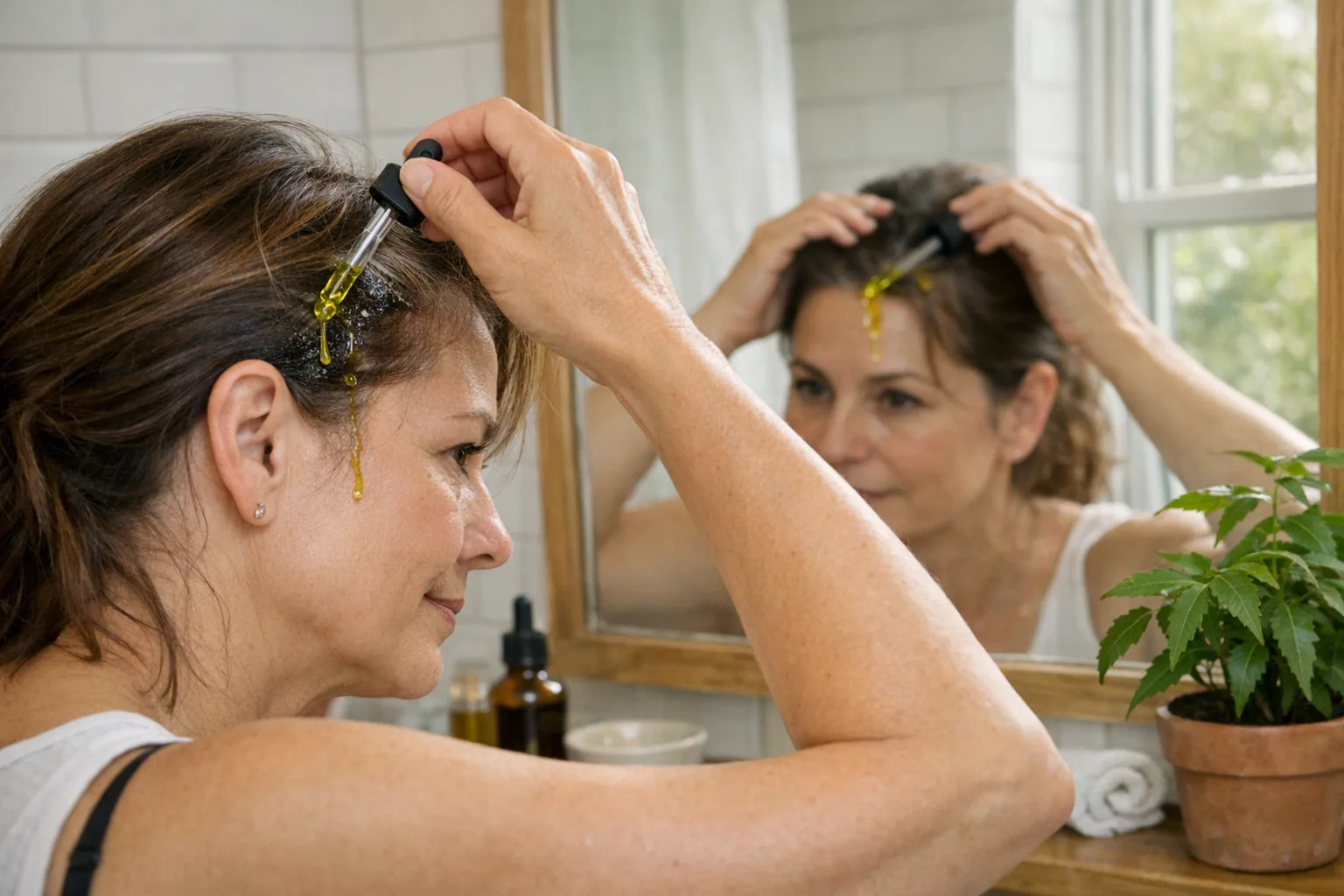
For the scalp, prepare a 2% to 5% blend in coconut, sesame or jojoba oil. Massage gently with the fingertips for 3 to 5 minutes without scratching, then leave on for 20 to 45 minutes before washing. If your scalp is oily or sensitive, start with 15 to 20 minutes. Sleeping with neem oil on the scalp is usually unnecessary and may increase irritation or leave difficult residue.
Temperature should be warm, never hot. If the oil is thick, warm the closed bottle in a bowl of warm water. Do not microwave it or place it directly over heat. Avoid applying neem oil to freshly shaved, waxed, exfoliated or overheated skin, as this increases reactivity.
Simple body blend for occasional use
- 10 ml sesame, jojoba or sweet almond oil
- 4 to 6 drops neem oil
- Optional: 1 drop lavender essential oil only if you already tolerate it and are not pregnant
Apply a small amount to targeted areas for 3 or 4 days, then pause. If you feel you need continuous use, it is better to review the underlying cause rather than increasing the dose.
Choosing by dosha or season
In Ayurveda, neem is usually linked to cooling, bitter and slightly drying qualities. It is therefore associated with pitta-type situations, where heat, redness and inflammation dominate, and with some kapha-type excesses, such as oiliness, heaviness or congestion. This framework can be useful as a guide, but it should not replace direct observation of the skin.
In summer or humid weather, people with oily skin may tolerate low-dose neem better, particularly on areas prone to blemishes or sweating. It can be combined with lighter oils such as jojoba, or with good-quality aloe vera gel after patch testing. In winter, or when skin is dry, tight or flaky, neem may feel too drying if used often. In that case, use a very low dilution and a more nourishing base such as sesame, almond or calendula oil.
For a vata-type state, traditionally associated with dryness, coldness and fragility, neem is rarely the main oil. It may be used occasionally, but in a richer, soothing base. For pitta, keep applications brief, cool and non-occlusive. For kapha, neem can fit oily skin or scalp routines, but excess is still a problem: oily skin can also become irritated and dehydrated.
Precautions and when to consult a professional
Neem oil can irritate the skin, especially in high concentrations. Azadirachtin, one of its known compounds, is associated with insecticidal activity but may also irritate skin and eyes. Keep neem oil away from the eye area, mucous membranes, genitals, open wounds and intense dermatitis flare-ups. If it gets into the eyes, rinse with plenty of water and seek medical help if irritation continues.
Do not ingest neem oil. This guide refers only to topical cosmetic use. Oral neem products may be dangerous, especially for children, pregnant women and people with certain medical conditions. Neem oil is also not recommended for babies or young children, and it should not be used on pets unless a veterinarian specifically advises it.
Avoid neem oil during pregnancy and breastfeeding unless a qualified professional recommends otherwise. Be cautious if you have very sensitive skin, rosacea, atopic dermatitis, known plant allergies, or if you use active dermatological treatments such as retinoids, benzoyl peroxide, exfoliating acids or topical corticosteroids. Combining too many active products increases irritation risk and makes reactions harder to interpret.
Consult a dermatologist or healthcare professional if there is pain, pus, yellow crusting, fever, wounds that do not heal, changing spots, severe hair loss, intense scaling or persistent itching. The same applies if acne leaves marks, if you suspect fungal infection, or if eczema or psoriasis spreads. Neem oil can be a cosmetic support, not a diagnostic tool or a substitute for treatment.
At home vs in a professional setting
Using neem oil at home makes sense for simple care, small areas and skin you already understand. A targeted blemish application, a mild foot blend or a short scalp mask can be done safely if you respect dilution and timing. The advantage is that you can observe the skin’s response and adjust frequency and quantity.
The risk at home is assuming natural means harmless. Applying neat neem oil over the whole face, leaving it on all night without testing, or using it on open dermatitis are common mistakes. Another frequent error is combining neem with many essential oils, clays, acids or scrubs in an attempt to make it stronger. With skin, stronger rarely means better.
In an Ayurvedic, massage or natural skincare setting, neem may be part of localized treatments, medicated oils or scalp care. The difference should be proper assessment: skin type, sensitivity, medication, allergies, pregnancy, visible lesions and realistic goals. A good practitioner will not apply neem indiscriminately or promise cures. They will use it as one tool within a safe practice.
If you receive a treatment involving neem oil, ask about the concentration, carrier oil, exposure time and what to do if irritation appears. Mention active skincare products, recent peels, laser treatments, waxing or diagnosed skin conditions, because these factors can completely change whether neem is appropriate.
FAQ
Can neem oil be applied directly to the skin?
It is not the safest option. Some people tolerate it, but undiluted neem oil can irritate the face, neck, underarms, groin and sensitive skin. Start with low dilutions, around 0.5% to 2% for the face, and use slightly higher concentrations only on small body areas for short periods.
Does neem oil help with acne?
It may support blemish-prone skin because of its attributed purifying and calming properties. However, acne has many causes, including hormones, inflammation, comedogenic products, stress, medication and genetics. Painful, persistent or scarring acne should be assessed by a dermatologist.
How can I use it for dandruff?
Mix a few drops into a carrier oil and massage the scalp gently for 3 to 5 minutes. Leave it on for 20 to 45 minutes, then wash with a mild shampoo. If flaking is severe, itchy, painful, smelly or accompanied by hair loss, seek professional advice.
Does the strong smell mean it has gone bad?
Not necessarily. Unrefined neem oil naturally smells strong, bitter, earthy and sulphurous. Warning signs include a clearly rancid smell, sudden texture changes, visible contamination or poor storage. Keep it tightly closed, away from light and heat.
Closing
Neem oil can be a useful topical ingredient when understood properly: a potent vegetable oil with Ayurvedic tradition and interesting cosmetic uses, but not a risk-free remedy. Its potential value for oily skin, blemishes, mild scalp flaking, insect bites or areas prone to fungal issues depends on dilution, frequency and the condition of the skin.
The safest approach is to start with a low dose, mix it with a carrier oil, patch test and avoid delicate areas. If there is skin disease, infection, pregnancy, breastfeeding, young children or active dermatological treatment involved, caution should be much higher. In skincare, effectiveness is not about using the strongest ingredient. It is about using the right one, in the right amount, at the right time.
Ready for your next retreat?
Explore hundreds of retreats across Spain with transparent pricing.
Explore retreats