Mahanarayan Oil: a practical guide for joints and muscles
Retiru Team
The Retiru content team — yoga, meditation and ayurveda.
Introduction
Mahanarayan oil, also known as Mahanarayana Thailam or Maha Narayan, is a traditional Ayurvedic massage oil commonly used for joints, muscles, the back, shoulders, neck and legs. It is known for being a warming, nourishing and deeply unctuous oil, often chosen when the body feels stiff, tired or tense.
It is important to frame it correctly. Mahanarayan oil is not a medicine and should not replace diagnosis or treatment for injuries, arthritis, tendinitis or persistent pain. In Ayurveda, it is used externally as part of broader care routines that may include massage, moderate heat, gentle movement, rest and appropriate lifestyle habits. In everyday use, many people apply it after physical effort, during cold seasons or when joints feel dry, tight or less mobile.
Its effect depends not only on the formula, but also on the way it is applied. A quick layer of oil on the skin is very different from slow massage with appropriate warmth, steady pressure and time to rest afterwards. This guide explains what Mahanarayan oil is, when it may be useful and how to use it with common sense.
What Mahanarayan oil is in Ayurvedic tradition
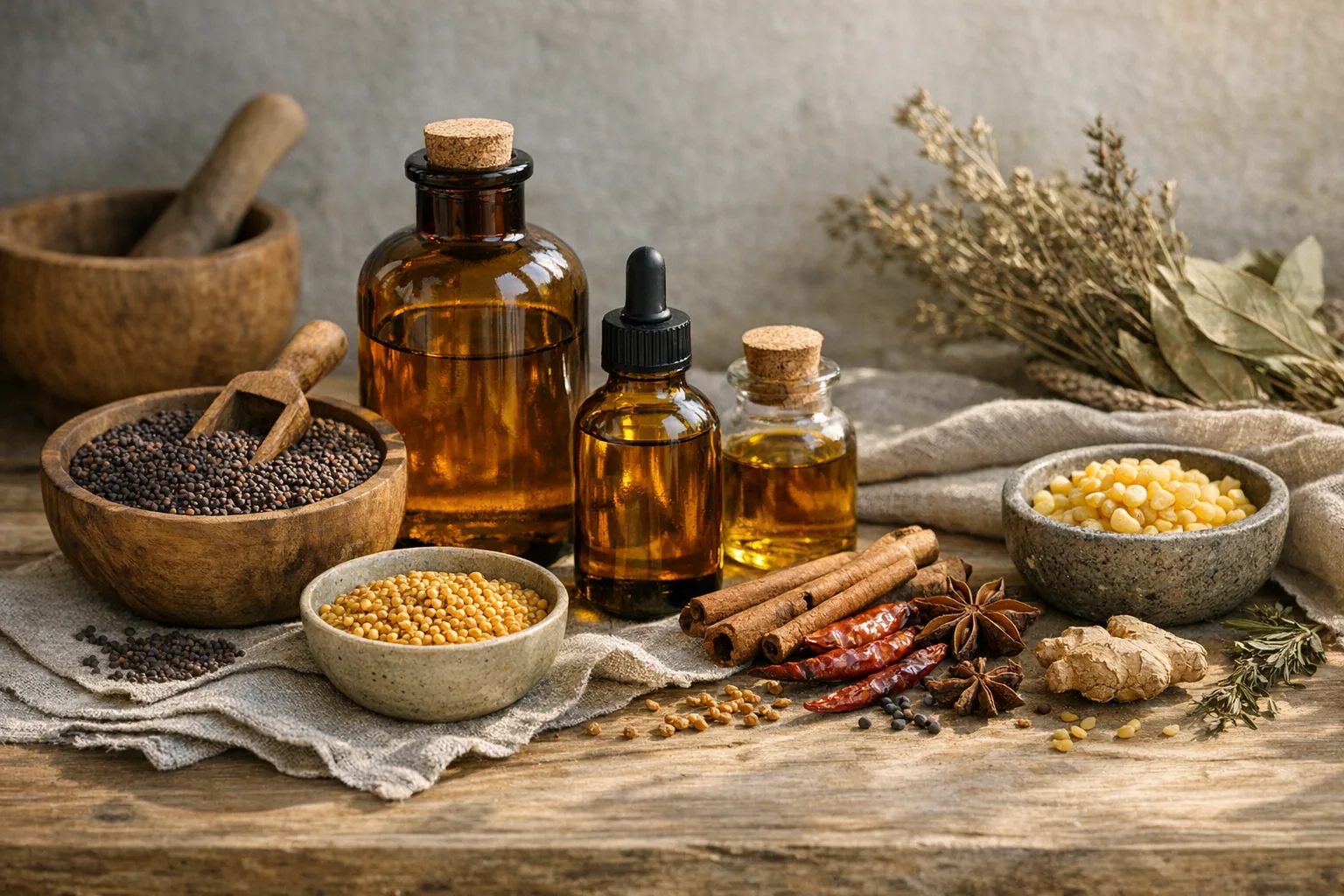
In Ayurveda, medicated oils are known as taila or thailam. They are traditionally prepared by cooking an oil base, often sesame oil, with herbal decoctions, plant pastes and other ingredients. The aim is to create an oil suitable for therapeutic external massage, carrying the qualities of the selected botanicals.
The name Mahanarayan is linked to a classical formula traditionally valued for the care of muscles, tendons, joints and nerves. Depending on the lineage and the manufacturer, the formula may contain many different herbs; some commercial versions refer to more than 50 botanical components. This complexity is one reason to treat it with respect: even though it is applied topically, it is not just a simple cosmetic oil.
Its texture is usually rich and heavy, with a warming quality during massage. In Ayurvedic terms, it is often associated with balancing Vata, which is linked with dryness, irregular movement, tension, cracking sensations, nervous exhaustion and stiffness. It may also be used in some Kapha contexts, where heaviness, sluggishness and stagnation are present, provided there are no signs of acute inflammation.
From a modern practical perspective, some of its perceived benefits can be explained without exaggeration. Massage improves body awareness, gentle heat can help superficial tissues relax, friction creates a sense of local circulation, and oil allows the hands to move smoothly over the skin. No miracle claims are needed to understand why this ritual may feel useful.
What it is used for: attributed benefits for joints and muscles
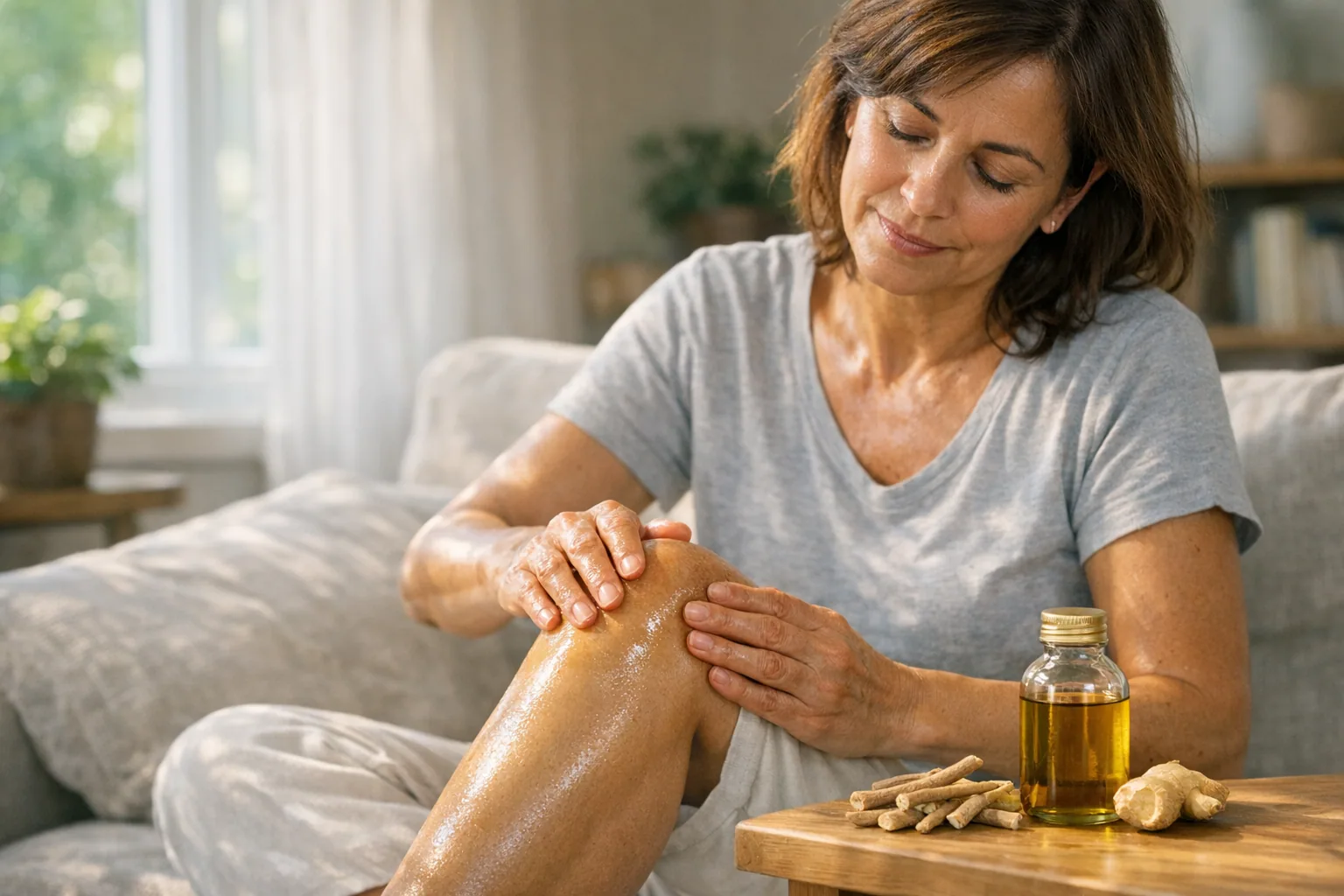
The most common use of Mahanarayan oil is massage over areas with joint stiffness, muscular tension or fatigue. It is frequently applied to knees, hips, ankles, shoulders, the lower back, forearms, hands and feet. For people who practise yoga, strength training, long walks or repetitive physical work, it can be part of a recovery routine when discomfort is mild and related to overuse, cold or lack of mobility.
In Ayurvedic tradition, it is attributed with tissue-nourishing qualities, support for mobility and a reduction in the feeling of tension. In practical terms, it is often used either before gentle movement or after activity. For example, 10 to 15 minutes of massage on calves and feet after a long walk may be more useful as a recovery ritual than simply applying the oil without attention.
It is also commonly used on the back, particularly when the lower or upper back feels loaded. In this case, the benefit often comes from the combination of warmth, touch and slower breathing. If back pain is intense, travels down the leg, causes tingling or weakness, or appears after a fall, it should not be managed with massage alone.
Another common use is for joints that feel cold or slow in the morning. A short massage on the hands, wrists, knees or ankles, followed by gentle movement, may help reduce the sensation of blockage. However, if there is visible swelling, redness, local heat or sharp pain, a warming oil may not be appropriate at that moment.
How to apply it: amount, temperature, massage and timing
Start with a small amount. For a small joint such as a wrist, ankle or knee, 1 teaspoon, around 5 ml, is often enough. For a larger area such as the lower back, thighs or both shoulders, 10–15 ml may be used. The skin does not need to be soaked; the goal is to allow the hands to glide while still being able to work the area for several minutes.
Warm the oil gently before application. The simplest method is to place the closed bottle in a bowl of hot water for a few minutes, or to warm a small amount in a bain-marie. The oil should feel pleasant, around 38–40 °C, never hot enough to burn. Always test a drop on the inner wrist before applying it more broadly.
Begin the massage with slow, broad movements. On long muscles such as thighs, calves or forearms, work lengthwise with moderate, steady pressure. Around joints, use circular movements without pressing directly into painful points. A useful routine is 10–20 minutes of massage, followed by 20–30 minutes of rest before showering with warm water.
If you apply it before gentle yoga or mobility work, use only a little and wipe off the excess to avoid slipping. Five to ten minutes may be enough. If you use it in the evening, you can take more time, cover the area with clothing that can get oily and let it sit longer if your skin tolerates it.
Frequency depends on the situation. For seasonal care in cold weather, 2–4 times per week may be sufficient. For a particularly stiff area, some traditions use it daily for short periods, but the skin’s response should guide you. If irritation, itching, excessive heat or increased pain appears, stop using it.
Choosing according to dosha, constitution and season
Mahanarayan oil is generally considered warming and nourishing, so it is often most appropriate in Vata situations: coldness, dryness, tension, cracking sensations, variable stiffness, light sleep or nervous fatigue. It tends to feel especially suitable in autumn and winter, or for people whose joints feel worse in cold and windy conditions.
In Kapha situations, where heaviness and sluggishness may predominate, it can be used with less oil and a more vigorous style of massage. The key is not to overdo the heaviness. A warm shower and movement afterwards can help avoid a dull or lethargic feeling.
For Pitta constitutions, or during very hot weather, more caution is needed. If the skin reddens easily, there is body heat, inflammation, irritability or a tendency to rashes, a warming oil may feel too stimulating. In such cases, use a very small amount, choose cooler times of day or seek professional guidance.
A simple rule is helpful: if the discomfort improves with gentle heat and slow movement, Mahanarayan oil may fit. If it worsens with heat, feels sharp or throbbing, or comes with swelling, it is probably not the right tool at that time.
Precautions and when to consult a professional
Even though it is used externally, Mahanarayan oil requires caution. Before first use, apply a small amount to the forearm and wait 24 hours. If redness, itching, burning, hives or peeling appears, do not use it. Formulas containing many herbs can trigger individual sensitivity, even in people who tolerate plain oils well.
Do not apply it on wounds, burns, active eczema, skin infections, painful varicose veins, suspected thrombosis or acutely inflamed areas. It is also not the right first response for a recent sprain, a swollen impact injury, a hot joint or sudden severe pain. These situations require proper assessment.
Seek professional advice if pain lasts more than one or two weeks, limits movement, wakes you at night, or comes with fever, unexplained weight loss, tingling, weakness, numbness or persistent swelling. Extra caution is also recommended during pregnancy, breastfeeding, rheumatic disease, anticoagulant treatment, neuropathy, diabetes with reduced sensitivity, or very reactive skin.
A common mistake is pressing too hard into a painful area. Massage with Mahanarayan oil should create comfort, pleasant warmth and a feeling of space, not intense pain. If you feel you need strong pressure to “make it work”, reduce pressure, slow down and focus on breathing and gentle movement instead.
At home vs in a professional setting
Using Mahanarayan oil at home can be enough for simple routines: stiff hands, tired feet, loaded shoulders or legs after walking. The main advantage is consistency. A 10-minute self-massage several times per week may be more helpful than one intense session done occasionally.
At home, use a dedicated towel, comfortable clothes that can get oily and a stable surface. Sesame-based oils and Ayurvedic formulas may leave residue, so avoid slippery floors. After application, a warm shower or warm compress can complete the routine, as long as there are no signs of inflammation.
A qualified therapist offers something different: assessment, technique, rhythm and the ability to work areas that are difficult to reach, such as the back, shoulder girdle or hips. In Ayurveda, the oil may be part of broader treatments such as abhyanga or localized heat applications, which should be performed by trained practitioners.
The main difference is not that the oil is “stronger” in a centre, but that professional context can reduce mistakes: too much pressure, poor indication, excessive heat or massage over areas that should not be manipulated. For general wellbeing, home use may be enough. For persistent pain or medical conditions, professional guidance is the safer choice.
FAQ
Can Mahanarayan oil help with arthritis or osteoarthritis?
It may ease stiffness in some people, especially when gentle warmth improves mobility. But it does not treat the underlying condition and should not replace medical care, physiotherapy or therapeutic exercise. During inflammatory flare-ups with heat or swelling, avoid warming oil unless advised otherwise.
Can I use it before yoga or exercise?
Yes, in moderation. Apply a small amount, massage for 5–10 minutes and wipe away excess oil to avoid slipping. It is better suited to gentle mobility or calm practice than to explosive training. After exercise, you can massage longer and let it rest for 20–30 minutes.
Will it stain clothes or sheets?
Yes, it can. Use old clothing, a dedicated towel and wait until the oil is partly absorbed before dressing. If you apply it at night, protect bedding and avoid delicate fabrics.
How quickly should I notice effects?
Warmth and relaxation may be felt during the massage itself. For recurring stiffness, regularity matters more: several applications per week over two or three weeks give a clearer sense of whether it helps. If pain increases or nothing changes, do not rely on it as your only strategy.
Closing
Mahanarayan oil is a traditional external care tool for joints and muscles, especially when stiffness, coldness, tension or fatigue predominate. Its value lies in the combination of warm oil, attentive massage, rest time and gentle movement, not in quick promises.
Used wisely, it can become part of a solid self-care routine. Used without discernment, it may irritate the skin or worsen inflammatory discomfort. Start with a small amount, moderate warmth and comfortable pressure. If your body responds with ease and better mobility, it may be a useful seasonal or weekly support. If pain is intense, inflammatory or unclear, professional advice should come first.
Ready for your next retreat?
Explore hundreds of retreats across Spain with transparent pricing.
Explore retreats