
Meditation Centers in Alicante
16 meditation centers in Alicante
Ana Arques - PSICOLOGIA MUTXAMEL. Coach. Meditacion. Danzaterapia.
Mutxamel, AlicanteAna Arques – Psychology Mutxamel is a space for psychological support and emotional well-being located at Carrer Dolores, 12, in Mutxamel, Alicante. The proposal combines psychology, coaching, meditation, and dance therapy within an approach that emphasizes the relationship with oneself, with others, and with the environment. For those seeking a meditation practice connected to self-knowledge, emotional management, and conscious movement, this center offers a close and personal alternative in the municipality. The core of their work is to accompany processes of change from a holistic perspective. Meditation appears as a tool to cultivate presence, conscious breathing, and relaxation, especially linked to managing anxiety and the desire to live with greater calm. Rather than being considered in isolation, it is integrated into a journey of personal listening and understanding: observing what happens, recognizing one's own patterns, and finding resources that help respond more clearly to everyday circumstances. The offerings include support in areas related to emotional well-being. They work on understanding and regulating emotions, with the intention of developing a more conscious relationship with what one feels. This support may be of interest to people going through moments of unrest, stress, confusion, or overload, as well as to those who wish to strengthen their emotional intelligence in their personal, family, or professional lives. The approach aims to identify what generates discomfort and to create space for decisions that are more aligned with one's needs and values. Self-esteem is another area present in Ana Arques's proposal. The work focuses on developing self-love, self-knowledge, confidence, and finding balance between personal responsibilities and relationships. In this sense, the center presents well-being as a construction that does not solely depend on "feeling good," but also on understanding limits, needs, ways of relating, and each person's internal resources. It is a particularly valuable perspective for those who wish to review demands, insecurity, or difficulty prioritizing themselves without losing sight of their relationships. Healthy relationships — whether in partnerships, family, friendships, or with oneself — are also part of their support areas. The proposal invites a review of communication styles, the bonds that are maintained, and the dynamics that may generate discomfort or distance. From there, the aim is to foster more authentic and balanced relationships, where there is space for listening, respect, and a more conscious connection. It is not about applying prefabricated formulas, but about accompanying each person to understand their own way of relating to the world. The center also addresses fears, blockages, and limiting internal dialogue. This line of work aims to differentiate between fears that serve a protective function and those that may hinder progress, decision-making, or initiating important changes. The proposal includes identifying patterns of self-sabotage and thoughts that hold one back, with the goal of regaining the capacity for action and building a life that is more coherent with what each person desires. For those who feel stuck, indecisive, or disconnected from their vital drive, this support can be a starting point for organizing priorities and taking steps with greater confidence. One of the distinguishing features of Ana Arques – Psychology Mutxamel is the presence of bioenergetics and psychocorporal therapies, including dance therapy. This aspect is based on the idea that the body also expresses experiences and emotions that sometimes cannot find words. Through movement, it proposes exploring sensations, tensions, and emotional energies, fostering a more direct connection with bodily experience. Dance therapy thus presents itself as a resource for those who wish to complement reflective work with an experience of movement, expression, and listening to the body. Within the category of meditation, this combination is particularly interesting: mindfulness is not limited to remaining still, but can also be experienced through breathing, bodily presence, and gesture. The center therefore brings together tools that invite slowing down, looking inward, and regaining contact with one's own experience. It is a suitable proposal for people seeking an approach to emotional well-being with space for both verbal expression and physical, conscious experience. Ana Arques also offers support in sports psychology. This area focuses on regulating the mind and emotions in relation to sports goals, competitions, and performance. The work can be directed towards finding a more suitable level of activation, managing pressure, and maintaining enjoyment in sports practice. Instead of understanding performance solely from the perspective of demand, it also proposes attending to the emotional and mental factors that influence the experience of training, competing, and progressing. Regarding modalities, the service includes in-person sessions in Mutxamel, online sessions, and proposals in nature. This variety allows each process to better adapt to the circumstances and preferences of the individual seeking support. In-person attention takes place at Carrer Dolores, 12, while the online option facilitates continuity for those who cannot travel or prefer to receive support remotely. Sessions in nature also provide a different context for walking, conversing, and reconnecting with the environment. The available public reputation is very positive. A profile of the establishment shows an average rating of 5 out of 5 based on 25 reviews on Google. Although individual opinions do not always detail the same aspect, this score reflects a favorable perception of the support offered. It is also publicly identified as a service for psychology, coaching, meditation, and psychotherapy, always maintaining the same location in Mutxamel. About the space, public information indicates that it is a center that operates by appointment only. Services are noted to be available on-site, including restrooms — including unisex restrooms — accessibility options such as adapted parking and restrooms, adapted seating, and free street parking. Additionally, the public profile describes it as a friendly environment for the LGTBI+ community and as a safe space for transgender individuals. No decorative features or interior dimensions are detailed, so the best approach is to understand it as a consultation focused on individual attention and personalized support. Ana Arques – Psychology Mutxamel offers a place to pause, listen to oneself, and work on well-being from various paths: psychology, meditation, coaching, and the body in movement. An option in Mutxamel for those who wish to address anxiety, self-esteem, relationships, blockages, or personal goals from an integrative, close, and conscious perspective.

Autoconocimiento y Meditación CIAG Elche
Elche, AlicanteSelf-Knowledge and Meditation CIAG Elche Self-Knowledge and Meditation CIAG Elche is a space dedicated to meditation, concentration, and the study of self-knowledge located in the center of Elche, at Vicente Blasco Ibáñez Street, 20, first floor right. Its proposal is integrated into the activity of CIAG, which stands for Circle of Research in Gnostic Anthropology: a non-profit cultural association aimed at disseminating knowledge related to anthropology, philosophy, mysticism, ancient cultures, and practices for inner development. For those looking to approach meditation from a reflective and structured perspective, this center offers a different framework than a conventional wellness class. The focus is not limited to momentary relaxation but is directed towards self-knowledge, observation of the mind, and exploration of universal human questions through theoretical content and meditative practice. It is an alternative designed for individuals interested in dedicating time to introspection, deepening concentration techniques, or incorporating a study dimension into their personal practice. ([ciagweb.com](https://ciagweb.com/)) The activity of the Elche center is part of a broader network of CIAG locations. According to information published by the association, its work is carried out through conferences, courses, seminars, audiovisual projections, congresses, workshops, and other cultural activities. The starting point is the comparative study of cultural, historical, philosophical, and spiritual expressions from different civilizations, with special attention to the elements that can help better understand human nature in its individual and social dimensions. Within this proposal, meditation occupies a central place. CIAG explains that its dissemination centers host conferences and projections related to anthropology and gnostic knowledge, and that many of its locations have spaces dedicated to practicing self-knowledge methods. In the case of Self-Knowledge and Meditation CIAG Elche, the published activity is specifically presented within the category of meditation, with an offer focused on the combination of learning and practice. The approach may be suitable for both beginners and those with experience who wish to know a different approach. The association notes that its activities bring together attendees with diverse backgrounds, united by a common interest in self-knowledge. This positions the center as a place of shared learning, where practice is understood as part of a continued process of observation, study, and reflection, rather than as an isolated activity. The general content disseminated by CIAG covers subjects related to archaeology, history, art, legends, philosophy, science, and mysticism of different peoples and cultures. Alongside this cultural aspect, practices of yoga, meditation, and concentration are included, presented as supportive tools for intellectual and emotional development. Therefore, the experience in Elche may particularly interest those who wish to link meditation with the exploration of symbols, traditions, and approaches of ancient wisdom. Cultural activities of various formats are also announced, such as study meetings, courses, conferences, workshops, days, and projections. At the associative level, CIAG publishes the magazines Acuarius and La Rosa Ígnea, and occasionally develops visits to historical or archaeological sites in collaboration with other entities. Although the specific programming may vary by location and period, this context helps understand the cultural and educational orientation that frames the proposal of Self-Knowledge and Meditation CIAG Elche. ([ciagweb.com](https://ciagweb.com/)) One of the most notable features of the offer is its free nature. The organization indicates that its courses, both in-person and online, are offered at no cost. This aspect may facilitate an initial approach to meditation and self-knowledge for those who prefer to understand a methodology before committing to paid formats or periodic subscriptions. As with any group activity, it is advisable to confirm directly with the center the availability of spots, the start of new courses, and the conditions for participation before attending. ([ciagweb.com](https://ciagweb.com/)) Regarding its public reputation, Self-Knowledge and Meditation CIAG Elche has a rating of 4.5 out of 5 based on 2 Google reviews in a specialized profile. This is still a small sample, so it is advisable to interpret this score as an initial positive signal rather than a definitive conclusion about the overall experience of the center. No verifiable review texts corresponding to this specific location have been found that allow for a rigorous summary of recurring themes; therefore, the numerical rating is the only reputational data that can be reflected with caution. ([studiomaps.app](https://studiomaps.app/studio/autoconocimiento-y-meditacion-ciag-elche?utm_source=openai)) Regarding the environment and facilities, the available information identifies the Elche location as a space linked to meditation and cultural association activities. The organization generally describes its locations as places where conferences, projections, and self-knowledge practices are held, sometimes in meditation rooms. There is insufficient public detail about the decoration, room size, equipment, accessibility, or additional services of this specific location, so it is preferable not to anticipate characteristics that are not confirmed. This lack of detailed visual or descriptive information does not prevent a good understanding of its identity: Self-Knowledge and Meditation CIAG Elche does not define itself as a gym or a studio for physical disciplines, but as a center for study and inner practice. Its proposal invites reserving a space for conscious pause, working with attention, and engaging in dialogue with questions that transcend daily routine. Meditation is approached here within a broad cultural vision, where theoretical learning and practical experience complement each other. In summary, Self-Knowledge and Meditation CIAG Elche is an option for those who wish to explore meditation from a self-knowledge perspective and a comparative study of human traditions. Located in a central area of Elche, it brings together a cultural, educational, and meditative proposal with free courses and an open vocation to the public. A place to consider if you are looking for a thoughtful practice, with content and an interest in deepening the relationship between consciousness, personal reflection, and wisdom from different cultures.
Autoconocimiento y Meditación CIAG Torrevieja
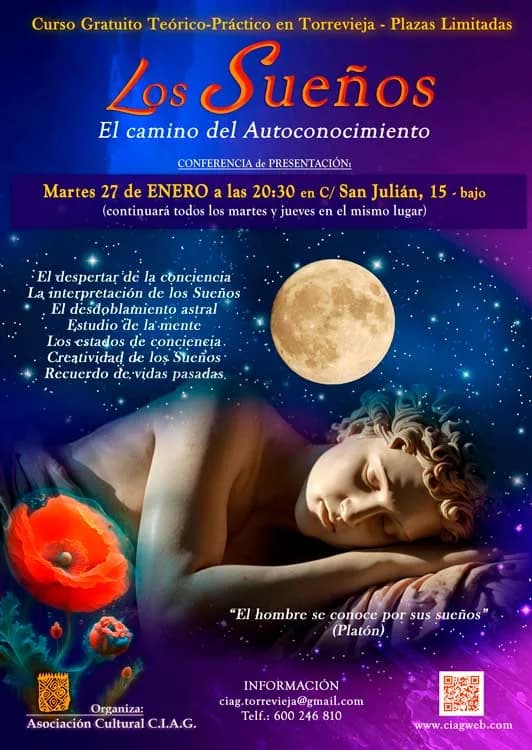
Torrevieja, AlicanteSelf-Knowledge and Meditation CIAG Torrevieja Self-Knowledge and Meditation CIAG Torrevieja is a space dedicated to the practice and study of meditation in Torrevieja, Alicante. It is located at C. San Julián, 15 bis, ground floor 2, in postal code 03181, an urban location designed for those who wish to incorporate regular time for inner attention, reflection, and meditative learning into their daily lives. The center is part of CIAG, the Circle of Research of Gnostic Anthropology, and directs its proposal towards self-knowledge through a theoretical-practical approach. Its activities are aimed at individuals interested in learning meditation tools, observing their own mental and emotional processes more deeply, and exploring content related to traditions of inner development. Rather than presenting an isolated practice, the approach offered by the center combines explanation, study, and direct experience of meditation. The Torrevieja headquarters communicates information about its activities and the opening of new groups. Therefore, it can be an interesting alternative for both those approaching meditation for the first time and those seeking a group framework to sustain a practice and progressively deepen its foundations. Services and Activity Proposal The proposal of Self-Knowledge and Meditation CIAG Torrevieja revolves around courses and meetings for meditation and self-knowledge. In a call published for this same headquarters in 2025, the center presented a theoretical-practical course structured in sessions of approximately one hour and fifteen minutes. Each meeting included a part of explanation and a meditation practice, a format that allows bringing the content into the realm of personal experience without disconnecting it from its study context. Among the topics announced in that programming were Raja Yoga, meditation postures, breathing techniques and pranayama, mind discipline, mantras, chakras, the law of karma, the world of dreams, and the awakening of consciousness. Issues related to astral projection were also addressed from the perspective of the teachings imparted by CIAG. This thematic breadth defines an offer that is not limited to relaxation techniques but delves into a journey of spiritual study and observation of inner life. Raja Yoga appears as one of the central axes of work. In the context of this proposal, meditation is understood as a way to train attention, quiet mental activity, and develop a more conscious view of oneself. Meditative postures and breathing are presented as supportive resources to prepare for practice, promote bodily stability, and dedicate a space of presence to inner work. The inclusion of pranayama and breathing techniques expands the experience beyond seated meditation. For many people, working with breath can help establish a clearer transition between daily rhythm and the moment of practice. In this center, these tools are integrated within a broader program, accompanied by theoretical content that invites understanding the meaning of each exercise according to CIAG's teaching line. Another distinctive feature of the proposal is the prominence of self-knowledge. Classes are presented as an opportunity to examine one's own psychology, emotions, thought habits, and how each person relates to their experience. The approach does not promise immediate results nor presents meditation as a universal solution: instead, it proposes a process of learning and deepening that requires interest, listening, and continuity. Previous calls indicated a duration of three months for the initial course, with the possibility of continuing at more advanced levels. Since the programming may change with the opening of new groups, it is advisable to confirm directly with the center the available activities, the incorporation format, and the current dates before attending. A Space to Study and Practice in a Group Self-Knowledge and Meditation CIAG Torrevieja carries out its activities in a street-level location, at ground floor 2 of C. San Julián, 15 bis. The available information identifies this specific point as the headquarters for meditation classes and activities, so it is important not to confuse it with addresses used by the center in previous calls at other points in Torrevieja. The format of sessions with both a theoretical and a practical part suggests an organized and participatory experience: first, a topic or a working tool is presented, and then time is reserved to focus on the meditative practice. This combination may be particularly suitable for those who value understanding what they are doing, asking questions, and approaching meditation from both a study and experiential perspective. No specific details have been published about the decoration, dimensions, equipment, or complementary services of the location. What defines its atmosphere is the purpose of the activities: to offer a meeting point centered on meditation, reflection, and shared learning. The experience is designed to provide space for content that often requires pause and concentration, from conscious breathing to the analysis of topics related to the mind, dreams, and consciousness. For Those Seeking Depth in Meditation Content This center may appeal to individuals who wish to explore meditation from a broad perspective, with references to Raja Yoga, breathing, mantras, and other concepts from the Gnostic tradition that inspires CIAG's activities. It may also interest those who prefer a guided journey, with structured classes and a progression of topics, rather than isolated practices without a training framework. Self-Knowledge and Meditation CIAG Torrevieja proposes to pause, observe, and open a space for personal study within the city. If you are looking for a meditation practice accompanied by reflection and content for inner development, this headquarters at C. San Julián offers a way to approach that experience in a group and learn about the upcoming activities it organizes.

Centro de Meditación - CIAG - Orihuela
Orihuela, AlicanteMeditation Center - CIAG - Orihuela Meditation Center - CIAG - Orihuela is a space dedicated to study, meditation, and self-knowledge from the perspective of Gnostic Anthropology. It is located at Reyes Católicos Street, 6, mezzanine D, in the urban center of Orihuela, Alicante. Its proposal is aimed at people who wish to approach meditative practices accompanied by a cultural, symbolic, and research dimension regarding the great traditions of humanity. The center is part of CIAG, which stands for Circle of Research in Gnostic Anthropology, a non-profit cultural association that develops activities for dissemination, study, and practice. The entity defines its venues as meeting places to share knowledge related to anthropology, history, art, philosophy, mysticism, legends, and cultural expressions of ancient civilizations. In Orihuela, this identity is concretized as a local reference point for those seeking to explore meditation within a broader framework of reflection. It does not present itself as a conventional wellness studio focused exclusively on relaxation, but as a center for study and practice with a specific orientation. The CIAG's approach emphasizes self-knowledge, concentration, inner silence, and personal observation, connecting these experiences with cultural materials and Gnostic teachings. Therefore, it may be particularly interesting for those curious about traditional-inspired meditation, symbolism, and paths of inner work. Services and Activity Proposal The activity of the Meditation Center - CIAG - Orihuela is framed within the general programming of the Circle of Research in Gnostic Anthropology. According to information published by the association, its venues organize conferences, courses, study meetings, and audiovisual projections related to Gnostic Knowledge and anthropology. Additionally, some delegations have spaces to practice meditation and self-knowledge methods established by this current. The Orihuela venue communicates information about its activities and the opening of new groups. This suggests a dynamic oriented towards progressive learning and group participation, beyond attending a single session. It is a suitable alternative for those who value a context of continuity, exchange, and guided approach to cultural and contemplative content. In the overall dissemination resources of CIAG, meditation is linked to exercises of relaxation, concentration, observation, and breath work. The organization also gathers meditative proposals inspired by different references from its tradition, including practices with sounds or mantras, contemplation of elements of nature, visualization techniques, and exercises related to chakras. It is important to note that these contents belong to the overall proposal of the association: the specific availability of each practice, course, or group in Orihuela may vary, and it is advisable to confirm it directly with the center. In addition to meditation, CIAG incorporates yoga and concentration as support tools for understanding its studies. Its approach is cultural and educational: it investigates common elements among traditions from diverse origins, from the Iberian, Greek, Roman, or Egyptian worlds to Arab, Nordic, Chinese, Tibetan, and pre-Columbian cultures. This comparative perspective gives the center a distinct identity and may attract individuals interested in deepening their understanding of the historical, philosophical, and symbolic background of certain inner practices. The association communicates that its courses, both in-person and online, are free. However, since this offer may be updated by groups, dates, and locations, it is most prudent to consult with the Orihuela venue about which activities are active at the time of the visit, how to join a group, and what type of session will be held. Reviews and Reputation Currently, there are no verifiable user ratings or a consolidated public score for this specific establishment in Orihuela. One of the consulted platforms explicitly invites users to be the first to leave a review, so it would not be accurate to assign the center a rating, number of reviews, or comments from attendees. The absence of public reviews does not allow for evaluating the experience from the perspective of former participants, but it does help to understand that it is a space with a discreet local digital presence. For those prioritizing firsthand knowledge of the activity style, it may be a good idea to request information about upcoming groups or attend an introductory proposal, if available. Environment and Facilities Public information places the center on a mezzanine of Reyes Católicos Street in Orihuela. This location suggests an urban format, integrated into the city, designed for gatherings and the development of study and meditation activities in a contained context. No detailed descriptions, verifiable photographs of the interior, or specific information about dimensions, decoration, equipment, accessibility, or complementary services of this venue have been located. For this reason, it is not appropriate to attribute environmental characteristics that are not confirmed. What does define its proposal is the vocation to create a space for shared practice, reflection, and study, aligned with the cultural work of CIAG. The association's own dissemination philosophy emphasizes the importance of silence, concentration, and collective learning. In this sense, the venue's interest does not lie in offering treatments or spa facilities, but in providing a local framework to dedicate time to meditation and the exploration of cultural and spiritual content from a specific tradition. Meditation Center - CIAG - Orihuela may be a unique choice in Orihuela for those wishing to approach self-knowledge from a Gnostic and cultural perspective. A place to pause, share concerns, and discover meditative practices within a study itinerary with its own identity.

Centro de Meditación CIAG Elda
Elda, AlicanteCIAG Elda Meditation Center: a space for study, meditation, and self-knowledge in Alicante CIAG Elda Meditation Center is the local headquarters of the Circle for the Research of Gnostic Anthropology in Elda, Alicante. It is located at Don Quijote Street, 25, ground floor, in an urban setting designed as a meeting point for individuals interested in meditation, inner knowledge, and the study of various cultural and philosophical traditions. The center's proposal is integrated into the activities of CIAG, a non-profit cultural association dedicated to the dissemination of what is known as Gnostic Anthropology. Its approach combines the study of ancient cultures, reflection on human nature, and practices of introspection such as relaxation, concentration, yoga, and meditation. Therefore, this space may be particularly interesting for those looking to approach meditation from a perspective of personal, symbolic, and cultural research, beyond a purely physical or athletic practice. The Elda headquarters publishes information about its activities and the opening of new groups. This allows the center to be understood as a dynamic place, aimed at supporting both individuals who wish to start and those who are already curious to deepen their observation of the mind, silence, and self-knowledge. The activity is proposed in a group environment, with a divulgative vocation and open to diverse profiles united by the interest in better understanding themselves. Services and activity proposal The main specialty of CIAG Elda Meditation Center is meditation understood as a tool for inner knowledge. Within the general philosophy of CIAG, the meditative practice is related to exercises of relaxation, concentration, and introspection, as well as the study of content linked to Gnostic tradition and the cultural expressions of different civilizations. The center is part of a network of headquarters that develop cultural and educational activities. Among the initiatives that CIAG highlights for its spaces are lectures, courses, study meetings, audiovisual screenings, seminars, workshops, and cultural gatherings. It also includes activities related to archaeology, history, art, philosophy, mysticism, legends, and the science of ancient cultures. In Elda, the published information focuses especially on the center's activities and the creation of new groups, so it is advisable to check directly for availability and specific programming before attending. Meditation occupies a central place within this proposal. The organization presents practices and content aimed at body relaxation, attention, concentration, and internal observation work. Its resource library includes, among other topics, relaxation exercises, meditation methods, sound practices for meditation, and symbolic approaches specific to its study tradition. This breadth of content gives an idea of CIAG's approach: it is not limited to a single contemporary technique but proposes an exploration of meditation linked to a framework of Gnostic thought. For a person approaching for the first time, the value of the center may lie in finding a physical space in Elda where they can begin to familiarize themselves with the meditative practice in a guided and progressive manner. For those already interested in philosophical, spiritual, or anthropological currents, the proposal allows for a deeper exploration of subjects that connect individual experience with the comparative study of symbols, myths, religions, and cultures. CIAG indicates that its courses, both in-person and online, are free. However, specific activities, group opening dates, and participation dynamics may vary depending on the headquarters and available programming. In the case of Elda, the center itself invites inquiries about current activities and new groups before planning a visit. A cultural approach to meditation CIAG Elda Meditation Center stands out for framing meditation within a broader cultural proposal. The Circle for the Research of Gnostic Anthropology defines its work as research and dissemination of knowledge related to ancient civilizations and universal human values. In this context, meditation is presented as a supportive practice for intellectual and emotional development, along with concentration and yoga. This orientation may be suitable for those who wish to explore meditation from pause, reflection, and study. Instead of presenting it solely as a quick-consumption wellness activity, the center's approach emphasizes the learning process and consistency. The practice is linked to questions about the mind, emotions, consciousness, dreams, symbols, and each person's relationship with their own inner life. Additionally, the entity emphasizes objectives such as respect, tolerance, solidarity, and fraternity, and frames its activities as spaces for study and cultural coexistence. The proposal is not defined as a health consultation or therapeutic treatment; it is a center for dissemination and meditative practice with a specific philosophical identity. Those seeking psychological, medical, or clinical attention should consult qualified health professionals. Space and facilities The available information confirms that the Elda headquarters is located in a street-level premises at number 25 on Don Quijote Street. This ground floor condition makes it easy to identify within the city and places the center in a format for in-person activities and group formation. No detailed public data has been located regarding the size of the premises, its decoration, accessibility, capacity, specific equipment, or interior layout. For this reason, it is not possible to affirm whether it has an independent meditation room, its own materials for practices, a reception area, or other specific services. The CIAG network indicates that many of its headquarters have meditation rooms, but this characteristic is not explicitly detailed for the Elda center. Far from promising facilities that have not been confirmed, the most relevant aspect of this headquarters is its function as a local meeting point for meditation and self-knowledge activities. It is a space aimed at those who value a face-to-face, measured, and educational approach, in contact with others who share an interest in the study of consciousness and cultural traditions. CIAG Elda Meditation Center ultimately offers a unique alternative for approaching meditation in Elda from a Gnostic and cultural perspective. If you are interested in learning about its upcoming groups or activities, it is advisable to contact the headquarters in advance to receive updated information and assess whether its approach aligns with your personal moment and interests.

Centro de Meditación CIAG Novelda
Novelda, AlicanteCIAG Novelda Meditation Center CIAG Novelda Meditation Center is a space dedicated to meditation, self-knowledge, and cultural dissemination in Novelda, Alicante. It is located at Carrer Dr. Fleming, 33B, within the urban core of the town, and is part of the network of the Circle of Gnostic Anthropology Research (CIAG), a cultural association that develops study activities, conferences, courses, and practices linked to the Gnostic tradition. The center's proposal is aimed at those who wish to reserve time for introspection and approach meditation from a perspective of personal knowledge. More than just a quick-consumption wellness space, CIAG Novelda is integrated into an educational project that relates meditative practice to the study of anthropology, philosophy, mysticism, art, history, and symbols from various ancient cultures. It is, therefore, especially suitable for individuals interested in exploring the cultural and spiritual dimension of meditation, as well as incorporating moments of inner observation into their daily lives. Its location in Novelda makes it an accessible meeting point for residents of the city and nearby towns in the interior of the province of Alicante. The activity is framed within a network present in different Spanish cities, although this profile corresponds exclusively to the center located at Carrer Dr. Fleming, 33B. Services and Activity Proposal CIAG Novelda Meditation Center presents itself as a dissemination hub for Gnostic Anthropology. From this perspective, learning combines theoretical content with practical proposals, intending for each attendee to gradually approach meditation and self-study. The CIAG entity indicates that its locations hold conferences and audiovisual presentations on topics related to anthropology and Gnostic knowledge. These activities open a broad framework for reflection, in which cultural traditions, symbols, history, philosophy, mythology, and spiritual currents of civilizations such as Egyptian, Greek, Roman, Mayan, Tibetan, or Nordic, among others, can be addressed. The approach is not limited to meditation understood as an isolated technique but situates it within a broader search for understanding the human being and their capacities for attention, observation, and awareness. Meditation occupies a central place in CIAG's identity. The organization explains that many of its locations have meditation rooms to practice self-knowledge methods associated with Gnosis. Additionally, its general proposal includes exercises for relaxation, concentration, and meditation. For beginners, this orientation can be interesting as it links learning to a gradual process, aiming to develop the ability to quiet the body, direct attention, and observe mental activity. The CIAG network also disseminates guided meditative practices and content related to relaxation. Among the materials shared are exercises based on breathing, concentration, the use of sounds or mantras, visualization, and contemplation. It is important to understand these references as part of the association's teaching framework: the specific programming, available practices, and session formats in Novelda may vary, so it is advisable to consult directly with the center before attending. In addition to in-person activities, CIAG develops courses and educational actions of a dissemination nature. The entity communicates that its courses, both in-person and online, are free. Its introductory meditation course presents theoretical content and progressive guided practices, a formula that can facilitate access for people who have never meditated and prefer to have a structured learning environment. Within its general itinerary, the study of meditation is accompanied by reflections on attention, inner knowledge, dreams, concentration, and the relationship between thought, emotion, and behavior. The center may be suitable for those seeking a meditation space with a defined identity and wishing to learn about the Gnostic approach from associative and cultural sources. It may also interest individuals attracted to comparative traditions, symbolism, and the study of ancient civilizations, always from a proposal that invites personal reflection. An Approach Centered on Self-Knowledge The idea of self-knowledge permeates CIAG Novelda's proposal. The association defines its locations as places where diverse individuals participate who share an interest in knowing themselves better. This nuance helps to understand the character of the center: it does not limit itself to offering a relaxation pause but proposes a reflective approach to inner life. In this framework, meditation is conceived as a practice that can accompany the observation of thoughts, emotions, and personal habits. For some individuals, this orientation can provide a space for consistency and study; for others, it may be a first contact with contemplative practice in a shared learning environment. The experience will depend on the active activities at each moment and the personal involvement of each participant. The association supporting the center is defined as cultural, non-profit, and without political or religious affiliation. Its aims include promoting the comparative study of different cultures, fostering training and dissemination activities, and supporting the understanding of these studies through practices such as yoga, concentration, and meditation. This cultural dimension distinguishes CIAG Novelda's proposal from other centers focused exclusively on mindfulness, physical yoga, or wellness therapies. Environment and Facilities Publicly available information confirms the location of CIAG Novelda Meditation Center at Carrer Dr. Fleming, 33B, Novelda, and its activity within the category of relaxation and meditation techniques. No verifiable details have been found regarding the interior design, room sizes, decoration, capacity, specific accessibility, or equipment of this venue. It can be affirmed that, due to the nature of the activities disseminated by CIAG, the center is oriented towards holding study meetings, conferences, screenings, and meditative practices. To know the conditions of the space, the materials needed to attend, or the modality of each activity, it is advisable to confirm this beforehand with the location. A Place to Pause, Study, and Look Within CIAG Novelda Meditation Center proposes a way to approach meditation that combines practice, study, and curiosity about great cultural traditions. In the heart of Novelda, it is an alternative for those who wish to dedicate time to silence, concentration, and self-knowledge from the framework of Gnostic Anthropology. If you are looking for a center with a meditative proposal linked to conferences, cultural training, and practices of inner reflection, CIAG Novelda can be a valuable starting point. Before planning your visit, consult directly about the availability of groups, activities, and upcoming events.
Centro Meditación Shiva Shambho Ananda Elche
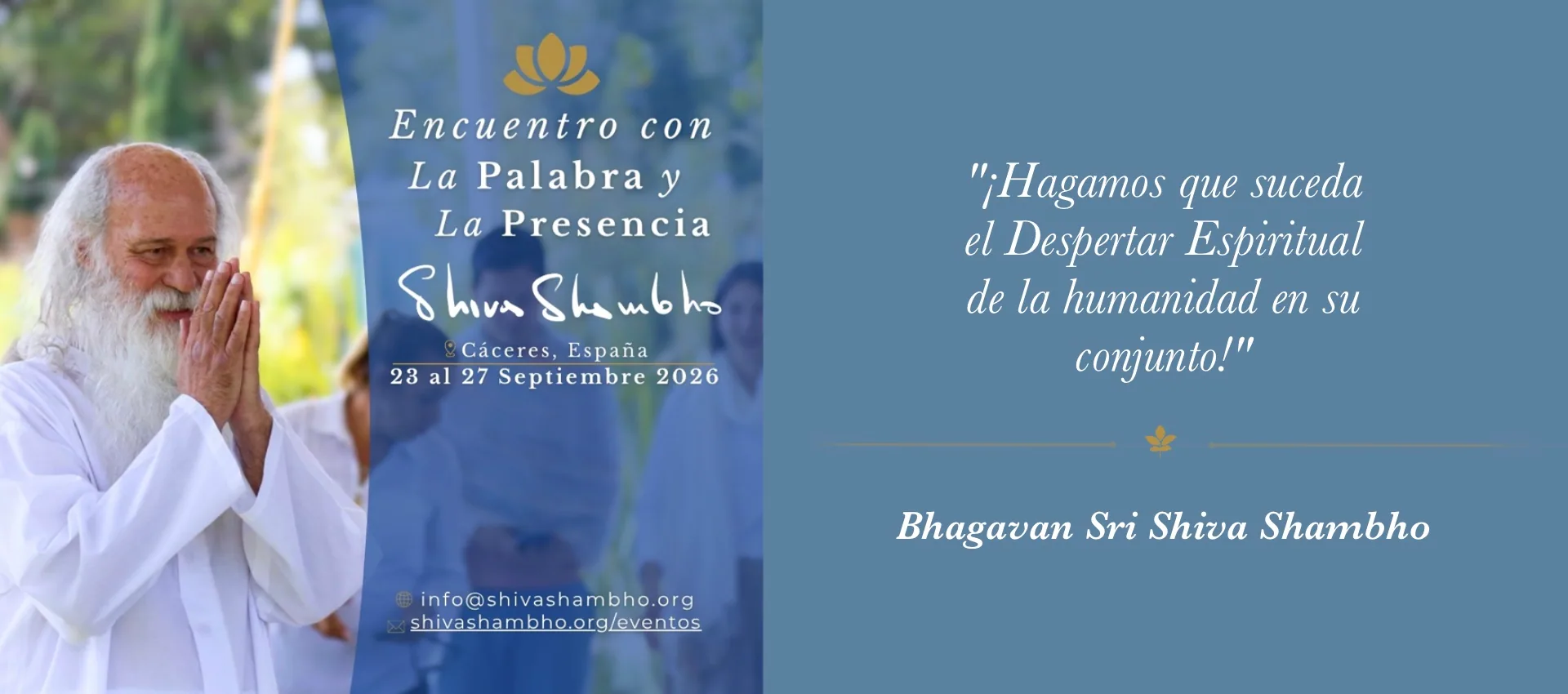
Elche, AlicanteShiva Shambho Ananda Meditation Center Elche Shiva Shambho Ananda Meditation Center Elche is a meditation space located at Hilarión Eslava Street, 12, in Elche, Alicante. Its proposal is oriented towards inner exploration through continued practice, with a focus on meditation, Kriya Yoga, and the teachings of Paramhansa Yogananda, Swami Kriyananda, and Bhagavan Sri Shiva Shambho. The center presents itself as a place to approach the meditative experience directly, emphasizing attention, presence, and personal practice. Its message summarizes this orientation well: prioritizing experience over the accumulation of theory. Therefore, it is especially suitable for those looking to integrate moments of silence, introspection, and conscious observation into their daily lives, as well as for individuals interested in deepening their understanding of a meditative yoga tradition with a spiritual dimension. With a history that began in 2001 under the name Ananda Center, this space has continuously maintained activities related to meditation and Kriya Yoga. Since 2021, the teachings of Bhagavan Sri Shiva Shambho have taken a prominent place in its current identity, reinforcing a vision centered on awakening consciousness and practice as a path to inner knowledge. Services and Practice Proposal The main specialty of the center is meditation. The proposal is not presented as an isolated or merely occasional activity, but as a path of observation and attention training. From this perspective, meditating means reserving a space to pause the daily rhythm, directing attention to the present experience, and cultivating a more conscious relationship with the mind, breath, and one's inner world. The Shiva Shambho Ananda Meditation Center Elche is also linked to the practice of Kriya Yoga. In the center's public information, this discipline is presented as part of the Raja Yoga tradition and as a practice aimed at spiritual development. Kriya Yoga occupies a central place within the legacy of Paramhansa Yogananda, a reference figure for Ananda, and is approached here from an experiential perspective: it is not just about knowing a philosophy, but about engaging in a regular and personal practice. The center's proposal is framed within the teachings of Yogananda, author of Autobiography of a Yogi, and his disciple Swami Kriyananda, founder of the Ananda movement. This foundation provides a defined spiritual context, although the center's communication emphasizes the accessibility of the teachings and the use of clear and direct language. For someone approaching for the first time, this can be particularly interesting if they seek an introduction to meditation that goes beyond relaxation techniques, incorporating a broader reflection on consciousness and the purpose of practice. The presence of Bhagavan Sri Shiva Shambho in the recent trajectory of the space defines another key aspect. The center explains that after his visit to Spain in October 2021, the transmission of the "Experience of Awakening" was promoted as a direct experience, beyond intellectual explanation. This idea permeates the identity of Ananda Elche: practice is conceived as an invitation to attend, experience, and recognize more clearly what happens in the present. In addition to its focus on meditation and Kriya Yoga, the center has maintained relationships with yoga initiatives in Elche. At a public event held in 2026 for International Yoga Day, a representative from Ananda Center Elche participated by offering guided meditation and pranayama, within a shared program with other local professionals. This collaboration reflects its connection with the yoga and wellness practice community in the city, although the essence of the center remains primarily meditative. Due to its approach, it can be a suitable option for both practitioners who are already familiar with the teachings of Yogananda or Kriya Yoga and for those who wish to discover a meditation space with a specific spiritual orientation. It is advisable to contact the center directly before attending to learn about the available practices and the most suitable way to participate at any given time. Reviews and Reputation The public information located for this establishment at Hilarión Eslava, 12 shows a discreet presence in local directories. An external listing records an average rating of 3.5 out of 5 based on two reviews attributed to Google. Given the small number of ratings and the lack of detailed comments associated with those reviews, this data should be interpreted with caution. On the other hand, the consulted directories confirm the center's connection, under names related to Ananda, Kriya Yoga, and Yogananda, with this same address in Elche. The official website also provides a more current and defined identity, focused on Ananda Elche and the teachings of Shiva Shambho. Environment and Facilities The center is located on the ground floor at Hilarión Eslava Street, within the urban fabric of Elche. Its location facilitates the integration of meditative practice into the routine of those who live, work, or travel through the city, without the need to go to a rural or retreat environment to reserve time for introspection. The visual information published by the center itself shows a space dedicated to its activities and meetings related to teaching. Rather than emphasizing large-format facilities or complementary services, the image of the place revolves around practice, gathering, and support in a meditative context. This sobriety aligns with a proposal that places the value of experience in attention and the continuity of the personal journey. In conclusion, Shiva Shambho Ananda Meditation Center Elche offers an alternative for those who wish to explore meditation from a tradition of Kriya Yoga and spirituality inspired by Yogananda. A space with a history in Elche, oriented towards conscious practice and deepening, step by step, in a more attentive and present inner experience.
Dharma Ioga
Pego, AlicanteDharma Ioga in Pego: a starting point for meditative practice Dharma Ioga is located at Plaça de la Constitució, 3, 03780 Pego, Alicante, in a central location within the town. Publicly registered as a yoga studio and featured in Retiru under the meditation category, this space is aimed at those who wish to reserve time for pause, inner attention, and self-care through practices linked to conscious wellness. Its location in Plaça de la Constitució places the experience in the urban core of Pego, making it easier for practice to be incorporated into daily routines without the need to travel outside the municipality. For many people, having a dedicated space for reflection and conscious movement close to home is a way to create continuity: it is not just about attending a one-off session, but about opening a regular space to breathe, observe, and return to the present. The name Dharma Ioga refers to the universe of yoga, while its classification in Retiru as a meditation center allows it to be understood as a proposal primarily aimed at cultivating mental calm and connection with one's own experience. It is an interesting option for residents of Pego and the surrounding area who seek to approach meditation from a wellness-focused environment. Services and approach of the proposal The publicly available information identifies Dharma Ioga as a yoga studio at this address in Pego. However, no official website or updated program from the establishment has been located that details specific modalities, schedule, session duration, levels, prices, or the profiles of the individuals leading the activities. For this reason, it is not possible to confirm which styles of yoga, meditative techniques, or complementary proposals are currently active. From Retiru's perspective, the center's interest lies in its connection to meditation. This discipline can become a valuable tool for those who want to introduce moments of stillness into intense days, train attention, or explore a more conscious relationship with breathing, bodily sensations, and mental rhythm. Each person approaches it with a different intention: some seek to create a disconnection routine; others, to have time without screens or demands; and others, simply to discover what happens when they pause for a few minutes and pay attention. In a space like Dharma Ioga, located within a town like Pego, the practice can fit both the beginning of a wellness journey and the maintenance of an already established habit. It may be suitable for those attracted to meditation but who prefer to do so in a face-to-face context, in the company of others and away from the usual stimuli of home or work. It can also be an alternative to consider for those who link meditation and yoga as complementary practices. Although the specific programming of the venue cannot be confirmed, both disciplines share for many people a special attention to breathing, listening to the body, and the possibility of reserving time for self-care. In this sense, the center is framed within a form of personal and unhurried wellness, away from competitive goals and focused on the experience of each participant. Before planning a visit, it is advisable to confirm directly with the establishment the current availability, the type of sessions, whether prior reservation is necessary, and any practical requirements for participation. This verification is especially important because the public records consulted show limited information and do not offer an updated agenda. Reviews and public presence The digital presence of Dharma Ioga in Pego is limited. A public record has been located that associates the name of the establishment with the address of Plaça de la Constitució, 3 and classifies it as a yoga studio. That same record shows an average rating of 3.5 out of 5 based on a single review, but does not allow access to the content of that opinion or know the date, context, or specific aspects evaluated by the user. For transparency, that isolated score does not provide a sufficient basis to draw reliable conclusions about the overall experience at the center. No verifiable and detailed comments have been found that allow for a rigorous summary of aspects such as the welcome, the quality of the sessions, the support, or the facilities. Therefore, Dharma Ioga is better presented as a space that deserves to be known and valued firsthand, confirming beforehand what activities are available at this moment. This scarcity of reviews does not in itself define the quality of the proposal: in small and local centers, especially those that work with close groups or through direct recommendations, the digital footprint may be limited. Still, for an informed decision, it is advisable to directly consult the details of the activity of interest and share expectations before attending. Environment and facilities The clearest detail about the environment of Dharma Ioga is its location: Plaça de la Constitució, 3, in Pego. Being in a central square provides a simple reference for locating it within the town and integrates it into the daily life of the municipality. For those who live or spend time in Pego, this proximity can facilitate meditation becoming a sustainable practice, without requiring complex organization. No official information or verifiable visual material about the interior layout, room sizes, available equipment, accessibility, changing rooms, practice materials, or group capacity has been located. Therefore, it would not be accurate to describe specific elements of the facilities. If aspects such as the availability of mats or cushions, climate control, accessibility conditions, or room privacy are important to you, it is best to inquire about them before attending. What does define Dharma Ioga is its association with a practice that invites slowing down. In an urban and nearby context, it can represent that necessary interval between daily obligations and personal time: a place to approach with curiosity, without the need to pursue immediate results and with the willingness to listen to how one feels. Dharma Ioga is, ultimately, a meditation and wellness proposal located in the center of Pego. If you are looking to incorporate a conscious pause into your week, getting to know its current approach and checking if it fits with you may be the first step to transforming a few minutes of attention into a personal care habit.

Fundación Dharma
Monóvar, AlicanteDharma Foundation, Monóvar: Vedic spirituality, meditation, and social commitment Dharma Foundation is located in Monóvar, Alicante, in the Collado de Novelda area, next to the Novelda–Monóvar road, at Polígono Industrial MF Collao de Novelda, 23. It is a space linked to Vedic tradition and Hinduism, focused on cultural dissemination, spiritual life, and social cooperation. The Vedic Dharma Center is also located at the same site, officially registered as a Hindu community and affiliated with the Hindu Federation of Spain. For those seeking a meditation place with a specific spiritual foundation, Dharma Foundation offers a different approach than a conventional wellness studio. Its identity is tied to Vedic philosophy, yoga understood in its cultural and contemplative dimensions, and a history of solidarity work with educational, health, and social projects in India. Meditation here is situated within a broader framework of reflection, spiritual practice, community gathering, and knowledge of Indian culture. The location, along the road between Novelda and Monóvar, reinforces its character as a unique reference center, away from the urban format of an academy or gym. It is particularly interesting for individuals who wish to approach Hindu tradition, deepen their understanding of Vedic meditation, or participate in activities connected to culture, solidarity, and inner growth. Services, activities, and approach Dharma Foundation carries out social, cultural, and educational work focused on development cooperation. Its foundational purpose includes supporting social, health, and cultural initiatives in India, covering areas such as education, nutrition, women's support, elderly care, environmental protection, and cultural heritage conservation. This solidarity background is an essential part of the center's identity and differentiates its offering from other spaces dedicated solely to wellness practices. In Monóvar, the project is closely related to the Vedic Dharma Center. The registration of this entity as a Hindu community confirms a clearly spiritual and religious orientation, linked to the study and experience of Vedic tradition. Therefore, those who approach the center may find a perspective in which meditation is not presented merely as a relaxation technique but as a practice of attention, personal knowledge, and connection with a philosophical tradition of Indian origin. The public activity of Dharma Foundation has also been associated with yoga and the promotion of conscious lifestyles. For years, it has collaborated in organizing the Alicante Yoga Festival, an open event that has brought together activities related to yoga, meditation, wellness, culture, and proposals for all audiences. This participation demonstrates its sustained relationship with the yogi community in the province and with outreach initiatives around these disciplines. Moreover, the foundation's recent public communications maintain a focus on education and support for girls and disadvantaged communities in India. Its work is linked to training, sports, and social support projects, highlighting values such as equal opportunities, solidarity, and intercultural respect. For visitors who value that contemplative practice has an ethical and social dimension, this component adds depth to the project. It is important to note that the available public information does not detail a stable schedule of meditation classes, individual sessions, residential retreats, fees, or activity calendars at the Monóvar center itself. For this reason, it is advisable to directly confirm what meetings, celebrations, practices, or activities are available at any given time before traveling. This prior consultation is especially important if seeking a specific experience, such as guided meditation, yoga, devotional singing, Vedic philosophy workshops, or participation in community activities. Reviews and reputation The center's public presence is clearer in institutional records, local directories, and activity communications than on opinion platforms with detailed comments. A public profile associated with the same location in Collado de Novelda shows an average rating of 5 out of 5 based on three user reviews. However, complete texts of those reviews or individual ratings that allow for precise insights into what specific aspects visitors highlight are not displayed. Out of responsibility, it is not possible to attribute specific opinions to those individuals regarding attention, facilities, practices, or the environment. Nevertheless, the published score indicates a positive reception among the small number of users who left ratings. Given the small sample size, it is advisable to interpret it as an initial signal rather than a definitive conclusion about the experience. Beyond the reviews, the reputation of Dharma Foundation is supported by its institutional trajectory. The foundation was registered as a development cooperation entity based in Monóvar, and the Vedic Dharma Center at the same address is listed in the official registry of religious entities. There is also visible continuity in solidarity projects, cultural activities, and collaborations in initiatives linked to yoga in Alicante. All of this presents an image of a project with a community vocation, defined identity, and a history in the realm of Indian culture and cooperation. Environment and facilities Dharma Foundation is located at Collado de Novelda MF 23, along the stretch of the Novelda–Monóvar road that appears in public records and profiles. The center shares its location with the Vedic Dharma Center, so the space is identified with both foundational and solidarity activities as well as a Hindu spiritual dimension. The available information defines it as a Vedic and community meeting place, not as a fitness center or hotel establishment. Its designation and records relate it to a Hindu community and Vedic culture; additionally, it appears in public directories as a place of worship. This context may be particularly suitable for visitors interested in a respectful, cultural, and spiritual approach to meditation. Insufficient public data has been found to confirm specific details about rooms, capacity, outdoor areas, accommodation, dining, full accessibility, or practice equipment. Wheelchair accessibility is indicated in a public profile, although it is advisable to confirm the specific access conditions based on each visitor's needs in advance. Dharma Foundation in Monóvar is, ultimately, a unique proposal for approaching meditation from the Vedic tradition and from a perspective committed to cooperation and intercultural respect. A space with its own identity, rooted in Alicante and connected to social and cultural initiatives in India, designed for those seeking an inner practice that also dialogues with social consciousness.
KMC Alicante- Centro de Meditación Kadampa
Alicante, AlicanteKMC Alicante – Kadampa Meditation Center KMC Alicante – Kadampa Meditation Center is a space dedicated to meditation, study, and the practice of modern Kadampa Buddhism in the city of Alicante. It is located at Carrer Carratalá, 5, ground floor, in postal code 03007, and offers an accessible way to approach mental calm and inner well-being without needing to change the pace of daily life or adopt prior beliefs. The center is part of the New Kadampa Tradition and presents itself as a non-profit entity aimed at sharing meditation methods and Buddhist teachings applicable to present-day challenges. Its proposal is directed both at people who have never meditated and those who wish to establish a more regular practice or deepen their study of this tradition. The underlying idea is simple and practical: to learn to recognize one's own mind, cultivate calmer internal states, and develop resources to respond more equably to pressure, worries, or the intensity of daily life. At KMC Alicante, meditation is approached from a guided, structured, and close perspective. It is not presented as an activity reserved for advanced practitioners, but as a tool that can be gradually incorporated into one's routine. The center explicitly states that its classes are open to people of any level and background, and that it is not necessary to belong to a religion to participate. This openness makes the space an interesting option for those seeking an initial contact with meditation in Alicante, within a continuous teaching environment. Services and Activity Proposal KMC Alicante's offerings combine weekly meditation classes, workshops, thematic courses, urban retreats, study programs, and prayer sessions with meditation. This variety allows for choosing between one-time experiences designed to discover the practice and more consistent paths for those wishing to create a habit or deepen their teachings. Weekly classes serve as the main entry point. They focus on the practice of meditation and the explanation of ideas that can be applied to real-life situations: managing stress, relating with more patience, maintaining a more constructive attitude towards difficulties, or finding moments of pause during demanding weeks. Each session is designed to be attended independently, so there is no need to start at the beginning of a cycle or commit to continuous attendance to benefit from it. For those who want to learn the basics in more detail, the center organizes introductory meditation workshops. In these meetings, aspects such as session preparation, posture, reducing distractions, and focusing on the object of meditation are addressed. These proposals are suitable for understanding, in an orderly manner, what it means to meditate within the Kadampa tradition and how to start a realistic home practice. The programming is complemented by specialized courses and urban retreats. The courses allow for dedicating more time to a specific topic, while the retreats offer a more intense immersion without needing to leave Alicante. In both cases, the proposal revolves around contemplation, guided meditation, and applying Buddhist teachings to everyday experience. Some retreats include periods of silence and sustained practice, a valuable alternative for those wishing to take a temporary distance from mental noise and external demands. KMC Alicante also has a General Program, open to anyone interested, and a Fundamental Program for those wishing to study Kadampa tradition texts more systematically. Additionally, its training structure includes a Teacher Training Program, aimed at students seeking to deepen their study and practice in this system. This progression allows each visitor to find a level of involvement that matches their life stage: from an occasional class to a more stable relationship with meditation and study. Another highlighted feature is the possibility of following content and teachings in an online format. This option expands access for those who cannot regularly travel to the center or prefer to complement in-person practice with remote resources. The project also maintains prayer and meditation activities, including pujas and open public chanting practices, which add a community and traditional dimension to the programming. Reviews and Reputation KMC Alicante has a favorable digital reputation. The public profiles located for this same establishment, at Carrer Carratalá, 5, reflect an approximate rating of 4.7 out of 5, based on over fifty aggregated reviews from Google. Although the figures may update over time, the volume of available opinions suggests a sustained experience from attendees and visitors. Among the highlighted comments published by the center itself is the evaluation of a person who describes it as a particularly pleasant place to find inner peace and live meaningful experiences. Overall, the perception conveyed by the reviews and the public communication of the project points to a space appreciated for its tranquil atmosphere, the support in classes, and the possibility of starting meditation without feeling out of place. Environment and Facilities The center is located in a street-level premises in Alicante and is conceived as a place for practice, learning, and pause. According to information published by the establishment itself, the meditation room is equipped with mats, cushions, and chairs, allowing each person to choose the posture that feels most comfortable. This flexibility is especially relevant for beginners or those who do not feel comfortable sitting on the floor for an entire session. There is no need to come with specific clothing or bring personal materials to participate in the classes. The approach is practical and without unnecessary solemnities: arrive, settle in, listen to the guidance, and try the experience of meditating in a group. For many people, this simplicity can help reduce the initial barrier that sometimes accompanies activities related to well-being or spirituality. The center's information also mentions a library and a shop with items related to practice and study, as well as the possibility of staying for a while in the space to rest before resuming daily activities. More than just a place focused solely on conducting sessions, KMC Alicante proposes a meeting point where meditation can be integrated into an active urban life, with various times and levels of participation. KMC Alicante – Kadampa Meditation Center is, ultimately, a proposal for those seeking to approach meditation in Alicante from a guided, accessible, and continuous framework. Whether to try a first class, consolidate a habit of mental calm, participate in a workshop, or reserve a day for an urban retreat, the center offers different paths to make space for serenity, reflection, and mental care.
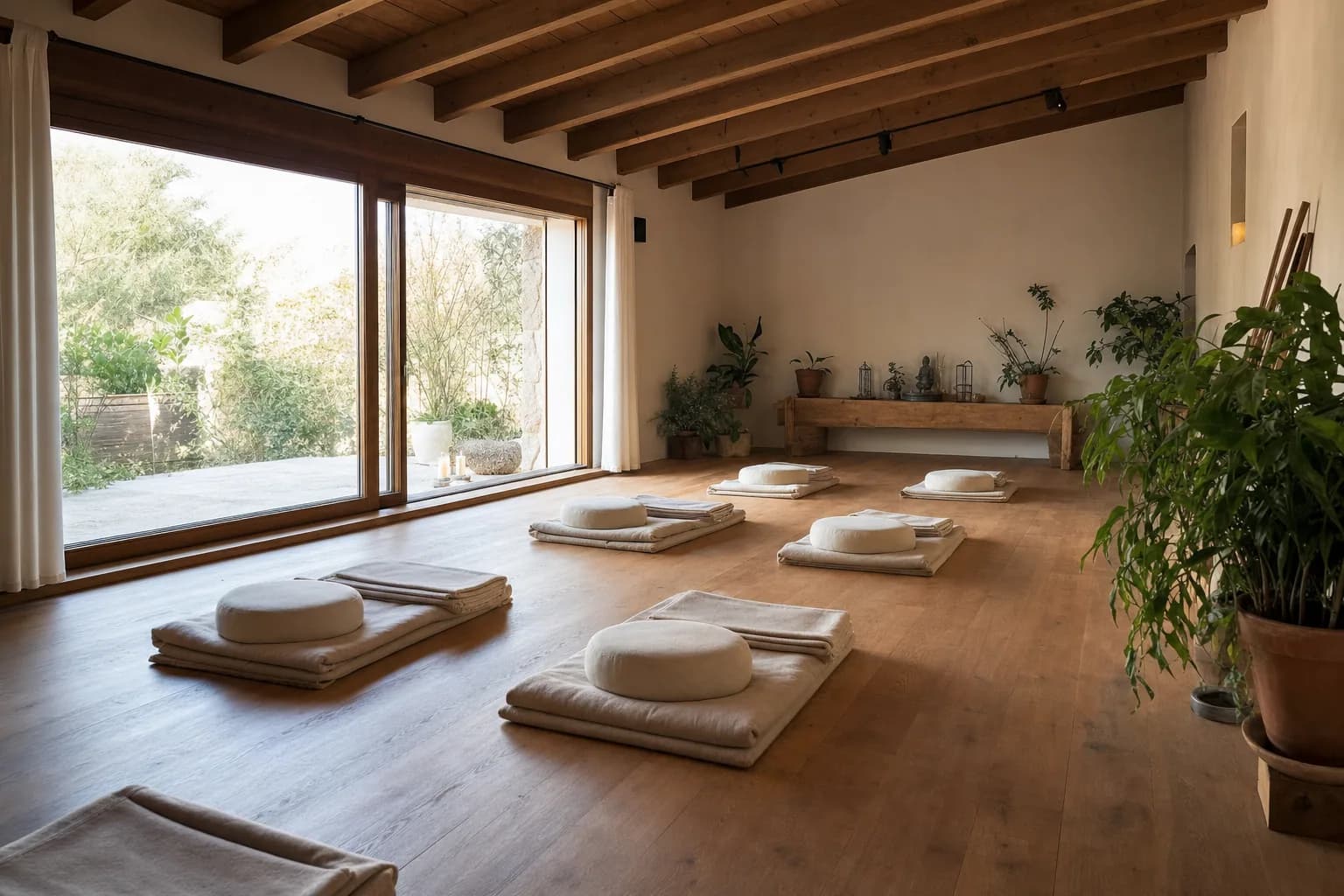
Masajes relajantes, Reiki, meditación 👉Calmarte
El Verger, AlicanteRelaxing Massages, Reiki, and Meditation at Calmarte in El Verger Calmarte is a wellness space located at Carrer Calvari, 30, in El Verger, Alicante, aimed at those who wish to reserve a moment for pause, listening, and personal care. Its proposal brings together three complementary paths to relaxation: relaxing massages, Reiki sessions, and meditation. Under a name that invites slowing down, the center presents itself as a local option to reconnect with the body, quiet the mind, and dedicate time to calm in daily life. Located in the heart of El Verger, Calmarte brings this type of wellness experience closer to local residents and people from nearby municipalities in the Marina Alta. It is especially suitable for those seeking support focused on relaxation, presence, and conscious rest, away from a fast-paced or merely functional view of self-care. Here, the focus is on creating a space to stop and return to the essentials: breathe, release tension, and pay attention to how each person feels. Although the center is classified in Retiru under the meditation category, its identity also integrates bodywork through relaxing massage and the energetic dimension associated with Reiki. This combination allows for a wellness experience from different entry points: touch and physical relaxation, the stillness of meditative practice, or a session aimed at personal balance from the perspective of Reiki. Services and Wellness Approach Relaxing massages are a central part of Calmarte's offerings. They provide an alternative for those who feel the need to disconnect from routine, release accumulated tension, and enjoy dedicated rest time exclusively for themselves. A relaxing massage can be a good choice after periods of high activity, demanding weeks, or simply when one wishes to take a conscious pause and regain a sense of greater bodily lightness. The proposal is complemented by Reiki, an energetic wellness practice typically performed in a calm and introspective environment. Many people seek this type of session for a tranquil, silent, and personal experience, where they can rest, focus, and observe themselves with more attention. At Calmarte, Reiki is part of an offering consistent with the name and overall orientation of the space: facilitating moments that invite calming the external rhythm and regaining one's center. Meditation completes this vision with a practice especially valuable for those who want to train their attention, create spaces of silence, or start a routine of conscious presence. There is no need to view meditation as a demanding goal or a practice reserved for experienced individuals. It can simply be a time to sit, breathe, let thoughts pass, and return to the present moment. In this sense, Calmarte is a proposal aligned with those seeking to incorporate more serenity into their daily lives from an accessible and unhurried approach. The coexistence of massage, Reiki, and meditation makes the center interesting for diverse profiles. Some connect better with the physical rest provided by massage; others prefer the silence and introspection of a meditative session; and there are those who wish to explore energetic practices like Reiki. The key is to choose the experience that best fits each visitor's personal moment, keeping in mind that these are proposals aimed at wellness and relaxation, not substitutes for professional healthcare or psychological attention when needed. Calmarte can fit into both a one-time self-care day and a more sustained intention to reserve time for oneself. In an era when schedules are often full and rest is relegated, having a nearby space dedicated to calm takes on special value. The proposal invites transforming pauses into something intentional: not waiting to be completely exhausted to care for oneself, but giving importance to small moments of reconnection. Reviews and Reputation In the publicly available information located for this establishment and this specific address, no sufficient verifiable reviews have been found to reflect a rating, number of opinions, or customer comments rigorously. Therefore, it would not be responsible to assign evaluations, experiences, or aspects of the service that are not clearly documented. This absence of public opinions does not define the quality of the experience by itself, but it does invite each person to directly consult the details they consider important before booking: the type of session they desire, the focus of the practice, the available duration, or any particular needs related to their visit. A Space to Return to Calm The available information places Calmarte at Carrer Calvari, 30, in El Verger. No verifiable public details have been found about the decor, size of the space, rooms, or equipment, so it is advisable to avoid describing facilities that have not been confirmed. What clearly communicates its proposal is an orientation towards personal wellness experiences based on relaxation, Reiki, and meditation. This simplicity may be precisely part of its appeal. Calmarte is not defined by an extensive offer of treatments, but by bringing together recognizable and complementary practices around a common intention: to offer a pause to slow down. For many people, caring for wellness does not require grand plans, but finding a place to stop, breathe, and allow oneself to be present. If you are looking for relaxing massages, Reiki, or meditation in El Verger, Calmarte offers a nearby alternative for dedicating quality time to yourself. An invitation to make space for rest, listen to the body, and gradually regain a sense of greater calm amidst the routine.
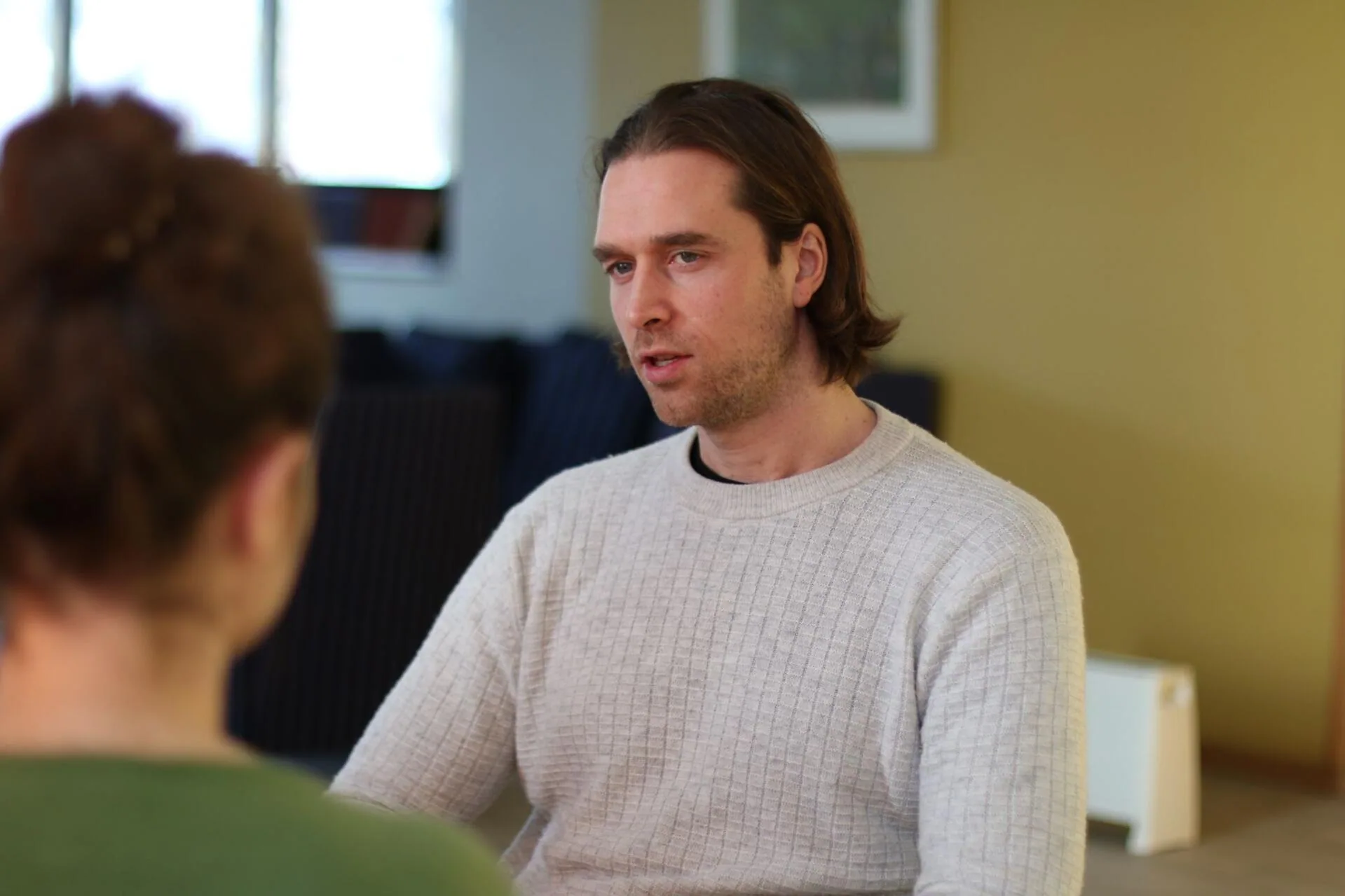
Meditación Acem
Alicante, AlicanteAcem Meditation in Alicante: a secular and structured practice for deepening inner calm Acem Meditation is a center dedicated to teaching meditation located at General Aldave Street, 44, first floor, in Alicante. Under the name Casa Acem Alicante, this space is part of Acem Spain and offers a clearly defined approach to meditation: a technique for relaxation and personal development that is presented as non-religious, without mystical components, and designed to be integrated into daily life. The proposal is aimed at both those who wish to start meditating from scratch and individuals who already know the method and want to maintain or expand their practice. Its identity is not based on seeking complex postures, rituals, or ideals of 'blank mind,' but rather on progressive, practical, and guided teaching. It is especially interesting for those looking to learn a way to meditate with explanations linked to the psychology of meditation and with an orderly learning framework. At Casa Acem Alicante, meditation is understood as a process that can help create more space for rest, reflection, and attention to one's own experience. The entity explains that its technique was developed in Scandinavia starting in 1966 by doctors and psychologists, and presents it as a practice aimed at reducing tension and fostering a more conscious relationship with thoughts, stress, and personal patterns. Services and activity proposal The main activity of the center is the introductory courses to Acem Meditation. These courses teach the basics of the technique and are designed for each participant to begin their own practice outside the classroom. No prior knowledge or specific equipment is required, and the practice is done sitting in a conventional chair, a detail that can be comfortable and accessible for people who do not identify with meditation formats associated with the floor, cushions, or sustained postures. The Acem method employs the mental repetition of a meditation sound and proposes a relaxed approach, without forcing concentration. Instead of trying to eliminate thoughts, the approach invites letting them appear and pass, observing the process without turning the session into a performance exercise. This way of presenting the practice may be suitable for those who find it difficult to concentrate or for those approaching meditation with some curiosity but without interest in spiritual or doctrinal approaches. The introductory courses published for Alicante have had formats of several afternoons, with sessions dedicated to learning the method, resolving doubts, and understanding how to incorporate it into personal routines. The teaching includes individualized guidance, guidelines for managing stress, tools for establishing a meditation habit, and simple explanations about the mental processes that may arise during practice. The goal is not only to learn a specific technique but to acquire resources to sustain it autonomously in daily life. For those who have already completed the initial training, Acem Meditation Alicante has also hosted follow-up courses. One of the formats disseminated by Acem is the first follow-up course, known as M1. In these sessions, participants begin with a group meditation and continue with dialogue and reflection based on texts related to the practice. This proposal is aimed at deepening the meditative experience, exchanging perspectives, and better understanding how each person's relationship with the technique evolves over time. The center has also hosted open seminars dedicated to reflection and conversation on existential topics linked to inner experience. These activities combine an optional group meditation with a talk and a subsequent dialogue space. Thus, the programming is not limited to technical learning but opens the door to addressing human issues from a calm, analytical, and shared perspective. In addition to the proposals held in Alicante, Acem Spain organizes intensive and residential courses in other locations. These activities may include prolonged meditations, orientation groups, talks on the psychology of meditation, basic Acem yoga, walks, and social interaction. However, it is important to clearly differentiate these experiences from the General Aldave headquarters: Casa Acem Alicante is the urban space designated for courses, follow-ups, meditations, and scheduled meetings in the city. Reviews and reputation The public presence of localized reviews for this center is limited, but there is a specific reference associated with the address of General Aldave, 44. A local directory of meditation centers shows a rating of 4.5 out of 5 for Acem Meditation in Alicante, although it does not indicate how many opinions make up that score. The highlighted review in that listing positively values the simplicity of the technique, the practical nature of the teaching, and the treatment received. In general terms, it conveys the perception of an easy-to-follow method and close attention during learning. Since there is not a large volume of verifiable public opinions or a visible number of reviews, it is more prudent to interpret this information as a favorable sign, but not as a conclusive statistical evaluation. Beyond that reference, the reputation of the space is primarily supported by the continuity of the activities published by Acem Spain: introductory courses, follow-up programs, and reflection meetings explicitly linked to Casa Acem Alicante. For those who value structured teaching and opportunities to continue advancing after the first contact, this continuity can be one of the most relevant aspects of the proposal. Environment and facilities The available information identifies the center as Casa Acem Alicante and locates it on the first floor of number 44 on General Aldave Street. Therefore, it is an indoor urban practice space prepared to host teaching and group meditation activities. No reliable public details have been found about decoration, room sizes, equipment, specific accessibility, or complementary services of the venue. What does emerge from the activities held there is an environment focused on calm learning, seated practice, and guided exchange among participants. In follow-up courses and seminars, conversation is part of the experience, so it is not presented solely as a silent meditation room, but as a place for shared training and reflection. The proposal of Casa Acem Alicante may fit particularly well with people who prefer a sober and unadorned approach: learning a specific technique, practicing it without needing to adopt a particular philosophy, and having activities to continue deepening. It is recommended to consult the current programming of Acem Spain before attending, as courses and meetings are organized on specific dates and may vary throughout the year.
Meditación Fernando Villasanta
San Vicente del Raspeig, AlicanteMeditation Fernando Villasanta in San Vicente del Raspeig Meditation Fernando Villasanta is a meditation and wellness proposal located at Paseo los Rosales, 1, letter B, in San Vicente del Raspeig, Alicante. The project is linked to the work of Fernando Villasanta and presents itself as a space aimed at making the meditative practice comprehensible, gradual, and accessible for people who wish to incorporate a conscious pause into their daily lives. Its specialty focuses on meditation as training for attention and the relationship with one's own experience. Rather than presenting it as a practice reserved for specific profiles or necessarily tied to a belief, the proposal emphasizes learning to be present, observing what happens, and developing personal resources to face the daily rhythm with greater calm. It is an option to consider for those looking to start meditating in San Vicente del Raspeig from a close approach, without the need for prior knowledge or a specific physical condition. The philosophy that accompanies the center revolves around concepts such as breathing, internal listening, stretching, and awareness of emotions and thoughts. The project itself defines this approach with a very personal idea: "listening therapy," understood as a way to attend to what happens within oneself. From this perspective, Meditation Fernando Villasanta proposes reserving time to lower external noise, recognize the present, and recover a more attentive relationship with the body and mind. Services and Practice Proposal The offerings of Meditation Fernando Villasanta are primarily dedicated to the teaching and practice of meditation, with educational content and guidelines designed to facilitate the first steps. Its website presents meditation as a path that can be approached simply, progressively, and comfortably, avoiding the idea that it is necessary to "clear the mind" or master complex techniques to begin. Among the content that is worked on or explained are different ways to meditate. These include SO HAM meditation, based on a traditional mantra; mindfulness, presented as a practice of awareness of emotions and situations that generate frustration or anxiety; Aikitaiso, related to the universe of aikido; and Gassho meditation, linked to the tradition of reiki. This variety reflects a proposal that connects meditation, breathing, gentle movement, and practices inspired by Eastern traditions. The approach is not limited to a single rigid technique. On the contrary, the project recognizes that there are different ways to meditate and offers references for each person to discover which ones feel most natural to them. For someone who is just starting, this can be especially valuable: not everyone connects in the same way with silence, breath observation, body work, or mantra repetition. The proposal invites an approach to these possibilities with curiosity and without pressure. Breathing occupies a relevant place in the center's philosophy. It is presented as a direct way to return to the present moment and establish a point of support during practice. Alongside it, stretching adds a bodily dimension that can help prepare the body before sitting down or become aware of accumulated tensions. This combination allows understanding meditation not only as something mental but as an integral experience where body, breath, and attention are interconnected. Meditation Fernando Villasanta also communicates a willingness to adapt the approach to personal needs. The project speaks of observing the demands of each person and current society, intending to bring tools related to quality of life, stress reduction, and self-care. It is important to understand these objectives as part of its wellness philosophy, not as a therapeutic or medical promise: meditation can support building habits of pause and presence, but it does not replace the attention of healthcare professionals when necessary. Another notable feature is its intention to make the practice inclusive. According to information published by the project itself, the meditation proposals are designed for people of different beliefs, health conditions, or physical abilities. This opens the door for those approaching this type of practice for the first time and wishing to do so from a flexible, respectful perspective without an obligatory doctrinal dimension. In addition to the in-person options announced by appointment, the Meditation Fernando Villasanta site functions as a resource for consultation. Its publications explain what meditation is, present different models, and share concrete ways to start. For those who value understanding the meaning of what they practice, this educational component adds context: it is not just about following instructions but gradually familiarizing oneself with a way of observing everyday experiences. Reviews and Reputation No verifiable public reviews specifically attributed to the meditation sessions at Paseo los Rosales have been found. However, there is a public profile of Fernando Villasanta in San Vicente del Raspeig that gathers five ratings with an average score of 5 out of 5. These opinions correspond to his teaching activity in a broad sense, so they should not be interpreted as exclusive reviews of the meditation service. Nevertheless, the available comments help to create a positive perception of his way of supporting learning. People who have left their ratings highlight attentive and kind treatment, easy-to-understand explanations, and a teaching style that encourages continued learning. His professionalism, consistency, and vocation are also valued. Overall, these references suggest a close educational experience, although the concrete experience of meditative practices will depend on each person and the chosen modality. Environment and Facilities Public information places Meditation Fernando Villasanta at Paseo los Rosales, 1, letter B, within San Vicente del Raspeig. No detailed data or verifiable images about the layout, size, decoration, or equipment of the facilities have been found, so it is not appropriate to attribute specific characteristics that have not been confirmed. What the project does convey is an intention to create a serene and accessible meeting point, aimed at stopping, breathing, and dedicating attention to the present moment. The language of its website, focused on progressing gradually and facilitating a gentle entry into meditation, aligns with a proposal directed at those seeking uncomplicated support. Meditation Fernando Villasanta can be an interesting choice in San Vicente del Raspeig for those wishing to explore meditation through breathing, mindfulness, conscious movement, and various practice traditions. A proposal to approach wellness with time, listening, and presence, allowing each step to find its own rhythm.
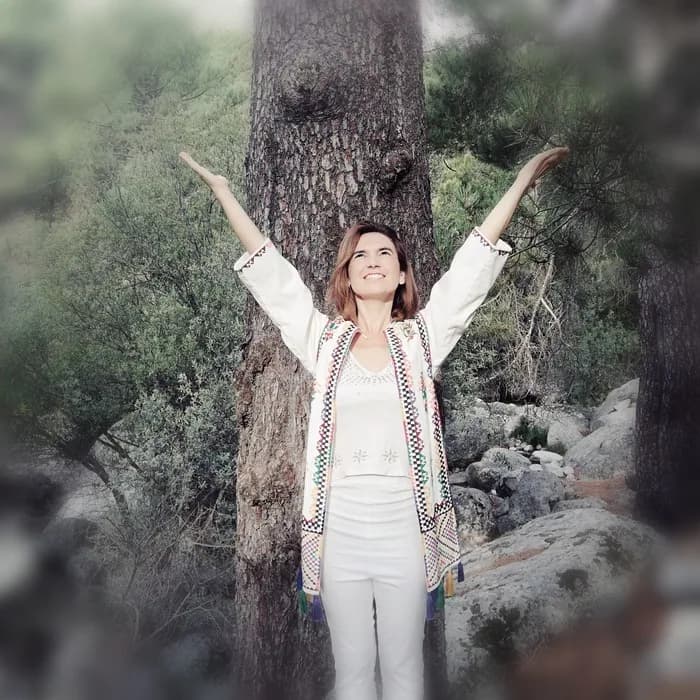
Meditation Samar Garden Denia
Dénia, AlicanteMeditation Samar Garden Denia: meditation, yoga, and sound experiences in the Montgó environment Meditation Samar Garden Denia is a meditation and wellness center located on Carrer Ametla, in Dénia, Alicante. Its proposal is aimed at those looking to pause the daily rhythm, dedicate time to inner listening, and explore practices that combine conscious movement, meditation, breathing, sound, and creativity. The space presents itself as a spiritual center surrounded by nature, within the Montgó Natural Park, with a garden that is an essential part of the experience. More than proposing a single discipline, Samar Garden Denia brings together holistic wellness activities and sessions designed to foster calm, introspection, and personal reconnection. It is an especially interesting alternative for those who wish to approach meditation from an experiential perspective, as well as for yoga practitioners who want to complement their routine with sound baths, conscious breathing, or retreat days in a natural setting in Dénia. The proposal is linked to the work of Teresa Juan, who is responsible for the experiences and the programming publicly shared by the center. Activities are offered in Spanish, and in the case of some yoga proposals, they may also be available in English. Wellness services and experiences The offerings of Meditation Samar Garden Denia integrate yoga, guided meditation, sound experiences, breathwork, and personalized retreats. Within the movement practices, the center communicates sessions of Celêstial Yoga, a proprietary proposal focused on the connection between body, energy, emotions, and inner attention. These classes are designed as a space for conscious practice, lowering the level of external stimulation and cultivating a more present relationship with the body. Yoga Nidra, known as conscious sleep yoga, is also mentioned. This practice is usually developed in a resting position and uses verbal guidance to navigate states of physical and mental relaxation while maintaining awareness. At Samar Garden Denia, it is presented as a tool to promote a deep pause, quiet the mental activity, and open a time for personal observation. Due to its accessible and slow nature, it can be suitable for both individuals with experience in contemplative disciplines and those wishing to discover more guided meditation formats. Sound baths occupy a prominent place in the center's programming. The sessions, described as Deep Sound Journey or ritual sound experiences, use crystal and quartz bowls, bells, gongs, cymbals, drums, and voice. The approach is not limited to passive listening: the proposal combines the soundscape with a guided meditation at the beginning, breathing, and an atmosphere of introspection. Both experiences for very small groups and private sessions are announced, allowing for a more intimate format tailored to the intention of each visit. The center has also promoted Meditation + Breakfast sessions, a formula that combines contemplative practice with a quiet moment to share. This combination fits with the slow character of Samar Garden Denia: a proposal that seeks to reserve space for presence without turning the experience into a rushed activity. In certain retreats, meals, brunch, snacks, water, infusions, or tea are also included, although these elements depend on each specific event. Another part of the offering consists of Celêstial Alignment and Soul Activation, practices presented by the center from a spiritual and energetic perspective. They are accompanied, according to available information, by individual guidance and spiritual teachings. These are experiences aimed at individuals who feel comfortable with a personal and spiritual development language and who wish to work with a specific intention within an introspective process. To complete the proposal, Samar Garden Denia communicates foot and cranial reflexology services, as well as energy alignment sessions. The whole set configures an offering that goes beyond a conventional meditation class: it combines individual practices, wellness meetings, sound sessions, and retreat formats designed for deeper engagement over more time. Personalized retreats and creativity One of the distinguishing features of the center is its one-day retreats and personalized experiences. The published information describes individual formats aimed at adapting the day to the history, interests, and intention of each participant. Before some personalized retreats, a prior contact is proposed to assess the fit of the experience and define what the person seeks to explore. These days can include Celêstial Yoga, pranayama, breathwork, guided meditation, moments of rest, ritual sound experiences, and creative practices. The artistic component may include drawing, writing, singing, music, dance, or spaces for free expression. In this way, creativity is incorporated not as a technical requirement or as a conventional art class, but as a means of self-expression and reflection. Art retreats that combine meditation, yoga, breathing, and sound in a single day have also been held. These proposals are designed for those who wish to step away from screens, spend time in nature, and regain a more spontaneous relationship with their creativity. The programming may vary, so it is advisable to confirm directly the availability and content of each experience before planning a visit. Reviews and reputation Samar Garden Denia has a very positive public reputation on Tripadvisor, where it has a rating of 4.9 out of 5 based on 37 reviews. The platform also ranks it among the highlighted wellness spaces in Dénia, a fact consistent with visitor comments that particularly value the environment and the personalized nature of the experiences. In the reviews, references to the tranquility of the place, the presence of Montgó, and the feeling of being immersed in nature are repeated. Several visitors describe the garden as a particularly beautiful and serene space, suitable for disconnecting from routine. Positive comments also appear about the sound baths, which are perceived as well-crafted and intense experiences, and about the way the sessions are guided. Some opinions mention one-day private retreats as structured and complete experiences, with yoga, sound, meditation, and moments of rest. Others highlight the attention received and the ability to adapt certain proposals to the individual's level or needs. Overall, the perception conveyed by those who have shared their experience is that of an intimate, personal center focused on creating a wellness experience with time and attention to detail. Atmosphere and facilities The atmosphere of Meditation Samar Garden Denia is closely linked to its location. The center presents itself surrounded by nature in the Montgó Natural Park and has a garden that serves as a setting for contemplation, practice, and moments of pause. This relationship with the outside is one of its main attractions: the experience is not limited to a room but incorporates the landscape, light, and tranquility of the surroundings. In addition to the garden, the space has a studio designated for practices such as sound baths and meditation sessions. The programming of private experiences and small groups reinforces a collected atmosphere, designed for those who prefer close attention over mass formats or gym routines. Meditation Samar Garden Denia can be a good choice for those seeking a meditation place in Dénia with its own identity, where yoga, sound, creativity, and nature meet in a personal proposal. A space to gift oneself a conscious pause, deepen wellness practices, or live a different day at the foot of Montgó.
Mindfulness Alicante
Alicante, AlicanteMindfulness Alicante: mindfulness and psychological support in the center of Alicante Mindfulness Alicante is a space focused on the practice of mindfulness and emotional well-being, located at Pintor Cabrera Street, 8, in Alicante. Its location, in the Ensanche-Diputación area and just a few minutes from the station, places it in a well-connected urban environment for those looking to incorporate professional support into their daily lives without straying far from the city center. The center's proposal is linked to the application of mindfulness within a psychological and therapeutic context. Rather than presenting meditation as an isolated activity, Mindfulness Alicante offers mindfulness as a practical tool to observe thoughts, emotions, and sensations with greater perspective. The goal is not to automatically eliminate what is uncomfortable but to develop a more conscious, flexible, and useful relationship with personal experience. The space is associated with the psychology practice of José Brotons, a professional who works from this location and whose approach integrates mindfulness, acceptance and commitment therapy, and cognitive-behavioral strategies. Thus, Mindfulness Alicante may be particularly suitable for individuals who wish to approach guided meditation and presence practices from an individualized, structured approach connected to emotional health. Services and work approach Mindfulness is the distinctive focus of Mindfulness Alicante. This practice proposes training the ability to attend to the present: recognizing what is happening in the body, what thoughts arise, how certain emotions manifest, and what automatic responses are triggered in response to them. Instead of fighting each unpleasant sensation or getting caught up in worry, the aim is to create a space for observation and choose ways of acting that are more aligned with one's own needs and values. Mindfulness is integrated here within an applied psychology framework. According to the available information about the center, the work can address issues such as anxiety, stress, persistent worries, low mood, insecurity, relational difficulties, self-esteem problems, sleep disturbances, decision-making, or personal change processes. Support is also provided for fears, blockages, irritability, difficulties managing intense emotions, and situations that limit daily life. The methodology combines resources from various therapeutic approaches. On one hand, cognitive-behavioral therapy provides tools to identify patterns of thought, behavior, and emotional reaction that may be maintaining discomfort. On the other hand, acceptance and commitment therapy focuses on the relationship with internal experience and on building a life consistent with personal values. In this context, mindfulness meditation is used as training to cultivate awareness, openness, and responsiveness. The proposal is not limited to discussing what is concerning. The process described by the center includes an initial assessment phase to understand each person's situation, an explanation of the hypotheses and work objectives, the progressive application of therapeutic strategies, and follow-up aimed at consolidating progress. This structure offers a clear reference for those seeking to understand how a psychological support process can develop. Importance is also given to practice between sessions. The idea is that the tools learned can be transferred to real situations: a moment of tension at work, a difficult conversation, a night of insomnia, repetitive rumination, or a period of uncertainty. Mindfulness practices can be adapted to each process and become a daily resource for pausing, observing, and responding in a less impulsive manner. For those approaching mindfulness for the first time, the center offers an accessible and grounded approach. Mindfulness is not presented as the obligation to "clear the mind," but as a way to train observation without judgment. Thinking, feeling anxious, or getting distracted is part of the experience; the practice consists precisely of realizing this and returning, again and again, to the present moment. Reviews and reputation The publicly available information does not show a consolidated aggregate score for the profile identified as Mindfulness Alicante. Therefore, it is not possible to provide an average rating or a reliable number of verified opinions specifically under that name. However, testimonials have been found published on the website associated with the practice at the same address. In them, some individuals describe support that helped them understand personal strategies that, although they seemed useful, were prolonging their discomfort. They also highlight having acquired a different way of facing problems and relating to automatic reactions in daily life. Other comments value the professional involvement, the clarity of explanations, and a therapeutic orientation based on acceptance, commitment, and mindfulness. Additionally, there are experiences shared by couples who indicate having received support to work on difficulties in their relationship. Since these are testimonials published on the center's own website, it is important to interpret them as personal experiences and not as a guarantee of results: each emotional process has its own pace, needs, and circumstances. Environment and facilities Mindfulness Alicante is located at Pintor Cabrera Street, 8, specifically in a professional practice situated on the second floor of the building. The location corresponds to an office-based format, designed for individual meetings and follow-up processes in a reserved environment. According to the available information, it is not presented as a large meditation studio with a massive schedule of classes, but rather as a consultation space where mindfulness is integrated into personalized support. This difference may be relevant for those seeking a mindfulness practice linked to specific emotional well-being goals, rather than an experience focused exclusively on group meditation sessions. Its central location allows for easy incorporation into the routine of residents, professionals working in the area, or individuals traveling from other parts of Alicante. Proximity to commercial areas, services, and transport connections adds convenience to a proposal designed to calmly address issues that often require continuity and confidentiality. In summary, Mindfulness Alicante offers a professional approach to mindfulness from psychology. It is an option for those who wish to explore mindfulness meditation with a practical sense, better understand their emotional patterns, and develop resources to cope with anxiety, stress, personal changes, or difficulties that interfere with their well-being. A space in the center of Alicante to pause, observe, and move forward with greater awareness.
NAGARJUNA CENTRO DE MEDITACIÓN
El Campello, AlicanteNagarjuna Meditation Center in El Campello: Tibetan Buddhism, meditation, and personal growth Nagarjuna Meditation Center, also known as Nagarjuna Alicante, is a space dedicated to meditation and the study of Tibetan Buddhism located at Ruperto Chapí Street, 9, in El Campello, Alicante. Its offerings are aimed at those who wish to start meditative practice, deepen their understanding of the mind, or approach Buddhist philosophy from a perspective applied to daily life. The center is part of the Mahayana tradition of Tibetan Buddhism and is affiliated with the Foundation for the Preservation of the Mahayana Tradition, FPMT. Its approach combines traditional teachings with accessible and contemporary language, emphasizing the development of compassion, wisdom, mental clarity, and a more conscious relationship with emotions and daily experiences. It is not necessary to be a Buddhist or have prior experience to participate in many of its offerings: the center caters to both individuals looking to learn to meditate and students interested in pursuing a deeper path of study and practice. ([budismoalicante.com](https://budismoalicante.com/el-centro/?utm_source=openai)) Its location in El Campello makes it easy to attend from various points in the province. The center is just a few minutes' walk from the TRAM El Campello stop, which is directly connected to Alicante via lines 1 and 3, and near a stop for bus line 21. This accessibility makes it a practical option for residents of El Campello, Alicante, Playa de San Juan, San Vicente, and other nearby towns who wish to incorporate in-person meditation into their routine. ([budismoalicante.com](https://budismoalicante.com/contacto/?utm_source=openai)) Services and Activity Offerings Meditation is one of the pillars of Nagarjuna Alicante. Among its regular activities is "Learn to Meditate," an open session that offers a gradual introduction to techniques from the Tibetan tradition to cultivate concentration, serenity, and inner observation. The practice includes references to samatha, associated with training a stable and calm mind, and vipassana, aimed at developing a clearer view of one's mental habits and experiences. It is especially suitable for those seeking a first group meditation experience without prior knowledge. ([budismoalicante.com](https://budismoalicante.com/meditacion-paso-a-paso/?utm_source=openai)) There is also a meditation and introduction to Buddhism activity designed to connect practice with the philosophical foundations of this tradition. This format may be interesting for those who not only wish to sit and meditate but also understand the meaning of the tools they use, explore issues related to the mind, and discover a broader view of compassion, well-being, and everyday behavior. The proposal maintains a close, progressive character suitable for different levels of experience. ([budismoalicante.com](https://budismoalicante.com/actividades/?utm_source=openai)) The center's programming also includes regular Buddhist practices, such as the recitation of the Sanghata Sutra, the practice of the Medicine Buddha, and the practice of Chenrezig. These sessions are integrated into the calendar for those who wish to learn about the ritual, devotional, and contemplative dimensions of Tibetan Buddhism. Alongside them, special tsog practices and other initiatives related to the study and practice community are held. Thus, Nagarjuna offers an experience that goes beyond meditation as an isolated technique and allows for an approach to Buddhism as a living tradition, with spaces for reflection, recitation, study, and gathering. ([budismoalicante.com](https://budismoalicante.com/actividades/?utm_source=openai)) The educational offerings are broad and variable according to the calendar. The center announces meditation courses, introduction to Buddhism programs, mindfulness workshops, study groups, lectures, spiritual retreats, and training on sutra and tantra. Some of these proposals are aimed at newcomers, while others are directed at students interested in deepening their knowledge. The program "Introduction to Discover Buddhism," for example, is presented as a modular study itinerary and is offered in both in-person and online formats, expanding access for those who cannot always attend the center. ([budismoalicante.com](https://budismoalicante.com/el-centro/?utm_source=openai)) Another aspect of the center is the so-called Dharma Café, an informal conversation format on topics related to Buddhism. In these meetings, issues such as the mind, meditation, reincarnation, relationships with other religions, vegetarianism, or life after death are discussed, creating a relaxed context for asking questions, listening, and sharing reflections. It is a suitable entry point for curious individuals who prefer to start through dialogue before joining a course or regular practice. ([budismoalicante.com](https://budismoalicante.com/dharma-cafe/?utm_source=openai)) The programming also includes retreats and weekend courses, some in both in-person and online formats. Recently announced content includes teachings on Buddhist texts, mental calm, purification, Mahamudra, or the wheel of life. This variety allows each person to approach the center from different needs: seeking a meditation habit, wanting to learn mindfulness, cultural and philosophical interest in Tibetan Buddhism, or the desire to develop a more sustained spiritual practice. ([budismoalicante.com](https://budismoalicante.com/actividades/?utm_source=openai)) In addition to meditation and study activities, Nagarjuna Alicante has included in-person Ashtanga yoga classes within its regular programming. This offering complements the work of attention and presence through movement, although activities may vary depending on the period and internal organization of the center. ([budismoalicante.com](https://budismoalicante.com/actividades/?utm_source=openai)) Reviews and Reputation The public information located for this establishment shows a rating of 5 out of 5 based on 9 reviews, compiled in a business profile attributed to Yably. It is a small sample, but the reflected score is very positive. No complete texts of those reviews have been located that allow for precise summarization of specific comments, so it is advisable to interpret that rating as a favorable sign of overall satisfaction, without extrapolating more specific conclusions about individual experiences. ([cylex.es](https://www.cylex.es/el-campello/centro-de-budismo-tibetano-nagarjuna-alicante-14302946.html?utm_source=openai)) Environment, Approach, and Attendance Modality Nagarjuna Alicante presents itself as a meditation center and Tibetan Buddhism study with an open and inclusive orientation. Its communication emphasizes that the teachings are not reserved for Buddhists but can be useful for anyone wanting to work on mental stability, inner knowledge, compassion, or personal growth. The tone of its proposal seems to move away from an exclusively theoretical approach: explanations, meditation, debate, and practice are combined to facilitate the transfer of content to daily life. ([budismoalicante.com](https://budismoalicante.com/el-centro/?utm_source=openai)) The center hosts in-person activities in El Campello and, for certain courses and teachings, enables online participation. This combination can be especially interesting for those who value the energy of shared practice but need flexibility to follow some trainings at a distance. The existence of regular meetings, introductory proposals, and more extensive courses allows for a gradual relationship with the space, from a first meditation session to more sustained study paths. ([budismoalicante.com](https://budismoalicante.com/actividades/?utm_source=openai)) Nagarjuna Meditation Center is, ultimately, a solid option in El Campello for approaching meditation within the framework of Mahayana Tibetan Buddhism. Its offerings include guided practice, training, community activities, retreats, and conversation spaces, with alternatives for both beginners and those wishing to deepen their practice. A place to visit with curiosity, with a specific intention to cultivate calm and attention, or with the desire to discover a tradition that places the care of the mind and a good heart at the center of its path.
Cities with meditation centers in Alicante
Explore city-specific landings inside the province.