
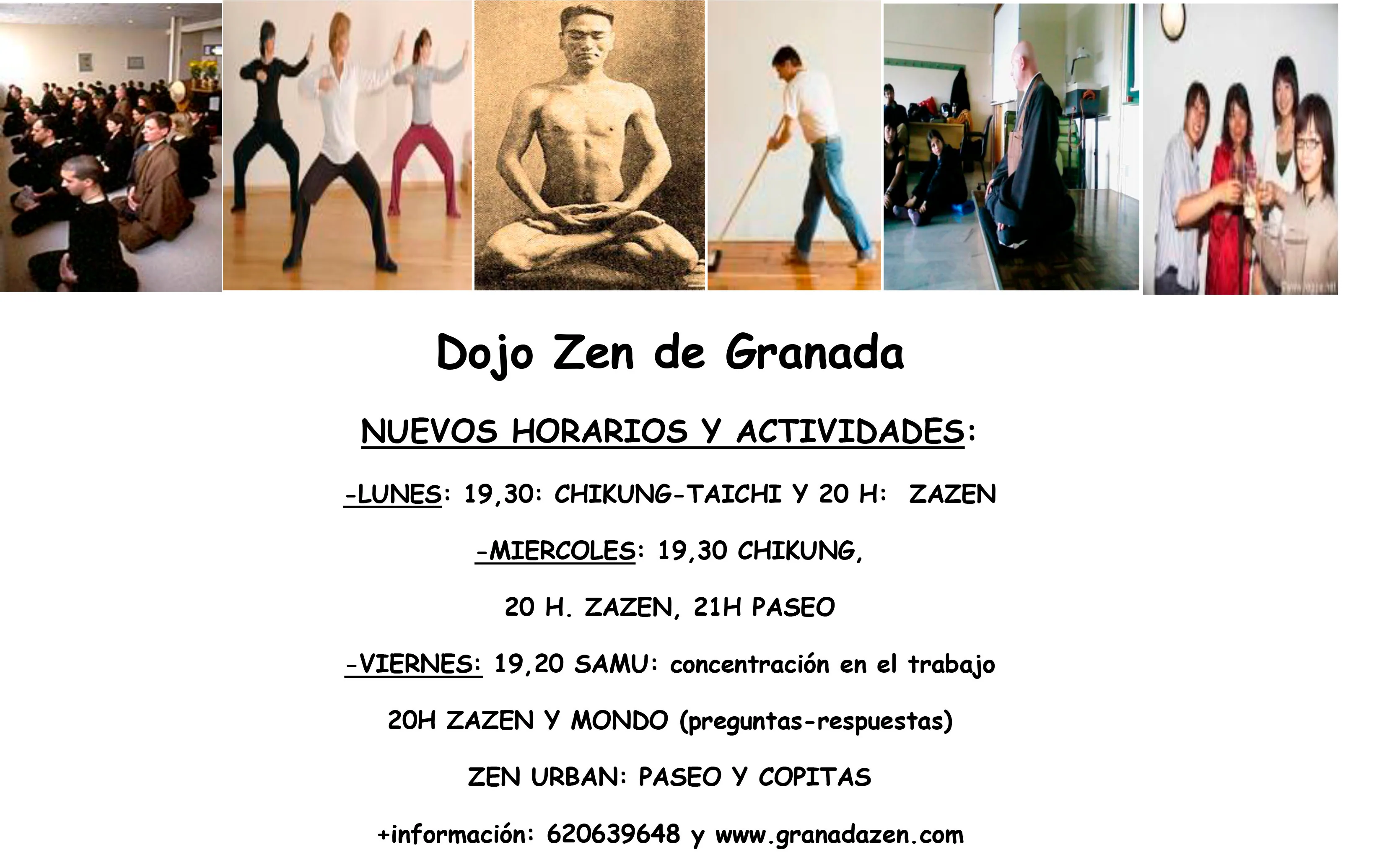
Dojo Zen de Granada
About
Zen Dojo of Granada: Zen meditation practice in the historic center
The Zen Dojo of Granada is a space dedicated to the practice of Zen meditation in the heart of the city. It is located at Pescadería Street, number 1, on the fourth floor of the building, also referencing Pescadería Square, within the Central district of Granada. Its location, just steps away from some of the busiest and most emblematic areas of the historic center, offers a very particular contrast: ascending to a space oriented towards silence, presence, and shared practice without leaving the urban pulse of the city.
The center's proposal revolves around Zen and, primarily, zazen, the seated meditation typical of this tradition. Far from being a quick wellness activity or a conventional physical training, the dojo presents itself as a place to cultivate attention, stability, and observation through regular practice. It is an interesting option for those who wish to approach meditation from a traditional perspective as well as for practitioners looking to integrate a contemplative discipline into their daily lives.
The very term "dojo" expresses the character of the space: a place of practice. In this case, practice is articulated through the body, breath, silence, and repetition. The group format allows for sharing meditation time with others, creating a concentration framework that can be especially valuable for those who find it difficult to maintain an individual routine. The Zen Dojo of Granada is historically linked to the fabric of Zen groups in Andalusia and is recognized in specialized sources as a well-established Granada dojo within this tradition. (zensevilla.com)
Services and practice proposal
The core of the activity is zazen. This form of seated meditation invites one to pause, attend to posture and breath, and observe the mental flow without the need to chase or combat it. In the context of a dojo, zazen is understood as a direct and constant practice: it does not require prior experience in complex techniques, but rather a willingness to approach it with patience, continuity, and a listening attitude.
Alongside zazen sessions, the information published by the center includes complementary proposals that expand the experience of practice. Among them is chikung, a discipline of movement and conscious breathing that can serve as physical preparation for meditation or as a way to work on presence from a more dynamic rhythm. Tai chi is also included in one of the dojo's proposals, reinforcing the relationship between stillness, movement, breath, and attention.
The program described on the official website also includes meditative walks. This practice transfers mindfulness to movement, contact with the ground, the rhythm of steps, and the environment. It can be an accessible way to understand that Zen is not limited to quiet time on the cushion, but can accompany simple actions of daily life. In a city like Granada, where the historic center invites leisurely walks and discovery, this urban dimension fits naturally with the personality of the space.
Another identified activity is samu, defined by the dojo itself as concentration in work. In the Zen tradition, samu relates to performing everyday tasks with attention and presence. Beyond the formal practice of meditation, this approach emphasizes the way of being in what one does: organizing, caring, collaborating, or performing a specific task without separating action from awareness. It is a nuance that adds depth to the proposal of the Zen Dojo of Granada and may interest those looking to bring meditation into their real lives, beyond an isolated session.
The center also mentions mondo, a format for questions and answers. This activity opens a space to share doubts, experiences, or reflections around practice. For beginners, this type of meeting can help situate essential concepts and better understand the dynamics of a dojo. For those who already meditate, it can become an opportunity to delve into aspects that arise with consistency: the relationship with thoughts, the difficulty of maintaining a posture, regularity, or the role of practice during periods of change.
The proposal is completed with an initiative called Zen Urban, which combines walking and social gathering. This is an interesting detail because it shows a community dimension: practice is not limited to the silence of the room, but can also continue in a more relaxed, close, and connected way with the city. Together, the Zen Dojo of Granada brings together seated meditation, conscious movement, practice in action, conversation, and walking, without losing the Zen approach as its axis.
Reviews and reputation
In the public listings found for this same establishment at Pescadería Square, it has a rating of 5 out of 5 based on 5 reviews. Although no verifiable and detailed individual comments have been found that allow attributing specific experiences to users, this public rating reflects a very positive reception among those who have left reviews. (places.leadset.ai)
It is also included in compilations of meditation centers in Granada as a space specialized in Zen practice and located in the city center. These references highlight precisely the combination of a central location and orientation towards meditation, although it is important to understand them as directory listings and not as an exhaustive description of the current experience of the center. (mejoresdegranada.es)
Environment and facilities
The available information places the dojo on the fourth floors C and D of a building on Pescadería Street. This suggests an experience away from direct street access: the journey to the space creates a certain separation from the external movement, something coherent with a practice that seeks to reserve time for concentration and calm. (granadazen.com)
No reliable data has been found regarding the decoration, room sizes, accessibility, equipment, or specific elements of the facility, so it is advisable not to anticipate characteristics that the center has not publicly detailed. It can be affirmed that practice is intended to be carried out in comfortable and sober clothing, in a framework of respect for the group and for the silent character of zazen.
The location is one of its distinguishing features. Pescadería Square is part of the historic center of Granada, in an environment of lively streets, shops, and dining, very close to the usual routes of the city. The dojo thus offers the possibility of reserving a moment of contemplative practice without the need to travel to the outskirts: a conscious pause within the urban routine. (granadahoy.com)
For those looking to learn about Zen from a serious, in-person, and shared practice, the Zen Dojo of Granada proposes a meeting point with its own identity in the city center. Zazen, chikung, tai chi, meditative walking, samu, and dialogue spaces configure an offer that understands meditation as a living discipline: silent when appropriate, active when daily life demands it, and always oriented towards being more present.
Frequently asked questions
What kind of center is Dojo Zen de Granada?+
Dojo Zen de Granada is a meditation center in Granada, Granada. It is listed in Retiru’s directory of yoga, meditation and ayurveda centers.
What do people say about Dojo Zen de Granada?+
Average Google rating of 5 out of 5 from 10 reviews.
Other meditation centers in Granada
See all →
Área Esencial Centro de Psicología y Mindfulness

BorealRelax: Centro de Masajes y Wellness Spa

Centro de Meditación Kadampa Granada

Círculo de Mujeres | Mujer Lunar | Tarot, Reiki, Meditación

FULL VITALITY SPA SIERRA NEVADA
Meditación de Introspección
Is this your center?
Claim it to manage your profile, respond to reviews and publish events.