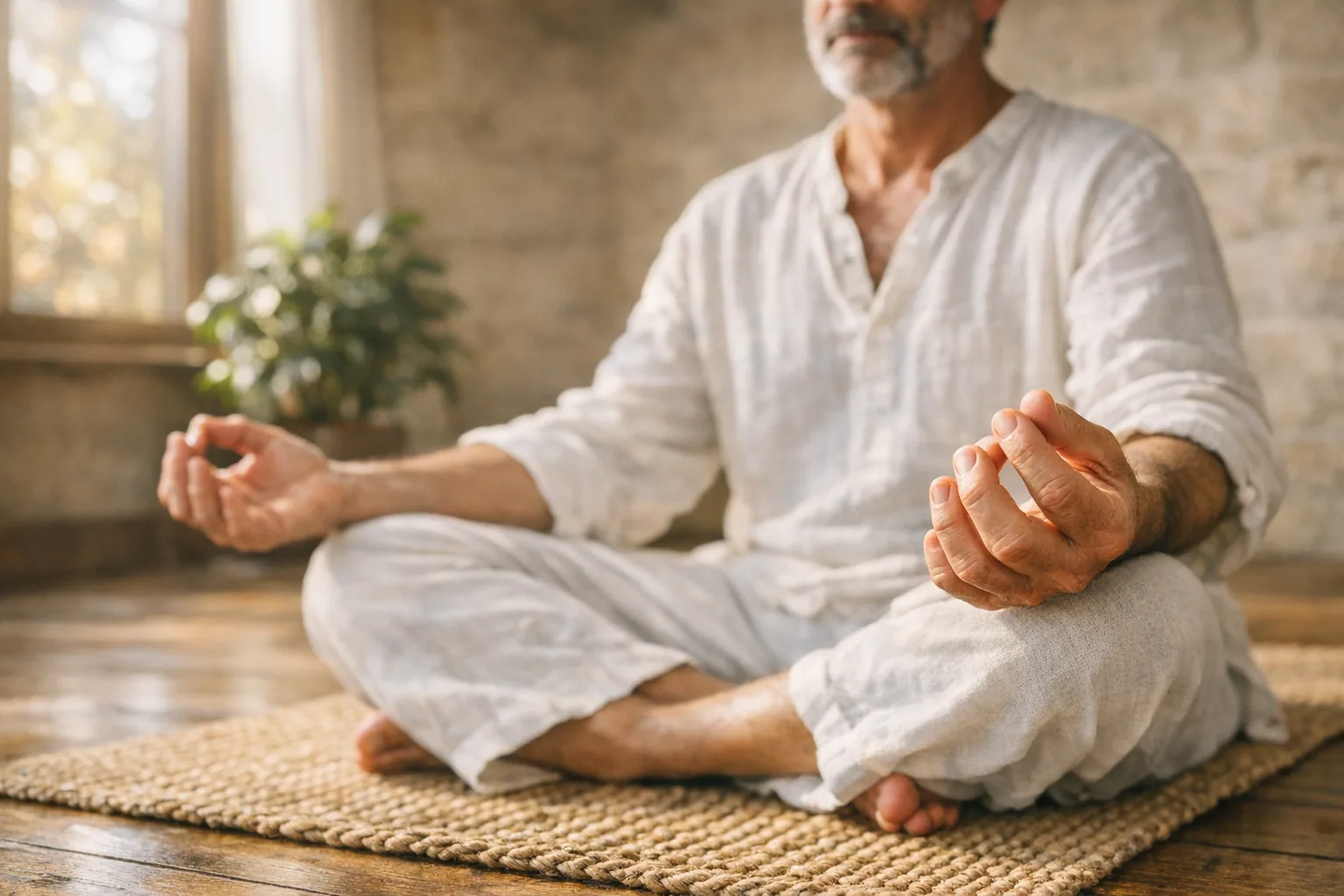
The Relationship Between Yoga and Ayurveda: How They Complement Each Other and Why They Often Go Hand in Hand
Retiru Team
The Retiru content team — yoga, meditation and ayurveda.

The Relationship Between Yoga and Ayurveda: How They Complement Each Other and Why They Often Go Hand in Hand
The relationship between yoga and Ayurveda is much closer than it sometimes appears when mentioned as two separate wellness practices. In reality, they are part of the same traditional vision of health and life: a way of understanding the body, mind, energy, and daily habits as a whole.
That’s why it’s no surprise that many wellness retreats, detox getaways, and holistic care programs integrate them together. Yoga provides movement, attention, and mental discipline; Ayurveda, on the other hand, offers a more personalized approach to diet, daily rhythms, and internal balance. Together, they create a coherent framework for those seeking to care for themselves more consciously, without falling into generic solutions.
If you are exploring this world for the first time or want to better understand why so many wellness experiences combine both disciplines, here you’ll find a clear, useful, and rigorous guide. And if you are also interested in discovering related experiences, you can start by exploring available retreats or by learning more about yoga, meditation, and Ayurveda centers in different areas of Spain.
What Yoga and Ayurveda Have in Common
Yoga and Ayurveda share a philosophical and cultural origin in India, and both are based on a central idea: health does not depend solely on the absence of disease, but on the balance between different layers of the person.
Although over time they have developed as distinct disciplines, their foundations remain connected:
- they understand that body, mind, and environment influence each other
- they value prevention and daily care
- they pay attention to natural rhythms
- they consider that each person is different and needs a tailored approach
- they work not only on symptoms but on habits and lifestyle
In that sense, yoga is not limited to the physical practice of postures. Traditionally, it includes breathing, concentration, meditation, and a more mindful way of living. Ayurveda, in turn, is not just a dietary or therapeutic proposal but a traditional system of holistic care that observes constitution, digestion, rest, season of the year, and other personal factors.
Yoga and Ayurveda Are Not the Same, But They Are Complementary
A common misconception is to think that yoga and Ayurveda are different versions of the same practice. They are not. They share roots but fulfill different functions.
Yoga Focuses More on Practice and Direct Experience
Yoga usually centers on the relationship between body, breath, mind, and presence. Its best-known tools are:
- postures or asanas
- breathwork or pranayama
- meditation
- relaxation
- mental observation and inner discipline
In a yoga retreat, for example, it’s common to find practice sessions, guided silences, rest times, and a daily structure designed to foster concentration and calm.
Ayurveda Provides the Framework for Daily Balance
Ayurveda concerns itself more with the context: how you eat, when you sleep, what rhythm you follow, what suits you best, how the season affects you, or even what type of routine helps you feel more stable.
It does not seek a one-size-fits-all answer. On the contrary, it starts from the idea that each person has a particular constitution and that well-being is built through decisions tailored to it.
That’s why while yoga can help you listen to yourself and regulate through practice, Ayurveda offers criteria to organize your daily life more coherently with your state and life stage.
The Common Philosophical Base: Balance, Observation, and Prevention
Beyond the names, both disciplines share the same sensibility: to prevent rather than correct, to observe rather than impose, and to adjust rather than force.
This idea is especially valuable in a context like today’s, where many people seek to compensate for sensory overload, mental fatigue, and disconnection from their own routines.
From this perspective, yoga and Ayurveda are not to be understood as “quick fixes,” but as tools to fine-tune the relationship with oneself. They do not promise immediate or universal results, but they do offer a solid framework to cultivate more conscious habits.
How They Relate in Practice
The combination of yoga and Ayurveda usually appears very naturally in retreats, wellness centers, and self-care programs. Not because it is a trend, but because both disciplines fit well together.
- Yoga Practice Is Better Adapted with an Ayurvedic View
Not everyone needs the same type of yoga at every moment. An Ayurvedic approach can help choose a practice better suited to a person’s overall state, the season, or the time of day.
For example, generally speaking:
- a gentler practice may be more appropriate in times of fatigue or overload
- a more dynamic practice may fit better when one seeks to activate energy and focus
- sequences, schedules, and rhythms are better adjusted when observing how the person is, not just what they “should do”
This is not about medicalizing the practice but making it more sensible and personalized.
- Ayurvedic Diet Can Better Accompany a Yoga Experience
In many retreats, food is not a secondary element. It is part of the experience. When inspired by Ayurveda, meals are usually designed to promote digestion, lightness, and regularity.
This does not mean rigid diets or extreme restrictions. Rather, it involves reviewing aspects such as:
- meal timing
- ingredient quality
- ease of digestion
- the relationship between season, climate, and diet
- attention to group rhythm and daily practice
In a well-designed retreat, food not only nourishes but also supports the overall goal of the stay.
- Daily Routines Gain Coherence
One of the points where yoga and Ayurveda meet most clearly is in routine. Both disciplines value daily order as a foundation for well-being.
Waking up at a reasonable hour, eating regularly, reserving time for practice, resting with good sleep hygiene, and reducing external noise are habits that may seem simple but make a difference when sustained.
In a weekend retreat or longer getaway, this structure can help disconnect from autopilot. If you want to discover such proposals by location, you can check the different retreat and wellness destinations.
What Role Each Discipline Has in a Wellness Retreat
When yoga and Ayurveda are integrated in a retreat, each brings something different to the whole.
Yoga Organizes the Experience from Within
A well-planned yoga practice helps to:
- ground in the body
- reduce mental dispersion
- create space for breathing
- accompany rest or introspection processes
- sustain attention over several days
In silent, meditation, or personal reconnection retreats, this is especially useful because yoga prepares the ground for a deeper, calmer experience.
Ayurveda Provides Context and Criteria
Ayurveda can help answer questions many people have before booking a retreat:
- What type of food will be offered?
- Is it a gentle or more cleansing proposal?
- How is the day organized?
- What physical intensity level does it have?
- Is it designed for experienced people or also beginners?
This clarity is important because not all wellness retreats meet the same needs. Some are more contemplative; others are more rest-oriented; others combine physical practice, mindful eating, and traditional therapeutic support.
Who Might Benefit from Combining Yoga and Ayurveda
You don’t need prior experience in either discipline to benefit from a program that combines both. In fact, many people encounter them for the first time through a retreat, weekend getaway, or short stay in a specialized center.
It can be a good option if you want to:
- slow down without disconnecting entirely from your body
- reconnect with more stable habits
- better understand what type of practice suits you
- begin a gentler approach to well-being
- live a more structured experience than just a simple vacation
- explore self-care from a holistic perspective
It may also interest people who already practice yoga but want to better understand how diet, routine, and rest influence their daily energy.
What Not to Expect from Yoga and Ayurveda
As important as knowing what they offer is understanding what they are not.
- They are not miraculous shortcuts.
- They do not replace medical care when needed.
- They do not guarantee identical results for everyone.
- They don’t work well if turned into a rigid list of rules.
The quality of the experience depends greatly on how it is designed. A serious retreat or a well-managed center does not sell unrealistic promises: it offers a coherent environment, respectful practice, and guidance tailored to the people.
If you want to evaluate options wisely, it can be helpful to review both the program’s approach and the venue’s or team’s background. The platform Retiru gathers proposals and centers to help you compare more clearly.
How to Choose a Retreat That Combines Yoga and Ayurveda
Not all retreats labeled “holistic” offer the same level of rigor. If you are considering booking one, it’s worth looking at some key aspects.
- Program Focus
Check if the retreat is more oriented towards:
- rest and disconnection
- daily yoga practice
- Ayurveda introduction
- mindful eating
- meditation and silence
- energy recovery
- a combination of several disciplines
The clearer the focus, the easier it is to know if it fits you.
- Intensity Level
There are gentle, very contemplative retreats, and others with more physical load or structure. A good program should indicate if it is intended for beginners, regular practitioners, or those with experience.
- Quality of the Space
The environment matters. A well-kept, calm, and well-located center can greatly enhance the experience. In Spain, there are proposals by the coast, mountains, and countryside; choosing the right setting can make a difference. If you seek inspiration by area, you can review the Retiru destinations.
- Food and Schedules
If Ayurveda is part of the program, it’s good to know exactly how it is integrated: meal types, number of servings, flexibility if you have specific needs, and level of adaptation.
- Organizer Transparency
It’s preferable to choose proposals that clearly explain what is included, what isn’t, and what kind of support they offer. If you are a center or organizer, you can also consider how to give visibility to your experiences through Retiru for organizers.
Yoga and Ayurveda in Spain: An Increasingly Common Combination
In Spain, interest in yoga, meditation, and wellness experiences has grown notably in recent years. This has also driven the emergence of retreats and centers that integrate a broader vision of self-care.
Although each proposal has its own stamp, the combination of yoga and Ayurveda frequently appears in:
- disconnection retreats
- weekend getaways
- rest and self-care programs
- stays in rural or natural settings
- experiences linked to mindful eating
- meditation gatherings with a holistic approach
This expansion responds to a real demand: many people no longer just want to “do yoga,” but to live an experience that helps reorder habits, recover energy, and escape daily saturation.
The Role of the Environment: Nature, Rhythm, and Silence
One reason why yoga and Ayurveda work so well together in a retreat is that both benefit greatly from the environment.
Nature, relative silence, the absence of constant stimuli, and slower rhythms foster a clearer experience. Not because the environment does all the work, but because it reduces interference.
That’s why many people seek retreats in places where the landscape accompanies: quiet coast, mountains, countryside, or areas away from urban noise. If you want to explore options like these, the Retiru blog can help you better understand different wellness formats and approaches.
Frequently Asked Questions About the Relationship Between Yoga and Ayurveda
Can You Practice Yoga Without Following Ayurveda?
Yes. They are related disciplines but you don’t need one to practice the other. Many people do yoga without incorporating Ayurveda into their daily life.
Is Ayurveda a Form of Alternative Medicine?
Ayurveda is a traditional knowledge and care system from India. In wellness contexts, it is mostly used as a guide for habits, diet, and personal balance. It should not be understood as a substitute for medical attention.
What Works Better for Beginners: Yoga, Ayurveda, or Both?
If you are a beginner, a program combining both disciplines can be very accessible if well guided. Yoga introduces you to body and breath practice; Ayurveda can provide a simple framework to organize habits without excessive demands.
Is it Necessary to Follow a Strict Ayurvedic Diet?
Not necessarily. In many retreats, Ayurveda-inspired food adapts to the context, group, and season. The important thing is that it is coherent and well explained.
What Type of Retreat Usually Combines Both Disciplines Well?
Rest, reconnection, gentle detox, silence, meditation, and holistic wellness retreats often work very well. Also weekend retreats when you want a real but brief pause.
Conclusion: A Relationship That Makes Sense When Understood with Discernment
The relationship between yoga and Ayurveda has depth, coherence, and a lot of practical sense. They are not just two labels added for trendiness, but two complementary ways to care for personal balance from different angles.
Yoga invites you to feel, observe, and practice.
Ayurveda helps you organize, adjust, and sustain. Together, they can offer very valuable experiences when well integrated and presented with rigor.
If you want to experience this combination realistically and well guided, it’s worth exploring retreats, centers, and destinations calmly. It’s not about looking for the “most intense” proposal, but the one most suitable for you. To start, you can discover available wellness retreats or check out specialized centers in yoga, meditation, and Ayurveda.
Ready for your next retreat?
Explore hundreds of retreats across Spain with transparent pricing.
Explore retreats