Relationship between Microbiota and the Immune System: How the “Gut Ecosystem” Trains Your Defenses
Retiru Team
The Retiru content team — yoga, meditation and ayurveda.
Relationship between Microbiota and the Immune System: How the “Gut Ecosystem” Trains Your Defenses
The microbiota (the trillions of microorganisms living with us, especially in the gut) is not an anecdotal detail: it actively participates in how the immune system responds, how it tolerates what is harmless, and how it reacts to what is harmful. Simply put, the gut is a great immunological “training ground,” and the microbiota is part of the technical team.
In this article, you will see the mechanisms that explain this relationship, what everyday factors modulate it (stress, sleep, diet, antibiotics), and how you can care for it with realistic habits — without miracle promises and with a wellness-focused approach.
Microbiota and Immunity: An Alliance That Starts in the Gut
The gut houses a large part of the immune system: gut-associated lymphoid tissue (GALT), immune cells, local antibodies (such as IgA), and an epithelial barrier that separates the “outside world” (the intestinal lumen) from the inside of the body.
The microbiota influences this immunity in several ways:
- Educates the immune system: helps distinguish between harmless entities (food, commensal bacteria) and potentially harmful ones (pathogens).
- Strengthens barriers: promotes a more resilient intestinal mucosa.
- Regulates inflammation: contributes to an effective immune response without “going overboard.”
When this balance is altered, it is often referred to as dysbiosis (a functional imbalance of the ecosystem), a broad term used in research to describe changes associated with various health issues. It does not automatically mean disease, but it can be a sign of imbalance.
Key Mechanisms: How the Microbiota “Talks” to Your Defenses
- The Intestinal Barrier: Your First Line of Defense
The gut functions as an intelligent filter. A diverse and stable microbiota is usually associated with:
- better epithelial integrity,
- adequate mucus production,
- a lower likelihood that microbial fragments or irritating substances cross the barrier.
This barrier is crucial because if it becomes inflamed or more permeable, the immune system can be activated more frequently or intensely.
- Metabolites like Short-Chain Fatty Acids (SCFAs)
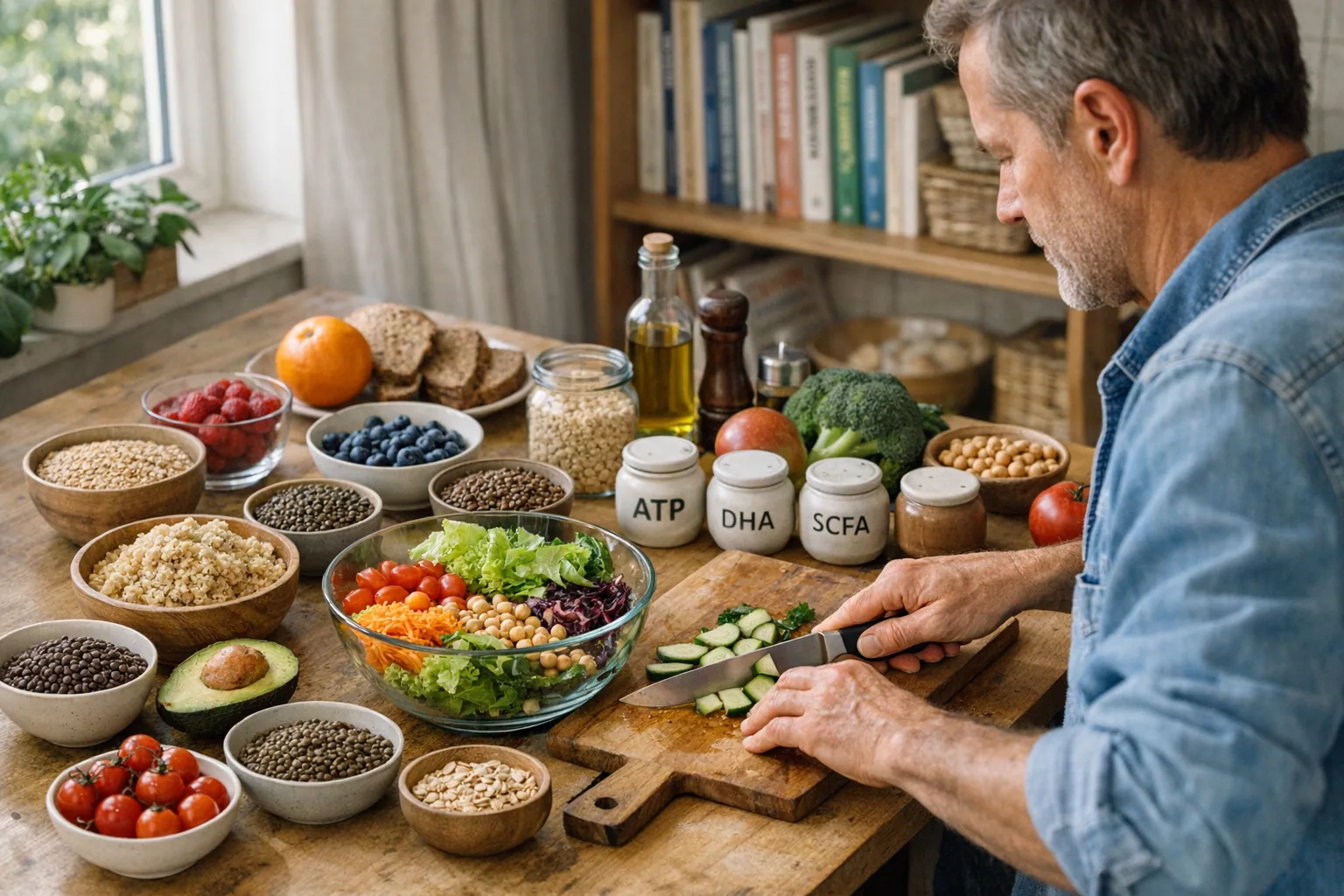
By fermenting fiber (from vegetables, legumes, fruit, whole grains, nuts), certain bacteria produce metabolites, among them SCFAs (such as butyrate, propionate, and acetate). These are studied because they:
- nourish colon cells,
- participate in inflammation regulation,
- influence immune cell activity (for example, in pathways related to immune tolerance).
In other words: it’s not only important which bacteria are present but also what they produce.
- Competition with Pathogens: Microbial “Barrier Effect”
A healthy microbiota also protects through pure ecology:
- occupying space,
- consuming resources,
- producing substances that hinder the growth of invaders.
That is why, after antibiotics (which can reduce part of the microbiota), some people become more vulnerable to opportunistic infections. A well-known clinical example is the relationship between antibiotics and the risk of C. difficile infection in certain contexts.
- Local Antibodies (IgA) and Immune Surveillance
The gut secretes IgA, an antibody that helps “coat” microbes and modulate their interaction with the mucosa. The microbiota influences its production and the type of surveillance the immune system carries out at the intestinal border.
The Gut–Brain–Immunity Axis: Why Stress Also Matters
The nervous, endocrine (hormonal), and immune systems are in constant communication. Chronic stress can influence:
- intestinal motility,
- digestive secretions,
- intestinal permeability,
- the composition and function of the microbiota.
In turn, changes in the microbiota can be related to inflammatory mediators and to how stress is perceived. It is not a linear “one cause–one effect” relationship but a circuit where lifestyle and biology feedback into each other.
This is where wellness practices (breathing, meditation, real rest) can be useful as part of a comprehensive approach. If you’re interested in guided experiences, you can explore meditation retreats or get inspiration from the Retiru blog.
Habits That Most Influence Your Microbiota (and, by extension, Your Immunity)
Diet: Fiber, Diversity, and Regularity
Without falling into rigid rules, the most consistent evidence points to:
- more plant variety (different colors and types),
- enough fiber (especially from whole foods),
- fewer ultra-processed foods in daily life.
Fermented foods (yogurt, kefir, sauerkraut, kimchi, miso…) can be an interesting tool for some people. The response is individual: some tolerate them very well, while others (due to digestive sensitivity) not so much.
Practical tip: if you want to “feed” your microbiota, think about adding (plants and fiber) more than forbidding.
Sleep and Circadian Rhythm
The gut and its microbiota exhibit daily rhythms. Sleeping little or with very irregular schedules can be associated with changes in metabolism and the gut ecosystem, which can indirectly influence immune regulation. Prioritizing consistent sleep is a simple and highly underrated intervention.
Movement: Moderate Exercise and Nature
Regular exercise is associated with:
- better metabolic health,
- favorable changes in microbial diversity in some studies,
- modulation of inflammation.
There is no need for extreme intensity: walking, yoga, mobility, and gradual strength training already add up.
If you want to integrate movement + rest + mindful eating, you may check out wellness and yoga centers where these routines are maintained realistically.
Antibiotics: Necessary but Impactful
Antibiotics save lives when well-indicated but can alter the microbiota. The key points are:
- use them only when prescribed,
- avoid self-medication,
- maintain good habits (fiber, rest) during and after treatment.
Probiotics and Prebiotics: What to Expect (Without Marketing Hype)
- Probiotics: microorganisms that, at certain doses and specific strains, can be useful for specific conditions. Evidence depends greatly on the strain and the goal; it’s not “one-size-fits-all.” A prudent educational reference: the NCCIH (National Center for Complementary and Integrative Health) explains potential benefits and evidence limits: https://www.nccih.nih.gov/health/probiotics-what-you-need-to-know
- Prebiotics: “food” for beneficial microbes (e.g., certain types of fiber). They usually work better as a foundational strategy: more plant foods, more diversity.
If you have digestive or immune conditions or take medication, it is advisable to consult a healthcare professional before supplementing.
Signs That Your “Gut–Immunity Axis” May Need More Care
These are not diagnoses but clues to review habits:
- irregular digestion (frequent bloating, constant changes in bowel rhythm),
- persistent fatigue with non-restorative sleep,
- increased sensitivity to stress,
- very monotonous diet or high in ultra-processed foods,
- recurrent infections (should be medically evaluated).
Wellness Approach: A Simple Routine to Support Microbiota and Immunity
Without obsession and with consistency:
- More plant on your plate: add 1–2 extra servings per day (legumes, vegetables, fruit, whole grains).
- A fermented food if well tolerated: test 3–4 days/week, observing tolerance.
- Walk + breathe: 20–40 minutes of walking and 5 minutes of slow breathing.
- Regular sleep schedule: prioritize consistency over “perfection.”
- Stress breaks: brief meditation or gentle yoga, especially on intense days.
To turn this into a getaway that “resets” habits with support, explore retreat destinations in Spain or see options at Retiru according to your style (silence, nature, yoga, Ayurveda).
Conclusion: Caring for Your Microbiota Means Caring for the Internal Conversation of Your Immune System
The relationship between microbiota and the immune system is one of the most powerful ideas in modern health: your defenses don’t work in isolation but are in constant dialogue with the gut, lifestyle, and environment. The good news is that the most effective changes are often the least glamorous: fiber and variety, sleep, movement, and stress management that is sustainable.
If you want to take a step further and do it in a context of real rest, you can start by exploring wellness retreats and escapes or discovering specialized centers where you can integrate these pillars with professional guidance.
Ready for your next retreat?
Explore hundreds of retreats across Spain with transparent pricing.
Explore retreats