What is kombucha and what is it really good for
Retiru Team
The Retiru content team — yoga, meditation and ayurveda.
What is kombucha and what is it really good for
Kombucha has become one of those “wellness” drinks you find in coffee shops, health food stores, and even hotel refrigerators. But beyond the healthy label, it’s worth knowing exactly what it is, what you can realistically expect from it—and what you can’t—so you can thoughtfully include it in a wellness routine.
What is kombucha
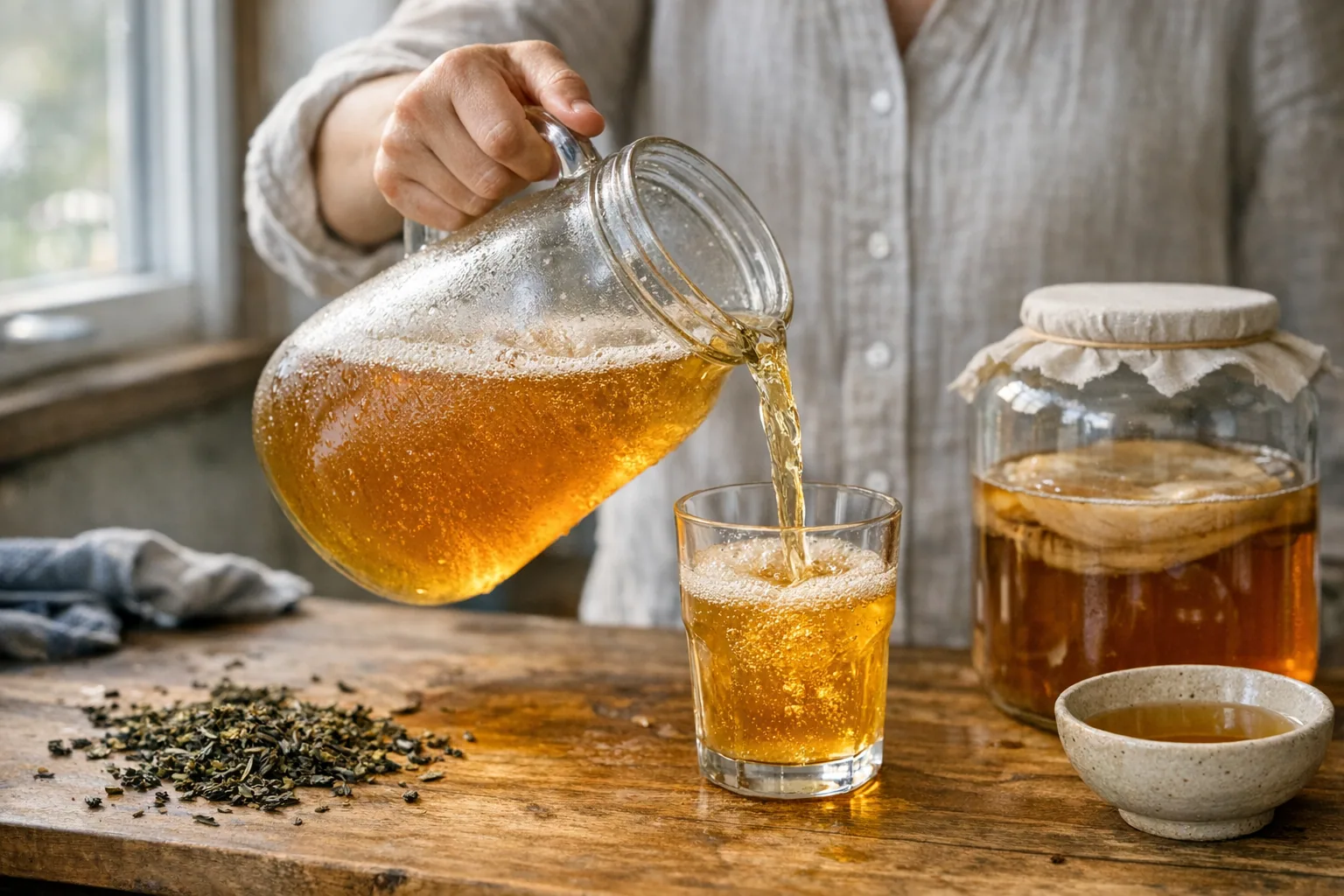
Kombucha is a fermented and lightly effervescent drink made from sweetened tea (usually black or green tea) that is fermented by a SCOBY (Symbiotic Culture Of Bacteria and Yeast), which is a symbiotic colony of bacteria and yeasts.
During fermentation, yeasts convert some of the sugar into alcohol and other compounds; then certain bacteria convert that alcohol into organic acids (for example, acetic acid, the kind found in vinegar). The result is an acidic, refreshing drink with a flavor reminiscent of a mix between tea, mild cider, and apple cider vinegar.
Important: although usually low, kombucha can contain small amounts of alcohol, especially if not properly controlled or homemade.
What is kombucha good for? Benefits to expect with caution
In wellness, “good for” shouldn’t mean “cure.” Kombucha can fit as a refreshing alternative to sodas and sugary drinks, and as part of a more mindful lifestyle. Here’s what makes the most sense to expect:
- Replace sodas with a generally less sugary option (depending on the brand)
Many commercial kombuchas have less sugar than a soda, although it varies widely. If your goal is to reduce ultra-sugary drinks, it can be a useful option if you check the label.
Practical tip: choose options with low sugar per 100 ml and avoid those close to a “normal” soda in sugar content.
- Provide fermentation compounds (and sometimes live microorganisms)
Fermentation produces organic acids and other compounds that give the characteristic sour taste. Some unpasteurized kombuchas may contain live microorganisms, which is why they are associated with being “probiotic.”
However, having bacteria and yeasts in a drink does not guarantee a clinically relevant probiotic effect. Solid evidence in humans on specific kombucha health benefits is limited, and reputable informative sources agree it is not a “remedy.”
- Support digestion and energy habits without promises
Many people notice it “agrees with them” or feels lighter than other drinks. It also contains some caffeine if made with tea (although some may be reduced during fermentation). The reasonable view is to consider it an accompaniment within a routine that already includes real food, rest, physical activity, and stress management.
What NOT to expect from kombucha (common myths)
- It’s not a miraculous detox. Real “detox” is done by healthy liver, kidneys, intestines, skin, and lungs assuming good habits.
- It is not recommended as a treatment for diseases nor as a medication substitute.
- Being “fermented” doesn’t automatically mean “better for everyone.”
Encyclopedic descriptions note that many benefits have been attributed to kombucha, but there is little evidence supporting most health claims and there are rare cases of adverse effects, mainly linked to contamination in homemade preparations.
Who should be especially cautious with kombucha?
Kombucha is usually well tolerated by healthy adults, but there are situations where it’s wise to consult a professional or avoid it:
- Pregnancy and breastfeeding: due to possible residual alcohol and microbiological risk (especially with homemade or uncontrolled kombucha).
- Immunocompromised individuals: for the same reason (microorganisms and potential contamination).
- Sensitive digestive issues (acid reflux, gastritis, irritable bowel): its acidity and gas may not sit well.
- History of alcohol problems: although low, it can contain alcohol.
Homemade kombucha vs. commercial kombucha: key differences
Commercial kombucha
- Usually has health controls and labeling.
- May be pasteurized (fewer live microorganisms) or not.
- More consistent in flavor and safety.
Homemade kombucha
- Can be delicious and economical but requires strict hygiene and control of time/temperature.
- There is more risk of contamination if the process is not done properly.
If safety is your priority, start with a quality commercial kombucha and see how it suits you.
How to include kombucha in a wellness routine (without overdoing it)
- Start with small amounts (for example, half a glass) to test tolerance.
- Drink it cold or at room temperature; avoid if it causes acidity.
- Use it as a “bridge drink” to replace sodas or alcohol, not as a daily obligation.
- Prioritize the whole picture: hydration, simple food, rest, and movement.
At Retiru, kombucha can be a nice complement during a self-care getaway: more mindful eating, mental pause, and gentle practices. If you want to go beyond the drink and turn it into an experience, you can explore wellness and unplugging retreats or get inspired with ideas on the Retiru blog.
Frequently asked questions about kombucha
Does kombucha have alcohol?
It can have small amounts (sometimes below 0.5% in regulated products, but it depends). Homemade kombucha can have more if over-fermented or bottled without control.
Is it probiotic?
Some are if they contain live cultures, but not all (pasteurized ones do not). Having microorganisms does not guarantee a health benefit.
Is it better than kefir?
They are different drinks: kefir (milk or water) has a more studied probiotic tradition in some contexts, but “better” depends on tolerance, goal, and product choice.
Conclusion
Kombucha is a fermented tea drink with an acidic, bubbly flavor that can be “good for” mainly as a more mindful alternative to sodas and sugary drinks, and as a small healthy ritual within a balanced routine. The most important thing is not to turn it into a promise: if you like it, it agrees with you, and you choose a product with a good composition, it can be a plus. And if you’re looking for a deeper reset—more rest, less screen time, more calm—then the next step might be a full experience: you can discover wellness getaway destinations in Spain or find similar spaces in the Retiru centers and accommodations directory.
Ready for your next retreat?
Explore hundreds of retreats across Spain with transparent pricing.
Explore retreats