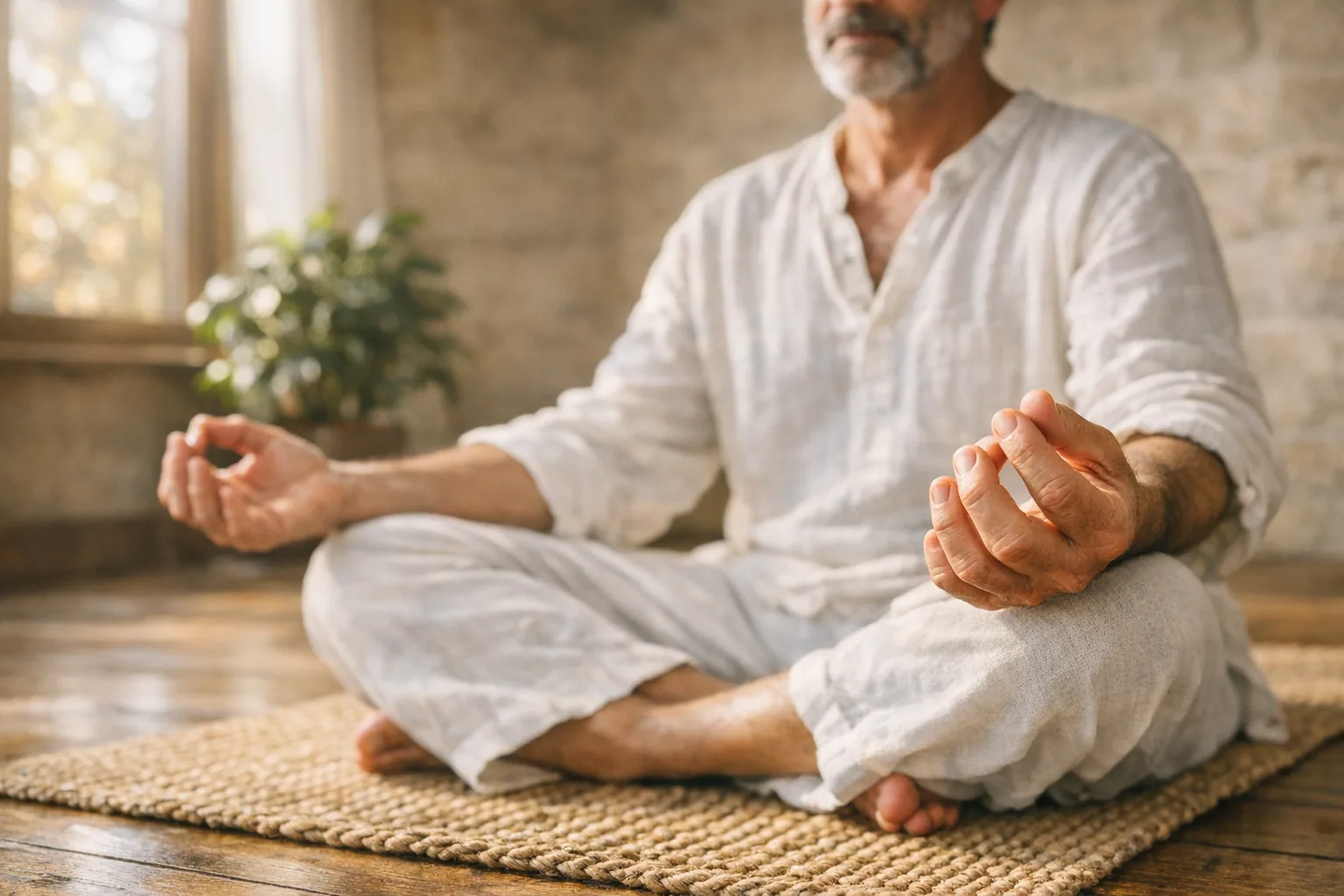
What is Yoga and Why It Is Much More Than Exercise
Retiru Team
The Retiru content team — yoga, meditation and ayurveda.
What is Yoga and Why It Is Much More Than Exercise
Yoga often reaches many people through a mat, a gentle class, or a search for physical well-being. But reducing it to just that is staying on the surface. Yoga is a much broader practice: it combines movement, breathing, attention, and a specific way of relating to oneself. That is why it appeals both to those seeking to improve their physical condition and to those wanting better rest, stress management, or a real pause in their routine.
Today, yoga is practiced in gyms, studios, specialized centers, and also in retreats and wellness getaways. However, before thinking about styles, postures, or levels, it's worth understanding what it really is and why its scope goes far beyond exercise. If you are exploring this universe for the first time, you can also expand your context at the Retiru blog, where you will find content about practice, mindful rest, and wellness experiences.
What is Yoga, in a Broad Sense
The word yoga comes from Sanskrit and is usually translated as "union" or "yoke," in the sense of linking, integrating, or disciplining. This idea remains useful today: yoga is not limited to moving the body, but proposes a practice of connection between body, breathing, mind, and, for many traditions, also an ethical or spiritual dimension.
Originally, yoga was born in India as a set of philosophical, meditative, and contemplative practices. Over time, different schools and paths developed, some more focused on meditation, others on breathing, others on postural work, and others on inner discipline. The classical sources of yoga, such as Patañjali’s Yoga Sutras, show that this tradition goes far beyond the physical level.
The modern form of yoga practiced in much of the West places much more emphasis on postures, known as asanas. That is not wrong, but it is incomplete. In its richest version, yoga also includes:
- breathing work or pranayama
- concentration and sustained attention
- meditation
- principles of personal observance and relationship with others
- regulation of internal rhythm and energy
In other words: yoga is not just "doing exercises"; it is an integral practice.
Why Yoga Is Much More Than Exercise
Because the Body Is Only Part of the Practice
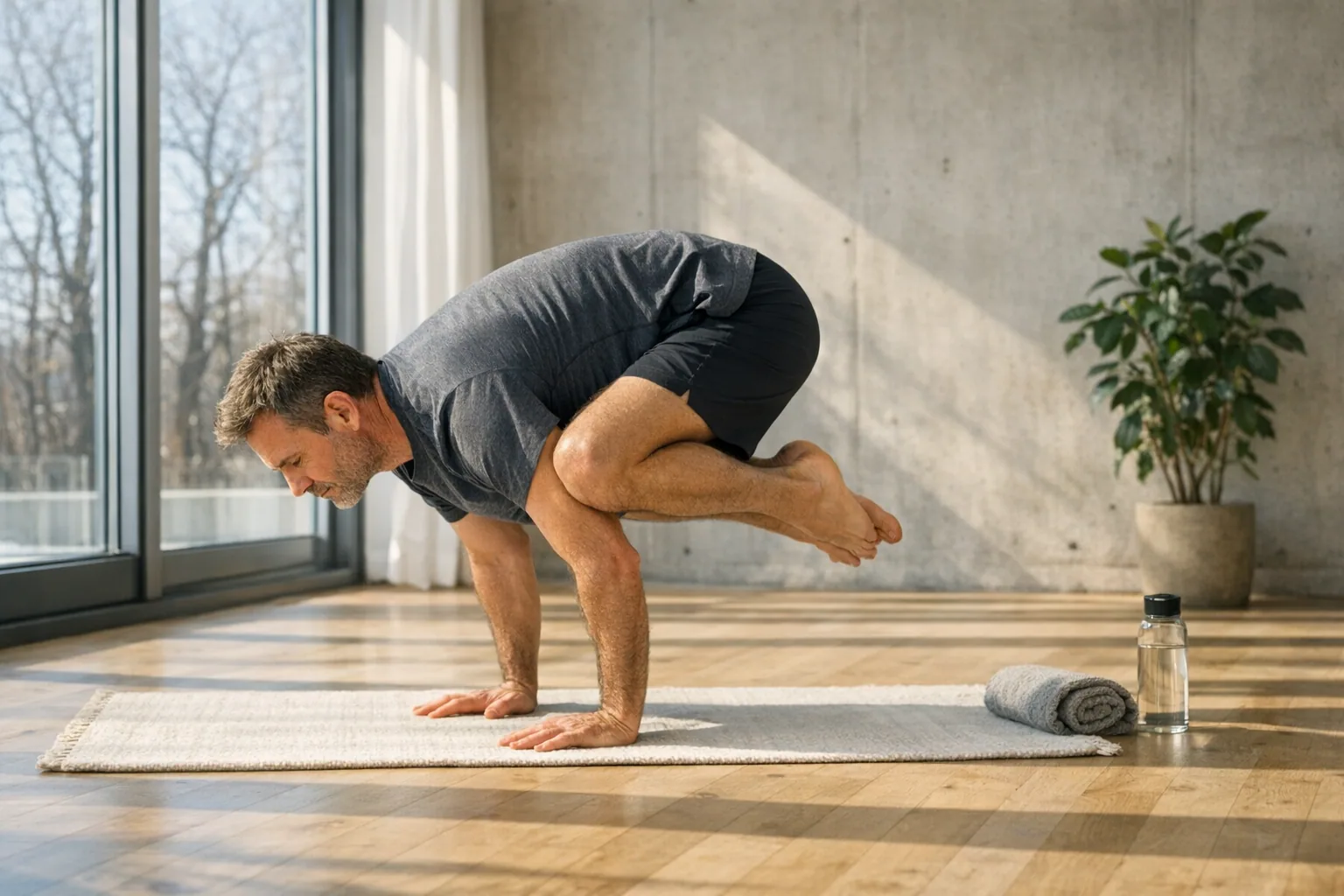
Yes, yoga has a clear bodily dimension. It improves mobility, activates strength, works on balance, and helps raise posture awareness. But, unlike other purely physical disciplines, in yoga the body is not trained in isolation. Each movement is usually accompanied by breathing, attention, and a more conscious rhythm.
This completely changes the experience. It is not just about "performance" or "calories," but about learning to inhabit the body with more presence.
Because Breathing Matters as Much as Posture
One of the features that distinguish yoga from many forms of exercise is the role of breathing. Breathing is not a technical detail: it is a central tool to organize the practice, regulate effort, and create a more stable relationship with the present moment.
When breathing becomes conscious, the practice stops being a mechanical sequence. The class transforms into a space to observe how the body responds, where tension appears, and what happens when one lowers internal noise. This approach explains why many people find in yoga something more restorative than a simple training routine.
Because It Trains Attention
In a yoga class, the body is not the only thing worked on; the capacity to be present is also trained. Maintaining a posture, coordinating breathing and movement, and holding attention on bodily sensations demands concentration.
This quality of attention has special value in a life marked by screens, multitasking, and constant stimuli. Yoga offers a framework to step out of autopilot for a while. It does not eliminate the noise of the day, but it can help create a more conscious pause.
Because It Includes a Mental and Emotional Dimension
Many people come to yoga seeking to stretch or relieve physical tension and are surprised to notice it also affects their mental state. That does not mean yoga “cures” anything nor replaces psychological or medical attention when needed. But it is reasonable to say it can foster an experience of greater calm, clarity, or emotional regulation in many people.
The reason is simple: by moving the body with attention, breathing more deeply, and reducing the internal pace, the nervous system can find a more favorable context to slow down. The experience is subjective but very common. That is why so many people incorporate yoga as part of their self-care routine, not just as physical activity.
Where Yoga Comes From and How It Has Evolved
Yoga has a long and complex history. It originated in India and evolved over centuries, with different philosophical and spiritual currents. It was not always a physical practice as we understand it today. For a long time, it was more linked to meditation, mental discipline, and the search for inner liberation.
With yoga’s global expansion, especially from the 19th and 20th centuries onward, many forms adapted to contemporary contexts. Thus appeared the modern yoga we see today in studios, centers, and retreats: more accessible, diverse, and, in many cases, focused on conscious movement.
This evolution has allowed yoga to reach very different audiences. But it has also made it necessary to remember that we are not facing simple gymnastics with an exotic name. Yoga has deep cultural roots and deserves to be understood with respect and accuracy.
For those who want to explore experiences where practice is lived with more context and depth, it can be helpful to look at the yoga retreats available on Retiru or discover yoga and wellness centers that integrate practice, rest, and environment.
What Yoga Offers in Real Practice
- Better Body Awareness
One of yoga’s most obvious contributions is improved body perception. You learn to notice how you position yourself, how you breathe, where you accumulate tension, and what patterns you repeat unconsciously. This awareness not only serves on the mat but also transfers to daily life.
- More Mobility and Functional Strength
Although not its only goal, yoga does work the body. It helps improve joint mobility, stability, balance, and some functional strength, especially when practiced regularly and with good technique.
- A Space for Pause
In a hyperconnected world, having time without productivity demands is already valuable. Yoga creates a structured pause. That pause may be brief but is usually very different from “resting” by looking at your phone or switching tasks.
- A Kinder Relationship with Effort
Yoga teaches something important: not all progress comes from pushing harder. Sometimes progress happens by breathing better, releasing tension, or holding a posture with less struggle. This shift in focus can be very useful outside practice, especially for people who are very demanding with themselves.
- A Framework for Integral Well-being
When practiced fully, yoga can be part of a broader vision of well-being. Not as a magic solution but as one piece alongside rest, nutrition, movement, stress management, and daily habits.
What Yoga Is Not
To understand what yoga is, it is also worth clarifying what it is not.
It is not just stretching. It is not just relaxation. It is not just a trend. It is not a religion in itself. It is not an automatic solution for all health or well-being problems.
Yoga can be integrated into spiritual, philosophical, or simply practical frameworks, depending on each person and school. And that makes it very versatile. But that versatility should not confuse us: its value lies precisely in combining various dimensions coherently.
Types of Yoga: One Practice, Many Forms
Today there are many styles of yoga, which can be confusing at first. Not all pursue the same goals.
Hatha Yoga
Usually a good entry point. It is a slower practice, with attention to alignment, breathing, and postural basics.
Vinyasa Yoga
Works on fluid and dynamic transitions between postures. It can be more physical and intense.
Ashtanga Yoga
A structured and demanding practice, with fixed sequences and a stronger pace.
Yin Yoga
Focuses on postures held for longer with a more introspective and calm approach.
Restorative Yoga
Seeks deep rest and nervous system regulation through support, comfort, and stillness.
Yoga Nidra
Although not a typical physical class, it is associated with yoga for its guided relaxation and mindful observation focus.
Choosing one style or another depends on what you seek: energy, gentleness, mobility, meditation, rest, or a mix of these. If you are interested in discovering options by level, environment, or type of experience, you can check out Retiru’s proposals and filter according to your life stage.
Yoga and Retreats: When Practice Deepens
Practicing yoga at home or in a weekly class is fine, but a retreat offers something else: time, continuity, and context. Leaving the routine behind, many people allow themselves to practice with more presence and less distraction. Silence, nature, rest, and stimulus reduction make yoga feel different.
A yoga retreat does not have to be intense or esoteric. It can be a weekend getaway, a gentle disconnection experience, or a deeper immersion in practice. What matters is that the proposal makes sense for you.
If you’re looking for inspiration by location, the wellness destinations section can help you discover areas of Spain where yoga is experienced especially naturally, from coastal to inland and mountain environments.
How to Start Yoga if You Are a Beginner
Starting does not require being flexible, spiritual, or fit. It mostly requires curiosity and reasonable consistency.
Some useful tips:
- start with classes adapted to your level
- prioritize breathing and comfort over the aesthetics of the posture
- don’t compare your practice with others’
- progress little by little
- look for teachers with solid training and good judgment
- listen to your body without forcing it
If you find it easier to start in a cared-for environment, a getaway or a gentle retreat can be a good entry point. In that case, you can explore the wellness and yoga blog section to better orient yourself before choosing.
How to Choose a Suitable Yoga Practice or Experience
Not every life moment calls for the same yoga. Some people need movement, others rest, others reconnection with breathing, and others simply to stop accumulating tension.
Before choosing, it’s worth asking yourself:
- Am I looking for physical activity, calm, or both?
- Do I prefer intensity or gentleness?
- Do I want a single class or a more complete experience?
- Am I interested in practicing in a studio, in nature, or on retreat?
- Am I going only for physical well-being or also mental disconnection?
If you are an organizer or manage a center, you may be interested in the for organizers section, especially if you want to give visibility to yoga, meditation, or wellness experiences in a specialized environment.
The Value of Yoga Today: An Ancient Practice for an Accelerated Life
Yoga’s continued growth is no accident. It responds to a very contemporary need: living with more pressure, more information, and less pause. Against this, yoga offers something valuable and low-key: a way to return to the body, breathing, and attention.
It does not solve life by itself, but it can change the way you go through it. And that is already a lot. That is why yoga is much more than exercise: it is a practice that can help you move better, breathe better, and, above all, relate differently with your internal rhythm.
Conclusion
Yoga is not a trend nor a simple physical discipline. It is a broad practice, with deep roots, that integrates body, breathing, attention, and, in many traditions, also a search for inner balance. Its value lies precisely in that combination: it moves you, but also orders you; it activates you, but also calms you.
If you are attracted to yoga for what it can bring to your well-being, it is worth going a little beyond the standard class and exploring its different forms, contexts, and spaces of practice. Sometimes, the next step is not to do more, but to practice with more meaning. And if you want to discover experiences designed for that, you can start by exploring Retiru’s retreats or choosing a yoga and wellness center suited to your moment.
Ready for your next retreat?
Explore hundreds of retreats across Spain with transparent pricing.
Explore retreats