Ghee: What It Is, Benefits, and How to Use It (Without Complicating Things)
Retiru Team
The Retiru content team — yoga, meditation and ayurveda.
Ghee: what it is, benefits, and how to use it (without overcomplicating it)
Ghee has become a staple in many “wellness” kitchens and frequently appears in the world of Ayurveda. But beyond trends, it’s worth understanding what it actually is, what benefits are attributed to it (and with what nuance), and how to use it properly so it truly supports your daily nutrition.
What is ghee?
Ghee is clarified butter: it’s made by gently heating butter so its components separate. During this process, water and milk solids (like proteins and sugars) are removed (or greatly reduced), leaving mostly pure fat.
In practice, this means ghee:
-
Has a deeper, more “toasted” (nutty) flavor than butter
-
Is more heat-stable than regular butter
-
Is often better tolerated by people sensitive to dairy components, although it is not necessarily “dairy-free” for everyone (this depends on purity and individual sensitivity)
Culturally, ghee originates from the Indian subcontinent and has been used both in cooking and in ritual and historical contexts (for example, in Hindu practices).
Ghee vs. butter vs. oil: what’s the difference?
-
Milk solids content
-
Butter: contains fat, water, and milk solids
-
Ghee: almost entirely fat; most water and solids have been removed
This is why ghee is less likely to burn than butter, since milk solids are what brown and burn quickly.
-
Smoke point (why it matters)
The smoke point is the temperature at which a fat starts to break down and smoke. Ghee generally has a high smoke point (often cited around 190–250 °C depending on quality), making it a practical option for sautéing and medium-high heat cooking.
-
Flavor and culinary use
Ghee adds a “rounded” flavor without adding water (as butter does), which helps achieve:
-
better browning in vegetables
-
properly “opened” spices in curries and stews
-
cleaner textures in dishes
Ghee benefits: what’s claimed and what to keep in mind
In wellness and Ayurveda, many benefits are attributed to ghee. It’s helpful to distinguish between practical culinary benefits (well-established) and health-related claims (more context-dependent).
Practical benefits (the most consistent ones)
-
Cooking stability
Because it’s more stable than butter, it’s less likely to burn during cooking.
-
Flavor and satiety
A small amount adds intense flavor and can make meals feel more satisfying (without needing extra sauces or sugar).
-
Versatility
Works in both savory and sweet dishes—from sautéed vegetables to finishing a kitchari or soup.
Nutritional aspects (with nuance)
-
Fat-soluble vitamins
As a dairy fat, it may contain fat-soluble vitamins (A, E, etc.), though amounts vary depending on butter quality and preparation.
-
Short-chain fatty acids (like butyrate)
Ghee contains butyrate (derived from butyric acid), which is studied in relation to gut health. However, research on butyrate doesn’t automatically translate into guaranteed benefits from consuming ghee—the dose and overall diet matter.
-
Digestive tolerance
With fewer milk solids, some people find it easier to digest than butter. Still, those with dairy allergies or strong sensitivities should be cautious.
Important: ghee is not a limitless “superfood”
Ghee is concentrated fat and, like any fat, adds calories. It can be a great addition to a balanced diet, but it won’t compensate for poor nutrition and shouldn’t be consumed in excess.
If you have high cholesterol, cardiovascular disease, specific digestive conditions, or are pregnant/breastfeeding and considering therapeutic use, it’s best to consult a healthcare professional. In Ayurveda, it’s traditionally used based on individual factors—not as a universal recommendation.
How to use ghee: simple, practical ideas
In everyday cooking (the easiest way)
-
Sauté vegetables: 1 teaspoon at the beginning or end, depending on desired browning
-
Cook eggs: replace oil or butter for a nuttier flavor
-
Toast spices: heat a small amount of ghee and add cumin, mustard seeds, turmeric, etc. (a classic Indian technique)
-
Rice, quinoa, or dal: a teaspoon when serving enhances aroma and texture
-
Vegetable soups: add a small amount at the end as a finishing touch (like olive oil)
In “wellness” recipes inspired by Ayurveda
-
Kitchari (rice + mung dal): ghee is used to sauté spices and add depth
-
Golden milk: a small amount can add richness (if it suits you)
How much should you use?
As a practical guideline: 1 teaspoon (5 g) is enough to add flavor. If used daily, balance it with your total fat intake (oils, nuts, cheese, etc.) to maintain overall dietary balance.
How to choose a good ghee (and avoid disappointment)
-
Simple ingredient list: ideally just “butter” or “clarified butter fat”
-
Clean smell and taste: should smell nutty, not rancid
-
Texture: can be liquid or semi-solid depending on temperature—this is normal
-
Personal tolerance: if using it for digestion, start with small amounts
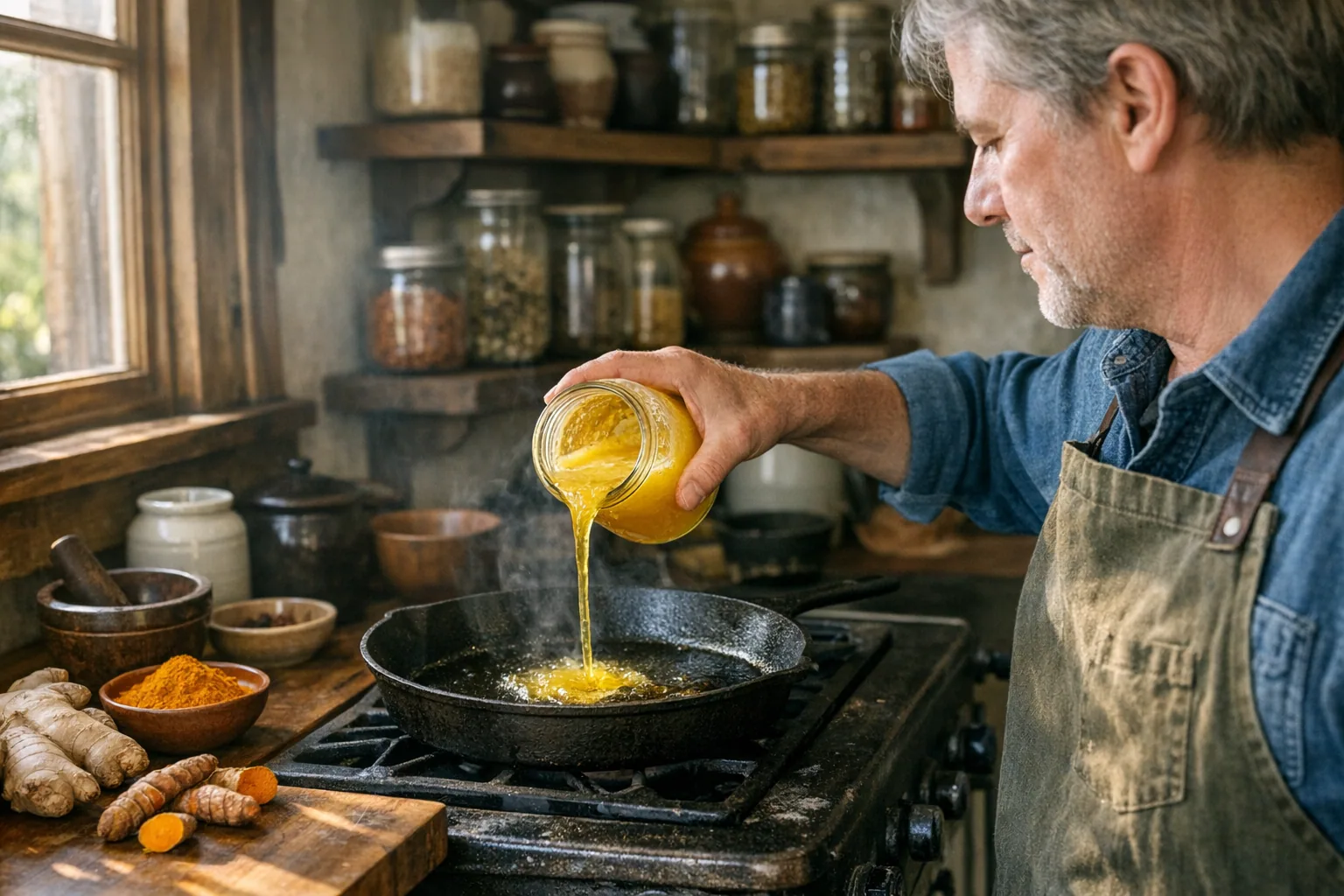
How to make ghee at home (basic method)
-
Place butter in a saucepan over very low heat
-
Let it melt and gently simmer
-
You’ll see foam and separation—skim impurities if needed
-
When the liquid is clear and golden with toasted solids at the bottom, turn off the heat
-
Strain through a fine cloth or filter and store in a clean jar
Tip: don’t rush the process—good ghee takes time.
How to store it
-
Keep in a sealed jar in a cool, dry place
-
Avoid introducing moisture (no wet spoons)
-
If it smells rancid, discard it
Ghee in Ayurveda: why it matters
In Ayurveda, ghee is considered a “sattvic” fat, associated with clarity, nourishment, and balance. It is not just a food, but a functional substance used in different contexts:
-
Digestive support (agni): used to support digestion, especially in cases of dryness or irregularity
-
Vata balance: in certain cases (like occasional constipation), small amounts such as 1 teaspoon on an empty stomach may be used
-
Anupana (carrier): helps deliver herbal compounds in traditional preparations
-
Medicated ghee: combined with herbs for therapeutic use
-
Panchakarma: used in guided cleansing protocols
-
Skin care: applied externally to nourish dry or sensitive skin
-
Nasya: small amounts used traditionally to lubricate nasal passages
Important: these uses are individualized and often part of guided protocols—not general recommendations.
Conclusion
Ghee is a traditional culinary fat that stands out for its flavor, cooking stability, and role in both cuisine and Ayurveda. Used with intention—small amounts, good quality, and within a balanced diet—it can be a simple way to cook more स्वादfully and consciously.
If you’re drawn to the broader Ayurvedic approach (routine, digestion, rest, practice), exploring it as a whole system—not just one ingredient—can be far more meaningful.
Ready for your next retreat?
Explore hundreds of retreats across Spain with transparent pricing.
Explore retreats