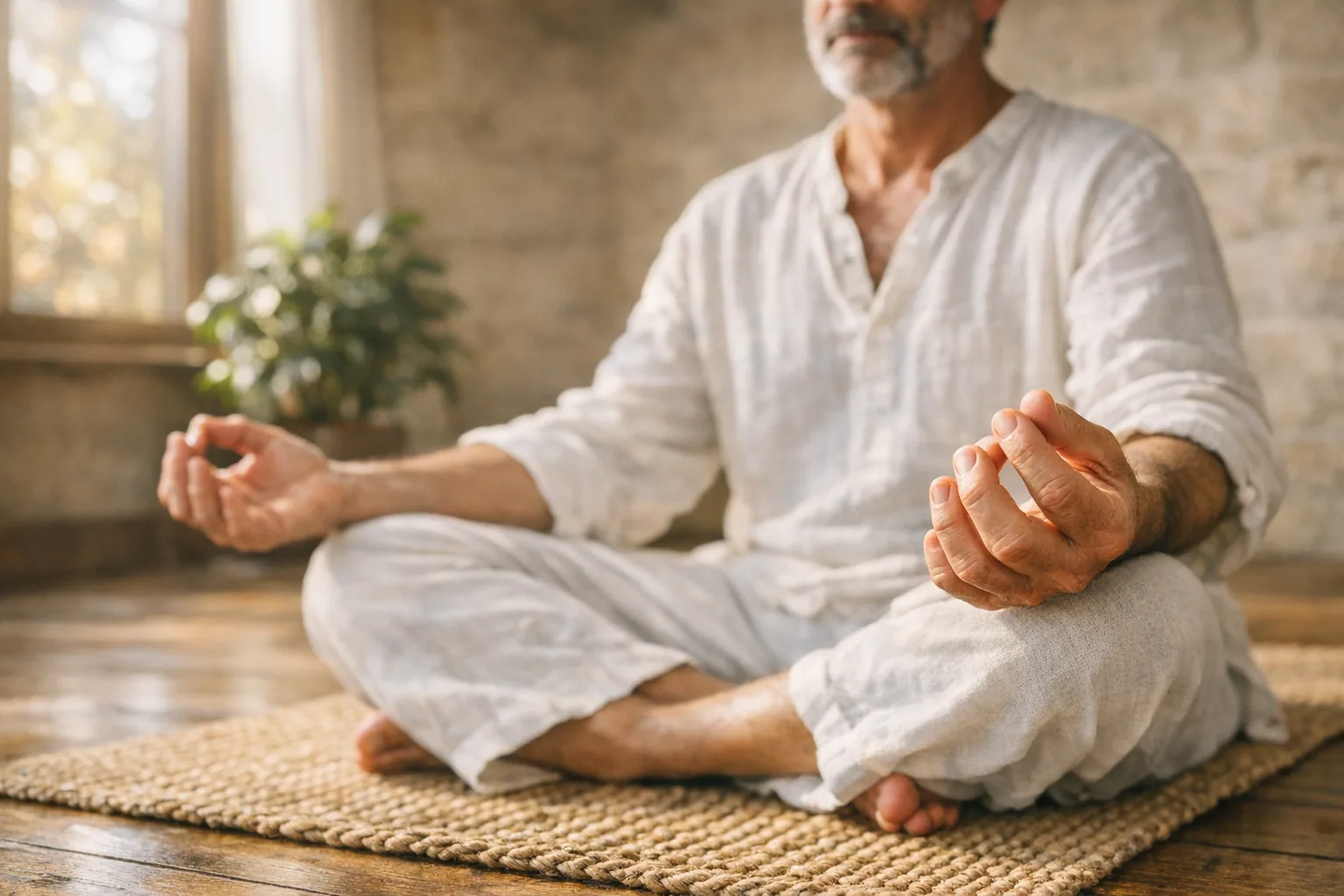
Integral Well-being: Body, Mind, and Energy
Retiru Team
The Retiru content team — yoga, meditation and ayurveda.
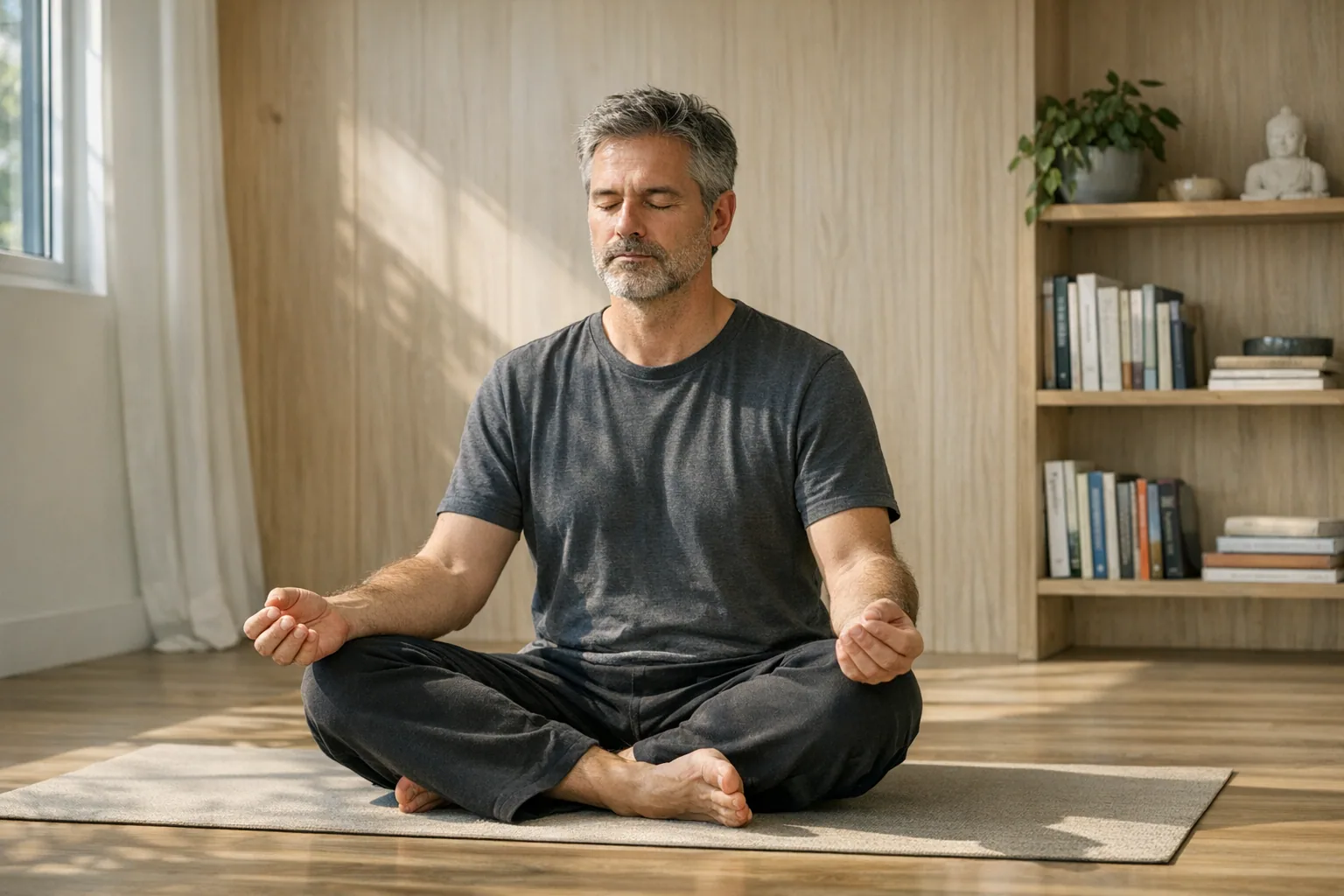
Integral Well-being: Body, Mind, and Energy
Talking about integral well-being means discussing something broader than just "feeling good" for a few hours or occasionally following a healthy routine. It means thinking of the person as a whole: the body that supports daily life, the mind that interprets what we experience, and that dimension of energy or vitality that many people perceive when they rest, regulate themselves, and reconnect with greater clarity.
In a context of excessive screen time, overloaded schedules, and sustained stress, the search for balance is no longer an abstract trend. It is a real need. That is why more and more people are turning to yoga, meditation, conscious breathing, more orderly eating, or even wellness getaways to intentionally pause. It is not always about doing more but about understanding what each part of us is asking for and how to respond more coherently.
This integral approach fits very well with Retiru’s philosophy: experiences that are not limited to disconnecting, but that help reconnect with the body, the mind, and a more stable sense of energy. If you are interested in exploring proposals of this kind, you can start by discovering the available retreats, visiting the well-being blog, or searching for destinations for a mindful getaway.
What Integral Well-being Really Means
Integral well-being is not a rigid formula nor a universal standard. Nor is it about doing everything "perfectly." Rather, it describes a dynamic balance between different planes of the human experience:
- Body: rest, movement, nutrition, posture, breathing, and physical sensations.
- Mind: attention, thinking, emotional management, stress, and concentration capacity.
- Energy or vitality: level of presence, motivation, clarity, and the feeling of being available for life.
When one of these planes is neglected, the others usually suffer. A tired body affects mood. An overloaded mind disrupts sleep. A routine without breaks can leave you functional but disconnected from yourself.
Therefore, integral well-being should not be understood as a superficial self-care fad but as a more mature way of relating to oneself. It is not about adding practices without criteria, but about choosing those that truly help restore balance.
Body: The Foundation That Supports Everything Else
The body is often the first place where imbalance expresses itself. Neck tension, fatigue, irregular sleep, heavy digestion, or a feeling of stiffness are common signals that something needs attention. They do not always indicate a serious problem but usually show that the organism is functioning in alert mode.
Conscious Movement, Not Just Exercise
Movement is important, but not all movement has the same effect. Integral well-being advocates a more conscious relationship with the body. This may include:
- gentle or dynamic yoga depending on the life stage
- nature walks
- joint mobility exercises
- regular stretching
- somatic or body-awareness practices
- real rest, without guilt
The key is not to train more but to move in a way that supports the nervous system, improves mobility, and reduces tension buildup.
Rest: The Great Forgotten
Sleeping does not always mean resting. Many people sleep enough hours but wake up feeling unrested. In those cases, it is advisable to review not only the quantity of sleep but also the quality of rest: schedules, screen exposure, noise, pre-bedtime stress, and excess stimuli.
In a wellness getaway or retreat, rest usually improves because the environment helps: fewer interruptions, more silence, more orderly meals, and a more human rhythm. That is one of the reasons why many weekend retreats have such a restorative effect: they don’t perform magic, but they do eliminate friction.
Nutrition and Stable Energy
Nutrition is also part of bodily well-being, although it is advisable to speak about it prudently and without oversimplifications. There is no universal perfect diet for everyone. What does exist is the relationship between eating habits, daily energy, and the sensation of lightness or heaviness.
In approaches like Ayurveda, for example, food is understood in relation to constitution, the season, and the person’s state. If you want to deepen your understanding of this tradition with more context, the Ayurveda and wellness center on the platform can help you find serious and well-focused proposals.
Mind: Clarity, Attention, and Managing Internal Noise
The mind rarely rests by inertia. Even when the body stops, the mind can keep running at full speed: reviewing tasks, anticipating problems, comparing, planning, ruminating. This constant mental activity exhausts as much as an intense physical day.
It’s Not About "Emptying the Mind"
A widespread idea about mental well-being is that meditating or resting mentally means clearing the mind. In reality, the goal is different: to learn to observe mental movement without getting trapped in it. This reduces reactivity and helps to respond more calmly.
Meditation, mindfulness, and conscious breathing are useful tools precisely for this reason. They don’t promise to eliminate stress but can improve the relationship with it.
Signs of Mental Overload
Some common signs of overload are:
- difficulty concentrating
- a feeling of “always being on alert”
- irritability without a clear cause
- accelerated thinking at the end of the day
- trouble disconnecting
- feelings of emptiness or automatic behavior
When this happens, sometimes you don’t have to change your whole life. It is enough to introduce pause spaces, clearer boundaries with technology, and real moments of silence.
The Value of Silence and Digital Disconnection
Silent retreats and getaways without constant phone use are not an escape for everyone, but they can be very useful experiences for those who feel overexposed to constant stimulation.
In Spain, there are increasingly more places designed for this kind of experience. If you want to explore options by region, you can check the section of destinations for retreats and wellness and consider environments that favor less noise, more nature, and a simpler rhythm.
Energy: A Way of Talking About Vitality, Presence, and Balance
When we talk about energy in integral well-being, it is advisable to use the term carefully. It is not about promising esoteric effects or presenting difficult-to-verify concepts as medical facts. In this context, energy can be understood as perceived vitality: that sensation of having enough internal resources to be present, think clearly, and sustain the day without constant exhaustion.
What Usually Influences the Feeling of Energy
Everyday energy depends on many combined factors:
- sleep quality
- nutrition and schedules
- stress level
- physical movement
- time in nature
- mental load
- relationships and environment
- recovery capacity after effort
That is why sometimes a person is not “lacking energy” in the abstract but is overexposed, poorly rested, or emotionally drained.
Recovering Energy Is Not Just Resting More
Rest helps, but it is not always enough. If the nervous system is in alert mode, the schedule leaves no margin, or the mind doesn’t stop, recovery can be blocked. In these cases, simple and sustainable practices often help:
- brief pauses during the day
- conscious breathing
- walking without headphones
- reducing multitasking
- sleeping with more regular schedules
- spending time in natural spaces
- limiting constant information consumption
At this point, a short stay in a specialized center can make a difference. You can explore the Retiru directory of centers to find places where rest, practice, and environment are well cared for.
How Body, Mind, and Energy Relate
Talking about integral well-being requires understanding that these are not three isolated compartments. The body influences the mind, the mind conditions energy, and energy is reflected back in the body.
A Simple Example
A person sleeps poorly for several days. Shortly after, they:
- feel more irritable
- have trouble concentrating
- have less patience
- move with less desire
- notice more physical tension
They haven’t changed “just the sleep”: the entire system has changed. That is precisely the logic of integral well-being. It does not seek to correct an isolated symptom but to see the whole.
Why Retreats Work So Well for This Approach
A well-designed retreat facilitates this rebalancing because it modifies the environment and rhythm:
- removes habitual distractions
- organizes meals and schedules
- introduces guided practice
- favors deep rest
- allows observing automatic habits
- creates space to integrate changes
Not all retreats are the same. Some focus on yoga; others on meditation; others on Ayurveda, nature, or silence. If you are an organizer and want to give visibility to your proposal, you can learn how to be part of Retiru and connect with an audience interested in mindful experiences.
Practices That Support Integral Well-being
You don’t need to adopt a complex routine to start noticing changes. In fact, the more sustainable the habit, the easier it is to maintain.
Yoga
Yoga can be a very complete practice for integral well-being because it combines movement, breathing, and attention. Depending on style and intensity, it can serve to:
- release tension
- improve mobility and posture
- gain body awareness
- accompany rest processes
- regulate internal rhythm
It is not necessary to practice intensely to obtain subjective benefits in body perception and general well-being.
Meditation
Meditation helps train attention and cultivate a less reactive relationship with thoughts. For beginners, it’s advisable to start with short and realistic sessions, without turning it into an additional obligation. Consistency, not duration, is what matters.
Conscious Breathing
Breathing is a simple, accessible, and useful tool to return to the present. Conscious breathing doesn’t solve everything but can help lower the pace, especially when combined with rest and pauses.
Nature
Contact with natural environments usually promotes a feeling of calm and perspective. In Spain, there are many destinations that combine landscape, silence, and good infrastructure for wellness getaways. From the coast to the mountains, passing through rural areas, the territory offers very interesting options for those who want to truly pause.
How to Choose an Integral Well-being Experience
If you are thinking about doing a retreat, a mindful getaway, or a personal care experience, it is advisable to look beyond the aesthetics of the place.
Useful Questions Before Booking
- Am I looking for rest, practice, silence, or a mix?
- Do I prefer a gentle or more structured experience?
- Do I need a natural environment, sea, mountains, or inland?
- Do I want to go alone, as a couple, or in a small group?
- Am I interested in yoga, meditation, Ayurveda, or another approach?
- Do I have previous experience or am I looking for something beginner-friendly?
Answering these questions helps choose better and avoid disappointments.
What to Review in a Retreat or Center
- type of program and intensity level
- profile of the facilitator or team
- location and accessibility
- quality of accommodation and food
- real free time during the stay
- group size
- practice approach
- clarity about what is and isn’t included
If you want to compare options with criteria, the Retiru retreats section can serve as a starting point to filter by discipline, duration, or location.
Integral Well-being in Spain: Destinations That Fit This Search
Spain has a clear advantage for this type of experience: geographic diversity, good connectivity, and a growing offer of spaces dedicated to well-being. It is not just about finding “a pretty place” but an environment that supports the getaway’s goal.
Some types of destinations that tend to work very well are:
- mountain areas with silence and clean air
- coastal environments outside high season
- rural areas with little noise and slow pace
- islands or natural enclaves where the landscape invites slowing down
To explore places in more detail, you can visit the well-being destinations in Spain section and consider which context fits best with your life stage.
Integral Well-being and Criteria: Avoiding Extremes and Oversimplifications
One of the keys to integral well-being is not falling into extremes. Not everything is fixed with discipline, nor everything solved with rest. Neither is it advisable to idealize any practice as a universal solution.
What Usually Works
- listening to the real state of the body
- reducing mental noise
- sustaining simple habits
- combining movement and recovery
- choosing environments that promote calm
- maintaining reasonable expectations
What to Avoid
- seeking immediate results
- confusing intensity with effectiveness
- using self-care as one more obligation
- thinking one practice replaces rest, medical attention or professional support when needed
- choosing experiences due to trends and not real need
Integral well-being is more useful when understood as a process. Sometimes there will be weeks of high energy and others of adjustment. That is also part of the path.
Conclusion: Returning to the Essentials, with More Awareness
Body, mind, and energy are not separate areas fixed independently. They are dimensions of the same experience. When one becomes disordered, the others notice it. And when they start to balance, improvement is usually felt everywhere: in how you sleep, how you think, how you move, and how you inhabit your day.
Therefore, integral well-being does not consist of chasing a perfect version of yourself but creating kinder conditions to live with presence. Sometimes it starts with a simple habit. Other times, with a deeper pause: a getaway, a retreat, a weekend without noise, or a place that helps you reconnect.
If you are at that point of seeking, explore Retiru’s options and find an experience that adapts to your rhythm, not the other way around.
Ready for your next retreat?
Explore hundreds of retreats across Spain with transparent pricing.
Explore retreats