Abhyanga: Ayurvedic Massage and Its Benefits
Retiru Team
The Retiru content team — yoga, meditation and ayurveda.
Abhyanga: Ayurvedic Massage and Its Benefits
There are practices that, without much fuss, change the tone of the day. Abhyanga — the warm oil massage from the Ayurvedic tradition — is one of them: a simple, sensory, and deeply balancing ritual used for centuries as part of the dinacharya (daily routine) to maintain the equilibrium of body and mind.
In this article, I explain what abhyanga is, what it is used for in Ayurveda, the benefits attributed to it (with a responsible approach), and how to do it safely at home. You'll also see when it is best to receive it at a center or retreat, and what precautions to consider.
What is Abhyanga?
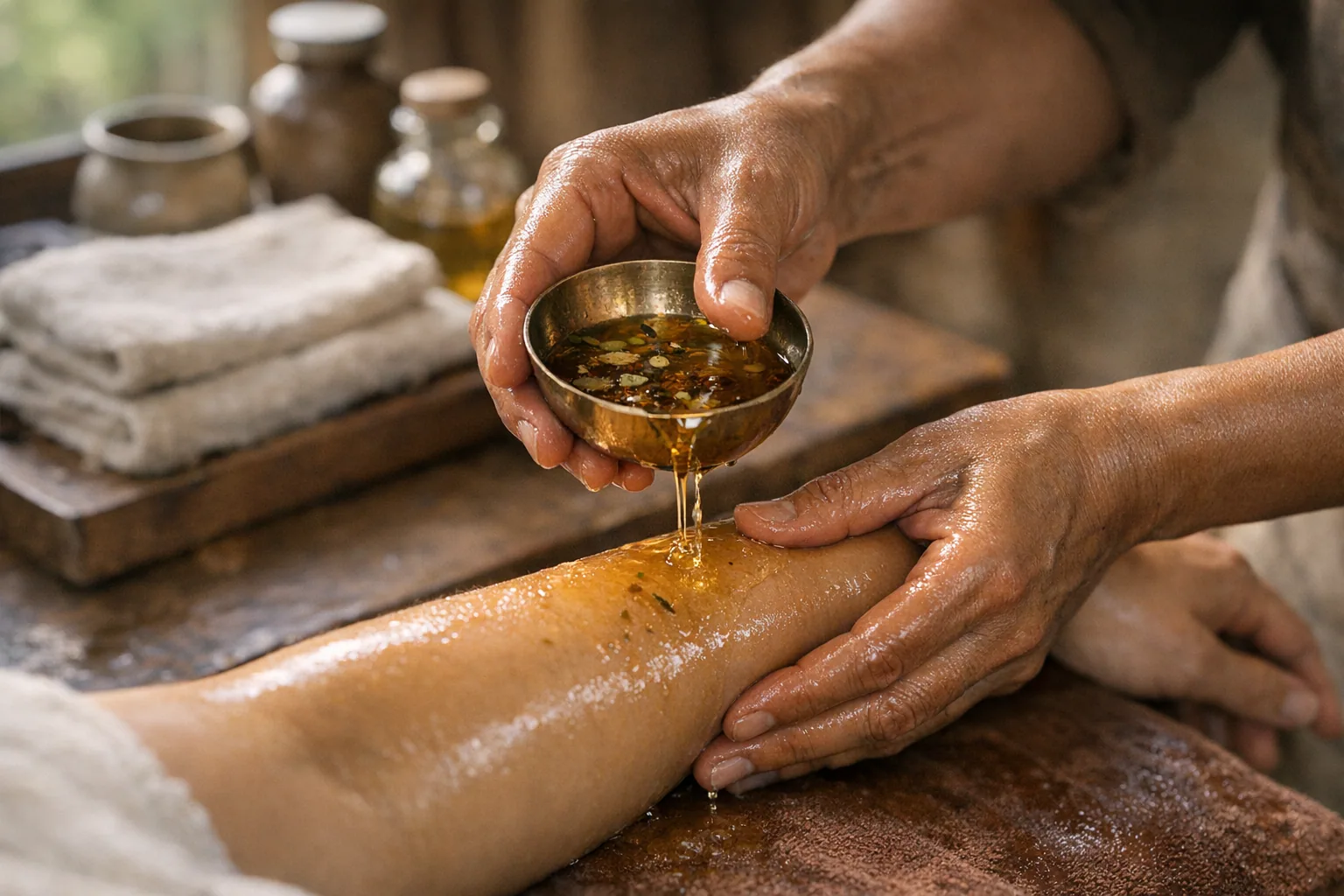
Abhyanga literally means "massage with oil". In Ayurveda, it refers to a full-body massage (from head to toe, or by zones) performed with warm oil, often infused with herbs and chosen according to the dosha (Vata, Pitta, or Kapha) or the life stage.
Traditionally, abhyanga:
- is part of the recommended daily routine (dinacharya),
- is used as support in Panchakarma processes (especially as preparation or purva karma),
- and is usually accompanied by gentle heat (a warm bath, shower, or svedana, i.e., controlled sweating).
If you are interested in deeper Ayurvedic experiences, you can explore the section on wellness and Ayurveda retreats at Retiru.
How is it Different from a “Normal” Massage?
Although it may seem similar to a relaxing massage, abhyanga has some distinctive features:
- The oil is the star: it’s not an “extra” but the therapeutic medium (in the traditional Ayurvedic sense) that nourishes, protects, and calms.
- Rhythm and direction: it usually involves repetitive, enveloping movements, sometimes with a specific direction (for example, toward joints or the heart, depending on the school).
- Intention of balance: the goal isn’t just to “release tension,” but to regulate the nervous system, support restful habits, and sustain energy.
- Can be self-massage: there is a very widespread home version, ideal for integrating into your routine.
Benefits of Abhyanga (What to Realistically Expect)
In Ayurveda, abhyanga is attributed many effects. It's important to understand these as potential wellness benefits (not medical promises). In practice, what most people report — especially when done regularly — is:
- Deep Relaxation and Feeling of “Slowing Down”
The warm oil, repeated rhythm, and sustained contact usually foster a state of calm. Many people describe it as an “anchor” during stressful days, transitions, travel, or times of intense mental stimulation.
- Support for Rest (Better Predisposition to Sleep)
It is not a “treatment for insomnia,” but it can be a great pre-sleep ritual: it reduces arousal, improves body awareness, and helps close the day with a clear signal to rest.
- More Hydrated and Better Barrier Skin
On a very tangible level: abhyanga usually leaves the skin more supple, nourished, and protected, especially in cold or dry seasons. This does not replace dermatology when there are pathologies, but as basic care, it can be excellent.
- Feeling of Grounding and Improved Body Awareness
The slow, whole-body contact helps “come back to the body.” For many, this translates into less mental scatter and more clarity in simple decisions: eating, resting, moving.
- Joint and Muscle Well-being (in a gentle way)
Oil massage and warmth can create a sense of relief in mild stiffness or muscle fatigue. If there is persistent pain, injury, or significant inflammation, it’s advisable to consult a healthcare professional.
- Sustainable Self-Care (When It Becomes a Habit)
Perhaps the most valuable benefit: abhyanga teaches consistency without pressure. Ten well-done minutes can be more transformative than one perfect session a month.
If you want to integrate these practices in a guided context, with gentle yoga, meditation, and mindful eating, check out the wellness getaway destinations at Retiru.
Abhyanga and Doshas: Which Oil to Use and Why it Matters
In Ayurveda, the oil is chosen according to constitution or the predominant imbalance. Practically, you can use these general guidelines (without overcomplicating):
If You Tend Toward Vata (dryness, cold, nervousness, irregularity)
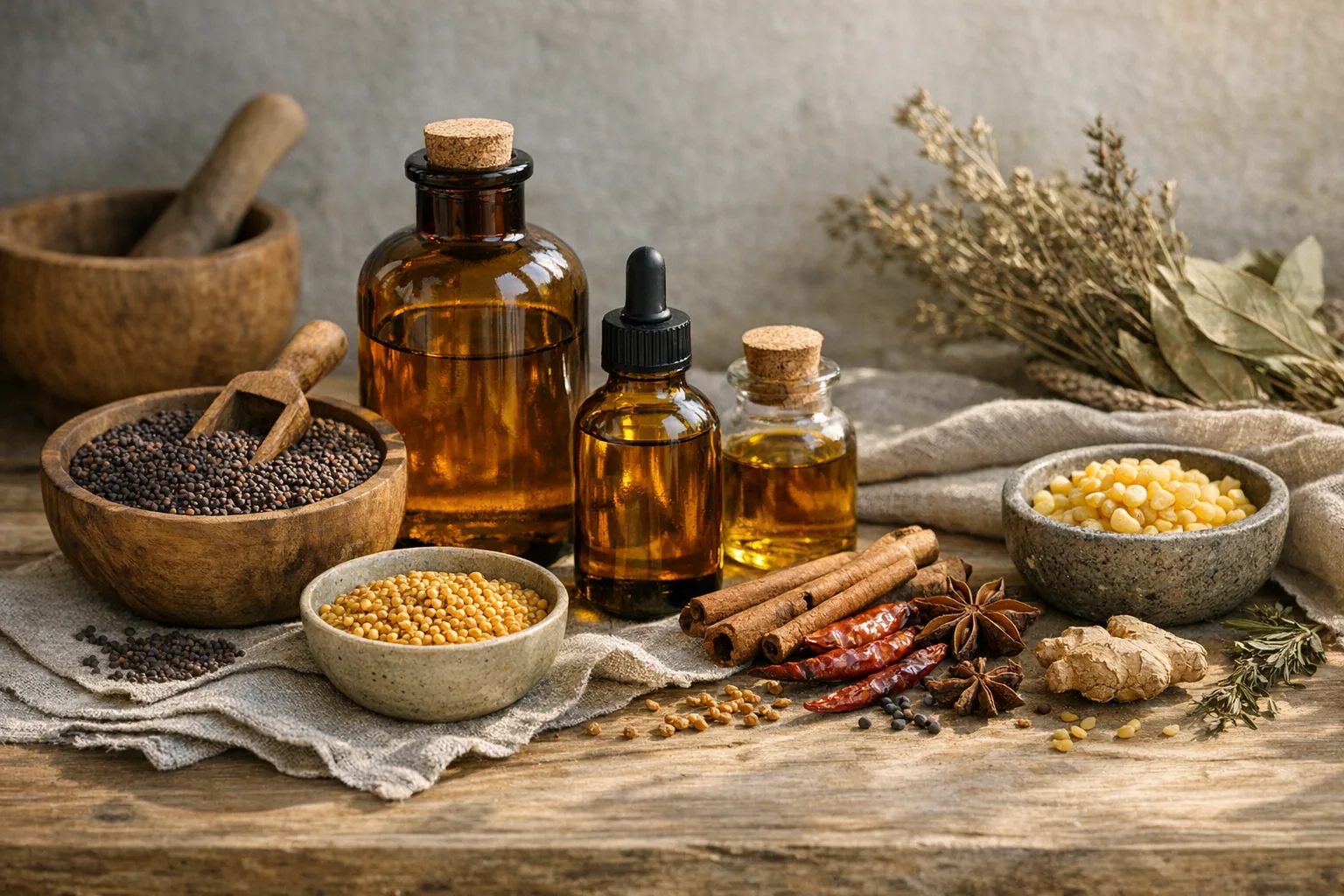
- Oils: sesame (classic), almond, nourishing blends.
- Key: more heat, slower pace, more oil.
If You Tend Toward Pitta (heat, irritability, inflammation, excess intensity)
- Oils: coconut (in summer), sunflower, “cooler” oils.
- Key: firm but non-aggressive touch; avoid excess heat.
If You Tend Toward Kapha (heaviness, slowness, congestion, retention)
- Oils: mustard or sesame in small amounts (as tolerated), sometimes with more invigorating stimuli.
- Key: more activating and shorter massage, without saturating.
If in doubt, a versatile and traditional option is good quality sesame oil (testing how your skin and temperature tolerate it beforehand).
How to Do Abhyanga at Home (Step-by-Step Guide)
You don’t need to be perfect. You need to make it possible.
Suggested Duration
- 10–15 minutes if you’re short on time.
- 20–30 minutes if you want a full ritual.
- Prepare the Space
- A warm place.
- Old towel or mat (oil stains).
- Comfortable clothes for afterward.
- Warm the Oil (Without Overheating)
- Using a double boiler or placing the bottle in hot water for a few minutes.
- It should be warm, not hot.
- Simple Order of Massage
- Scalp (optional): 1–2 minutes.
- Face and ears (gentle).
- Neck and shoulders.
- Arms (long strokes) and joints (circles).
- Abdomen (gentle, clockwise).
- Legs (long strokes) and knees/ankles (circles).
- Feet: spend some extra time; it tends to be the most regulating.
- Let It Sit for 5–10 Minutes
This “settling time” is part of the effect. You can breathe, stretch gently, or just be.
- Warm Shower
- Preferably with warm water and mild soap (or very little soap) to avoid removing the protective layer.
- Dry gently without excessive rubbing.
Practical Tip: if the idea of “oil all over the body” overwhelms you, start with feet and legs. It’s an easy and very effective entry point.
When is It Better to Receive Abhyanga in a Center or Retreat?
In a specialized center, abhyanga can be a different experience for three reasons: quality of oils, technique, and context (silence, warmth, rest, nutrition). It usually fits best if you:
- are going through a period of high stress or life change,
- need to truly rest (and support it with routine),
- want to combine it with yoga, breathing, and meditation,
- are seeking a more complete Ayurvedic approach (including lifestyle guidelines).
You can explore wellness, yoga, and Ayurveda centers at Retiru to find places where these treatments are offered with careful attention.
Contraindications and Precautions (Important)
Abhyanga is generally safe as a wellness practice, but there are situations when it is advisable to avoid it or seek professional guidance, especially if a deep massage or heat will be applied:
- Fever or acute infection.
- Intense inflammation, acute flare-ups, open wounds, or skin infections.
- Dermatological problems worsened by oils (consult if unsure).
- Thrombosis, significant circulatory problems, or unexplained pain.
- Pregnancy: it can be adapted, but best guided by a trained professional (avoiding certain pressures and areas).
- If you are under medical treatment or have a chronic condition, consider abhyanga as a complementary wellness practice, not a substitute.
For a cautious framework on complementary medicine, you can check resources from the NCCIH (National Center for Complementary and Integrative Health): https://www.nccih.nih.gov/
Frequently Asked Questions About Abhyanga
How often is it recommended?
In Ayurvedic tradition, it is contemplated as a habitual practice, but in real life:
- 2–3 times per week can already make a big difference.
- Daily if it suits you and you enjoy it (even if brief).
Is it done before or after the shower?
Usually before. The oil is applied, allowed to act, then removed with a warm shower.
Does it stain clothes and hair?
Yes. Use old towels and clothes you don’t mind getting oily. For hair, apply sparingly or reserve scalp massage for days when you have more time.
Is herbal oil necessary?
Not essential. It’s an extra layer of personalization. To start, good quality base oil is enough.
Conclusion: The True Value of Abhyanga
Abhyanga is not just a massage: it is a concrete way to tell the nervous system, “You can let go now.” In a world that pushes you to do more, this practice offers the opposite: rhythm, warmth, and presence. And when it becomes routine — even if brief — its effect accumulates.
If you want to take it a step further, you can get inspired by the Retiru blog or explore wellness retreats and getaways where Ayurvedic massage integrates with real rest, nature, and regulation practices such as yoga and meditation.
Ready for your next retreat?
Explore hundreds of retreats across Spain with transparent pricing.
Explore retreats